Phone
Consular Issues
Phone
Uzbekistan news
Central Asia Is Shaping Its Own Model of Regional Cooperation
Central Asia is entering a new stage of regional cooperation. What is emerging is neither a replica of the European Union nor an attempt to build a supranational bloc. Instead, the countries of the region are developing a flexible model based on sovereignty, political dialogue, practical cooperation and an expanding habit of consultation.
A region moving from fragmentation to coordination
For many years, Central Asia was often described through the language of fragmentation. Kazakhstan, Kyrgyzstan, Tajikistan, Turkmenistan and Uzbekistan shared geography, history, infrastructure and common environmental challenges, yet cooperation was constrained by unresolved borders, water disputes, trade barriers and limited political trust.
That picture is no longer sufficient. Over the past decade, the region has entered a new phase in which political dialogue has become more regular, practical cooperation has widened and the habit of consultation has become increasingly institutionalised.
One of the important catalysts for this shift was the change in Uzbekistan’s approach to its neighbourhood. From 2017, Tashkent placed relations with Central Asian states at the centre of its foreign-policy agenda and promoted direct, regular dialogue among the region’s leaders. At the 72nd session of the United Nations General Assembly in September 2017, President Shavkat Mirziyoyev proposed holding regular consultative meetings of the heads of Central Asian states. The first such meeting took place in March 2018.
Cooperation without delegated sovereignty
The Consultative Meetings have gradually become the region’s principal political platform for discussing common challenges. Yet the format was not designed as a supranational organisation. Central Asia has no regional commission with independent authority, no regional parliament and no legal order comparable to that of the European Union.
Cooperation advances mainly through presidential meetings, ministerial coordination, bilateral and multilateral agreements and issue-specific arrangements. Institutions exist, but they remain light and state-controlled. This is institutionalisation without the transfer of sovereignty.
Uzbekistan’s role in this process is therefore best understood not as an attempt to construct a hierarchical integration project, but as a contribution to creating a political environment in which regular consultation and practical cooperation became possible. That distinction is important: the emerging regional order depends on the participation and political will of all the states involved.
Political trust as regional infrastructure
The clearest evidence of change is not a new headquarters or treaty organisation. It is the gradual reduction of problems that once made regional cooperation difficult.
In March 2025, Kyrgyzstan and Tajikistan signed a treaty on their state border, bringing a decades-long negotiation process to a formal conclusion. Given the history of tensions along parts of that frontier, the agreement improved the political environment for wider regional cooperation.
Transport connectivity, water management, energy, climate resilience, trade and industrial cooperation are also increasingly discussed as regional issues. For Uzbekistan, which is double-landlocked and closely connected to its neighbours through transport, water, energy and trade networks, a more predictable regional environment has direct economic and security significance.
This practical dimension has helped give the new regionalism substance. Political rapprochement has been followed by efforts to expand cross-border trade, improve transport links and coordinate responses to shared challenges.
Uzbekistan and the institutional evolution of regional cooperation
The seventh Consultative Meeting of the Heads of State of Central Asia, held in Tashkent on 16 November 2025 under the chairmanship of President Shavkat Mirziyoyev, marked another stage in this evolution. The leaders adopted a decision admitting Azerbaijan as a full-fledged participant in the format.
The Tashkent meeting also demonstrated how the mechanism is becoming more structured while retaining its intergovernmental character. During Uzbekistan’s chairmanship, the regional agenda expanded across security, interregional cooperation, industry, agriculture, ecology, culture and other areas.
The sequence matters. In Central Asia, institutionalisation has largely followed political rapprochement rather than preceded it. Governments first rebuilt dialogue, reduced bilateral tensions and expanded practical cooperation. Formal mechanisms followed cautiously and selectively.
This may be described as sovereignty-preserving regionalism: states seek deeper coordination while avoiding the transfer of political authority to a regional centre.
From regional rapprochement to international recognition
External partners are increasingly responding to Central Asia as a more coherent regional space. A major example was the first European Union–Central Asia Summit, held in Samarkand on 4 April 2025. The summit was chaired by President Shavkat Mirziyoyev, with the participation of the leaders of the five Central Asian states and the European Union.
The meeting elevated relations between the European Union and Central Asia to a strategic partnership. Its agenda covered connectivity, trade, energy, water, climate, critical raw materials and other areas that are difficult to address through five unrelated bilateral tracks alone.
For Uzbekistan, hosting the summit reflected an important dimension of its regional policy: strengthening Central Asia’s collective international agency without replacing national foreign policies with a single regional centre. Greater coordination does not require the region’s states to speak with one voice on every issue. It enables them to identify areas where interests overlap and where joint engagement can bring practical benefit.
A model with strengths and limits
The emerging model has clear advantages. It lowers political barriers to cooperation, preserves national ownership and allows governments to advance practical initiatives without first resolving sensitive questions about supranational authority.
But it also has limitations. Consensus-based cooperation can slow decision-making. Light institutional structures may make implementation uneven, and regional cooperation can remain vulnerable to leadership changes, economic shocks or renewed disputes. Its durability will ultimately depend on whether repeated cooperation can survive moments when national interests diverge.
The next stage will therefore be judged less by the number of summits than by whether political agreements produce sustained results in transport, trade, water, energy, climate adaptation, security and people-to-people links.
Why Central Asia matters beyond Central Asia
Central Asia matters to debates about regionalism precisely because it does not resemble the European Union. The European experience has often shaped assumptions about how regional cooperation should evolve: states cooperate, build common institutions, accept shared rules and, in some fields, delegate authority above the national level.
Central Asia is moving differently. Its governments are building a denser pattern of political consultation and practical interdependence while maintaining a strong preference for sovereignty and intergovernmental decision-making.
Uzbekistan has contributed significantly to this process by promoting a more open regional political environment, initiating regular consultative dialogue among Central Asian leaders and linking political rapprochement with practical cooperation. At the same time, the process is fundamentally collective: its progress depends on the willingness of all participating states to reconcile national priorities with common regional interests.
Central Asia may never become another European Union — nor does it necessarily seek to. Its significance lies in showing that a region can become more cohesive, coordinated and internationally consequential while following its own institutional path.
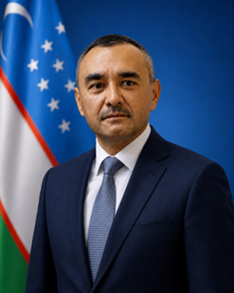
Jakhongir Isaev
Head of Department, NGO Center for Sustainable Development, Uzbekistan
📅 08.10.2026
Uzbekistan news
Central Asia Is Shaping Its Own Model of Regional Cooperation
Initiatives of Uzbekistan aimed at Economic Results for the Countries of Central Asia and Azerbaijan
Regular dialogue is the Foundation for addressing common water-related challenges in Central Asia
Uzbekistan and Turkmenistan: A New Stage in the Development of Their Strategic Partnership
11th Tashkent International Biennale of Contemporary Art to be held in the capital of Uzbekistan on October 12–16th
OTS Member States - A Crucial Link in the Eurasian Space
Uzbekistan plays an active role in Economic Integration within the framework of the Organization of Turkic States
CICA opens new horizons for financial cooperation
Aquatherm Tashkent 2026 to Showcase Latest Technologies for Construction and Utility Infrastructure
Uzbekistan is securing its place in the Global Hub for Technological Outsourcing
Digital Cooperation among the Turkic States Towards a Unified Technological Ecosystem
Uzbekistan and Azerbaijan are creating a Hub for Startups, Investors and Talent
UZBEKISTAN AND THE UN: FROM NATIONAL INITIATIVES TO THE GLOBAL AGENDA
The 5th Samarkand Forum on Human Rights to take place on September 28–29th
Uzbekistan's key trading partners participate in CICA
Speech by President Shavkat Mirziyoyev at the solemn ceremony dedicated to the thirty-fifth anniversary of the independence of the Republic of Uzbekistan
Uzbekistan Firmly Establishes Itself as a Stable and Predictable Partner for Long-Term International Business
Changing economic priorities of Uzbekistan reshape its engagement with the CIS
Inaugural Central Asia – Republic of Korea Summit at the highest level opens in Seoul
Uzbekistan and Korea: Advancing Green Energy and New Technologies
Uzbekistan and the Republic of Korea in the Emerging Framework for Cooperation with Central Asia
Tashkent brings together leaders and key deals in Polymer Market of Central Asia
The 1st Republic of Korea–Central Asia Summit: Why This Moment Matters
Uzbekistan – Serbia: A New Geography of Industrial Cooperation
The President of Uzbekistan’s Visit to Serbia: A New Stage in Economic Partnership Between Central Asia and the Balkans
Uzbekistan and the Republic of Korea: From Investment Partnership to Technological Cooperation
Regional Approaches to SDG Delivery: What Can Central Asia Offer?
Uzbekistan Opens a Balkan Gateway to Europe
The SCO Bishkek Summit: The Economic Agenda of a New Stage of Cooperation
Tourism: A new dimension of Uzbekistan-Kyrgyzstan partnership

-
 Ministry of Foreign Affairs of the Republic of Uzbekistan
 -
 Diplomatic Service of the Ministry of Foreign Affairs
 -
 State Committee for Tourism Development
 -
Ministry of Investments and Foreign Trade of the Republic of Uzbekistan
-
 invest.gov.uz
 -
-

-

-

-

-

-

of Uzbekistan in the Republic
of Latvia
When using the information, a link to www.uzembassy.lv
must be provided.
All rights reserved
Address
Address: Riga c., LV-1010. 11-11 Elizabetes Str., Latvia
Phone: 37167322424
Fax: 37167322306
Email: embassy@uzbekistan.lv
Useful links
HomeIssuance of biometric passport for departure abroad
Certificate to return to Uzbekistan
Withdrawal of citizenship
Loss of citizenship