Phone
Consular Issues
Phone
Uzbekistan news
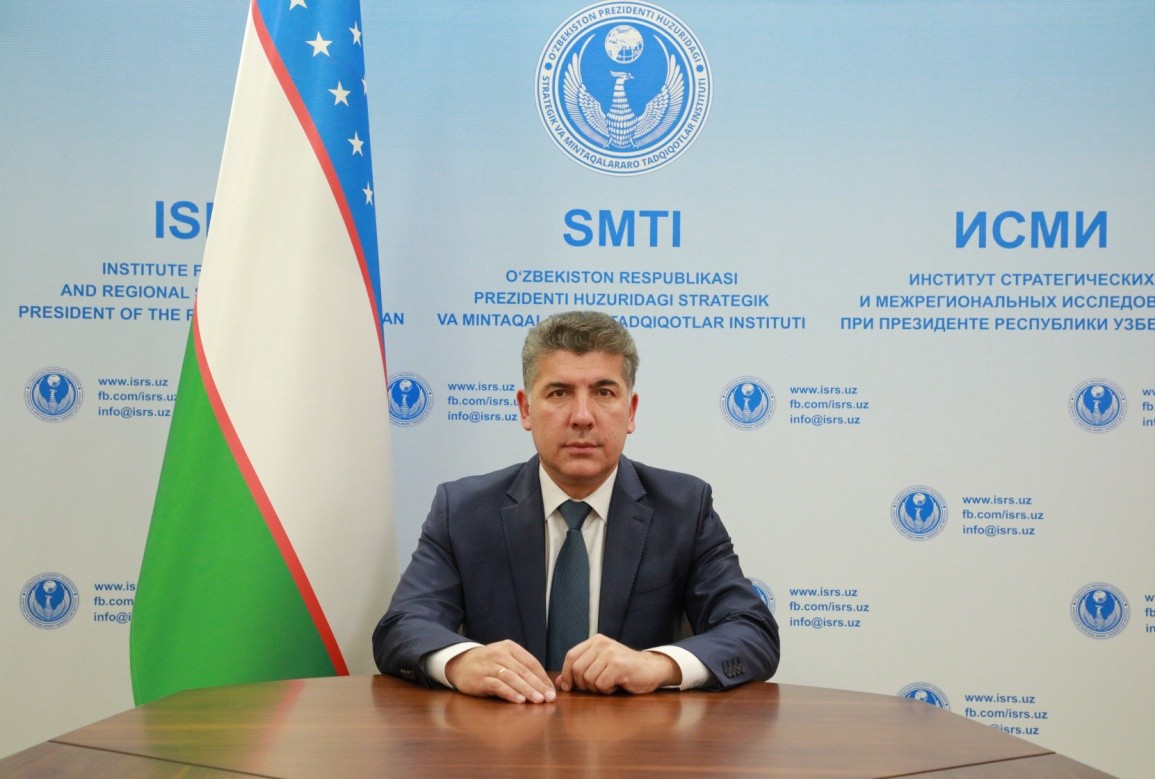
Akramjon Nematov: Central Asia is increasingly emerging as an independent centre for shaping its own economic and technological agenda
First Deputy Director of the Institute for Strategic and Regional Studies under the President of Uzbekistan commented to Dunyo IA on the outcomes of the Consultative Meeting of the Heads of State of Central Asia and Azerbaijan, held on October 8th in the “Avaza” National Tourist Zone in Turkmenistan
Akramjon Nematov, First Deputy Director of the Institute for Strategic and Regional Studies under the President of Uzbekistan (ISRS), commented to Dunyo IA on the outcomes of the Consultative Meeting of the Heads of State of Central Asia and Azerbaijan, held on October 8th in the “Avaza” National Tourist Zone in Turkmenistan:
Eighth Consultative Meeting of the Heads of State of Central Asia and Azerbaijan, held in Avaza on October 8th, marked a fundamental shift in regional cooperation. The region is entering a new phase: from diplomacy built on trust to economic connectivity, and from resolving longstanding issues to shaping a shared future. The political trust developed in recent years is becoming a driver of tangible development, providing a foundation for joint manufacturing ventures, infrastructure and energy projects, technological cooperation, and new value chains.
Azerbaijan’s full participation significantly broadens the geographical scope and opportunities for this cooperation, strengthening Central Asia’s links with the Caspian region and the South Caucasus.
Nature of regional cooperation is thus changing. Central Asia is increasingly emerging not only as a region of good-neighbourly relations and political dialogue, but also as a centre capable of shaping its own economic and technological agenda.
This shift is particularly significant amid profound changes in the international system. Geopolitical tensions are reshaping established patterns of trade, transport and energy flows, reconfiguring supply chains and increasing the value of reliable connections. The technological revolution is turning data, computing capacity and skills into strategic resources, while climate change is placing growing pressure on water resources, food systems, energy and infrastructure.
As President of Uzbekistan Shavkat Mirziyoyev noted, “The world is changing rapidly, tensions are rising, trade and transport links are being reshaped and new risks are emerging”. These conditions create a clear need for closer coordination among the countries of the region, particularly in areas where their interests and capabilities are already closely connected.
Significance of the “Avaza” meeting therefore lies less in the number of proposals put forward than in the shared direction of the regional agenda, which emerged even more clearly in the statements of all six leaders.
This points to an important qualitative change: the Central Asian countries now have an agenda of their own, set their own cooperation priorities and propose mechanisms to implement them. This is an increasingly clear expression of the region’s capacity to act in its own right.
Emerging model of cooperation remains open to the wider world, flexible in its arrangements and grounded in the region’s ability to determine its own priorities. President of Uzbekistan expressed its guiding philosophy clearly: “We need a flexible and transparent format in which strong, sovereign, and independent states cooperate on the basis of mutual respect, trust and pragmatism”.
Under this approach, stronger links within the region create greater opportunities for external engagement. Central Asia is increasingly positioning itself as a hub in its own right, connecting East Asia, the Caspian region, the South Caucasus, Europe, South Asia and other regions, rather than remaining on the margins of major geoeconomic developments.
Significantly, the leaders see the further development of the Consultative Meetings primarily in terms of effectiveness and the delivery of agreed commitments. President of Kazakhstan Kassym-Jomart Tokayev advocated preserving the format as a platform for direct dialogue and proposed taking stock of earlier regional initiatives. The President of Uzbekistan expressed a similar view: “The number of documents in itself does not solve much. What matters far more is that the decisions we have already taken are implemented and deliver the results they were intended to achieve”.
The next phase of cooperation will therefore involve strengthening implementation mechanisms, improving coordination among the relevant agencies and consistently following through on agreements, while preserving the flexibility and trust that define the format. The aim is to establish institutional arrangements that make cooperation more effective without making it more cumbersome.
Convergence of interests was particularly evident in the economic sphere. Kazakhstan proposed increasing intraregional trade and linking trade and logistics hubs with centres for industrial cooperation to create regional value chains. Kyrgyzstan focused on specific projects in agricultural processing, light industry, building materials and logistics. Tajikistan emphasised joint ventures, industrial complexes and manufacturing and export projects. Azerbaijan proposed making greater use of existing joint investment funds to establish new manufacturing operations and enter international markets. Turkmenistan also identified industrial, investment, transport and energy cooperation as key priorities.
Against this background, the formula proposed by the President of Uzbekistan, “six economies – one product”, builds naturally on this common direction. It seeks to complement mutual trade with deeper collaboration in manufacturing, bringing together the resources, technologies, capital, industrial capacity, skills and logistics of several countries to produce finished goods.
This reveals another fundamental shift. The region is gradually moving beyond a role centred primarily on transit and raw materials, and is demonstrating its readiness to become an important link in global manufacturing value chains. This strengthens the resilience of national economies, broadens market access for businesses and places economic connectivity on a firmer footing.
Uzbekistan’s proposals for a Central Asia–Azerbaijan Business Forum in Khiva and a Platform for Financial and Technical Support of Joint Investment Projects offer practical ways to advance this approach. They would provide the tools for project preparation, expert assessment, financial structuring and implementation support needed to turn political commitments to industrial cooperation into results. Uzbekistan’s initiatives thus build on priorities already identified by its partners and help translate them into investment and manufacturing projects.
A similar complementarity is evident in transport. Kyrgyzstan sees the China–Kyrgyzstan–Uzbekistan railway as central to future opportunities and proposes assessing transport projects by delivery costs and journey times. Kazakhstan is expanding the capacity of the Middle Corridor and the North–South route. Azerbaijan is steadily developing the Caspian link and the Trans-Caspian route. Tajikistan is focusing on multimodal transport, the removal of administrative barriers and the digitalization of procedures. Turkmenistan is developing connections along the East–West and North–South axes.
In this context, the President of Uzbekistan’s proposal to accelerate the establishment of the Council for Infrastructure Development advances the shared objective of connecting transport projects. Such a mechanism could help coordinate the development of roads, railways, ports, border infrastructure and logistics centres, integrating individual national routes into a more coherent regional network.
Transport connectivity is understood to extend well beyond the movement of goods. The development of corridors creates opportunities for new manufacturing facilities, industrial zones, logistics hubs and service facilities along their routes. Infrastructure thus becomes a driver of both territorial development and value creation.
This approach offers a new perspective on Central Asia’s place in Eurasia’s emerging connectivity network. The China–Kyrgyzstan–Uzbekistan railway, the infrastructure of Kazakhstan and Turkmenistan, Azerbaijan’s Caspian transport capacity and Tajikistan’s multimodal transport capabilities are gradually forming a broader network of interregional connections.
Central Asia is thus emerging as a potential key pillar of this connectivity network, linking different markets and routes while strengthening its own manufacturing and logistics capacity.
A similar trend is emerging in energy. Tajikistan proposed drawing up a list of priority energy projects, identifying mechanisms for their joint financing and developing a regional strategy for the green transition. Azerbaijan, Kazakhstan and Uzbekistan are already working to establish a green energy corridor across the Caspian Sea. Turkmenistan likewise considers energy one of the key areas for expanded cooperation.
Shavkat Mirziyoyev’s proposed Joint Concept for Low-Carbon Energy Potential takes this shared agenda forward through systematic planning. It would allow new generation capacity, energy storage and energy corridors to be planned around the complementary roles of hydrocarbons, hydropower, solar and wind generation. National energy strengths could thereby be combined more systematically into a resilient regional system.
Important areas of common interest are also emerging in the digital sector. Azerbaijan is developing Digital Silk Way and trans-Caspian fibre-optic infrastructure. Kazakhstan proposed cooperation on artificial intelligence and approaches to its responsible use. Tajikistan is establishing a Regional Artificial Intelligence Centre in Dushanbe. Kyrgyzstan is promoting a common e-commerce platform. Turkmenistan also views technological development and the adoption of AI as promising areas of cooperation.
President of Uzbekistan’s proposal for Common Computing Infrastructure, based on interconnected national data centres, would provide a technological foundation for these initiatives. It could link digital communications with computing capacity, research cooperation, skills development and practical applications. This would give AI cooperation the infrastructure needed for deployment in industry, transport, energy, agriculture and public administration.
Critical minerals, including rare earth elements, are closely linked to technological transformation. The President of Uzbekistan proposed stepping up efforts to establish a Regional Alliance on Critical Minerals and, as one of its first practical measures, developing a Unified Digital Map of Critical Mineral Reserves in Central Asia.
This initiative builds on efforts to deepen industrial and technological cooperation. A more comprehensive understanding of the region’s resource base could improve transparency for investors, support processing industries and lay the groundwork for products used in modern energy systems, electronics and other high-tech sectors. Critical minerals are thus viewed not only as raw materials, but also as a foundation for future regional value chains that generate greater added value.
The convergence of approaches was also evident in the water and climate agenda. Kazakhstan emphasises improving regional principles for water use. Kyrgyzstan pays particular attention to the preservation of glaciers and mountain ecosystems. Tajikistan highlights the implications of glacier conditions and low water availability for food security. Turkmenistan consistently highlights issues concerning the efficient use of the waters of the Amu Darya and Syr Darya, as well as the Aral Sea.
These priorities align with Uzbekistan’s longstanding commitment to stronger regional cooperation on water and climate. In Avaza, Uzbekistan focused on practical instruments: digital monitoring of water resources, modernisation of irrigation networks, the introduction of water-saving technologies, implementation of the Decade of Practical Action for the Rational Use of Water Resources in Central Asia, greater effectiveness of the International Fund for Saving the Aral Sea (IFAS) during our country’s forthcoming chairmanship, and sustained, substantive dialogue with Afghanistan.
Together, these measures would create a more comprehensive model in which common principles for water use are supported by objective data, glacier monitoring, technological solutions and durable mechanisms for cooperation.
The same progression is evident in environmental cooperation. The International Consortium “Clean Air of Central Asia”, proposed by Uzbekistan, gained a concrete project focus in Avaza. The President proposed launching its activities with a pilot program to improve the environmental performance of industrial zones, agricultural clusters and transport hubs. This would provide a practical mechanism for advancing the shared environmental agenda, allowing solutions to be tested and subsequently scaled up across the region.
Human capital is an essential part of this approach. President Shavkat Mirziyoyev proposed developing a Regional Atlas of In-Demand Professions and Skills, bringing together national forecasts of shortages in specific occupations and of future occupational needs.
This initiative directly supports the industrial, infrastructure and digital agendas. As joint projects expand, demand will grow for engineers, energy and logistics specialists, programmers, AI experts and other skilled professionals. The regional atlas could align education with the actual needs of the emerging economy and provide the skilled workforce required for future projects involving several countries.
Avaza thus demonstrated the gradual emergence of an interconnected regional agenda. Trade is becoming more closely linked with manufacturing; transport with territorial development; energy with new corridors and storage technologies; digitalization with artificial intelligence and computing infrastructure; resource potential with processing; and economic development with human capital. Uzbekistan’s proposals reinforce this approach by building on its partners’ initiatives and providing additional practical measures and institutional support in specific areas.
Broader political and economic conclusion is even more significant. The Central Asian countries are increasingly confident in setting their own development priorities, designing mechanisms to implement them and managing their engagement with external partners. This is one of the clearest expressions of the region’s growing agency.
The region’s geoeconomic role is also changing. The shared emphasis on industrial cooperation, investment, critical minerals, technology and human capital signals a readiness to develop the region as a centre of value creation integrated into the global economy. Transit connectivity is increasingly being complemented by manufacturing and technological cooperation.
Crucially, this process remains open to the wider world. Stronger ties within the region expand opportunities for cooperation with Europe, China, Russia, South Asia, the Middle East and other partners. This reinforces Central Asia’s role as a bridge between different geoeconomic regions and as an important component of the emerging framework for interregional connectivity. Azerbaijan’s full participation strengthens this potential, extending the geographical reach of transport, energy, investment and digital cooperation across the Caspian Sea and through the South Caucasus.
Taken together, decisions and initiatives put forward in Avaza reflect a strong willingness among the participating states to build a region of shared development, in which national strengths reinforce one another and support common growth.
The effectiveness of regional cooperation therefore takes on particular importance at this stage. It should be measured by the expansion of joint manufacturing ventures, lower transport costs, a growing number of well-prepared and adequately financed projects, stronger energy and digital links, more efficient water use and, ultimately, greater opportunities for people.
Principle articulated by our Head of State, “solidarity and trust – for the sake of development and security”, captures the logic of the current phase: the trust built over time is finding practical expression in shared development and greater collective resilience. This model continues to rest on another principle set out by the President of Uzbekistan: “strong, sovereign, and independent states cooperate on the basis of mutual respect, trust and pragmatism”. Combination of national independence, a shared regional agenda and openness to the wider world defines the framework for cooperation that took further practical shape in Avaza.
Dunyo IA
📅 09.10.2026
Uzbekistan news
Political mutual trust in the Central Asian region is transforming into economic capital
Uzbekistan attracts specialists from 16 countries to the anniversary international exhibition “Mining, Metallurgy and Metalworking – MiningMetals Uzbekistan 2026”
Uzbekistan has moved its economic cooperation with the Turkic states into a practical dimension
Akramjon Nematov: Central Asia is increasingly emerging as an independent centre for shaping its own economic and technological agenda
Central Asia Is Shaping Its Own Model of Regional Cooperation
Initiatives of Uzbekistan aimed at Economic Results for the Countries of Central Asia and Azerbaijan
Regular dialogue is the Foundation for addressing common water-related challenges in Central Asia
Uzbekistan and Turkmenistan: A New Stage in the Development of Their Strategic Partnership
11th Tashkent International Biennale of Contemporary Art to be held in the capital of Uzbekistan on October 12–16th
OTS Member States - A Crucial Link in the Eurasian Space
Uzbekistan plays an active role in Economic Integration within the framework of the Organization of Turkic States
CICA opens new horizons for financial cooperation
Aquatherm Tashkent 2026 to Showcase Latest Technologies for Construction and Utility Infrastructure
Uzbekistan is securing its place in the Global Hub for Technological Outsourcing
Digital Cooperation among the Turkic States Towards a Unified Technological Ecosystem
Uzbekistan and Azerbaijan are creating a Hub for Startups, Investors and Talent
UZBEKISTAN AND THE UN: FROM NATIONAL INITIATIVES TO THE GLOBAL AGENDA
The 5th Samarkand Forum on Human Rights to take place on September 28–29th
Uzbekistan's key trading partners participate in CICA
Speech by President Shavkat Mirziyoyev at the solemn ceremony dedicated to the thirty-fifth anniversary of the independence of the Republic of Uzbekistan
Uzbekistan Firmly Establishes Itself as a Stable and Predictable Partner for Long-Term International Business
Changing economic priorities of Uzbekistan reshape its engagement with the CIS
Inaugural Central Asia – Republic of Korea Summit at the highest level opens in Seoul
Uzbekistan and Korea: Advancing Green Energy and New Technologies
Uzbekistan and the Republic of Korea in the Emerging Framework for Cooperation with Central Asia
Tashkent brings together leaders and key deals in Polymer Market of Central Asia
The 1st Republic of Korea–Central Asia Summit: Why This Moment Matters
Uzbekistan – Serbia: A New Geography of Industrial Cooperation
The President of Uzbekistan’s Visit to Serbia: A New Stage in Economic Partnership Between Central Asia and the Balkans
Uzbekistan and the Republic of Korea: From Investment Partnership to Technological Cooperation

-
 Ministry of Foreign Affairs of the Republic of Uzbekistan
 -
 Diplomatic Service of the Ministry of Foreign Affairs
 -
 State Committee for Tourism Development
 -
Ministry of Investments and Foreign Trade of the Republic of Uzbekistan
-
 invest.gov.uz
 -

-

-

-

-

-

-


of Uzbekistan in the Republic
of Latvia
When using the information, a link to www.uzembassy.lv
must be provided.
All rights reserved
Address
Address: Riga c., LV-1010. 11-11 Elizabetes Str., Latvia
Phone: 37167322424
Fax: 37167322306
Email: embassy@uzbekistan.lv
Useful links
HomeIssuance of biometric passport for departure abroad
Certificate to return to Uzbekistan
Withdrawal of citizenship
Loss of citizenship