Phone
Consular Issues
Phone
Uzbekistan news
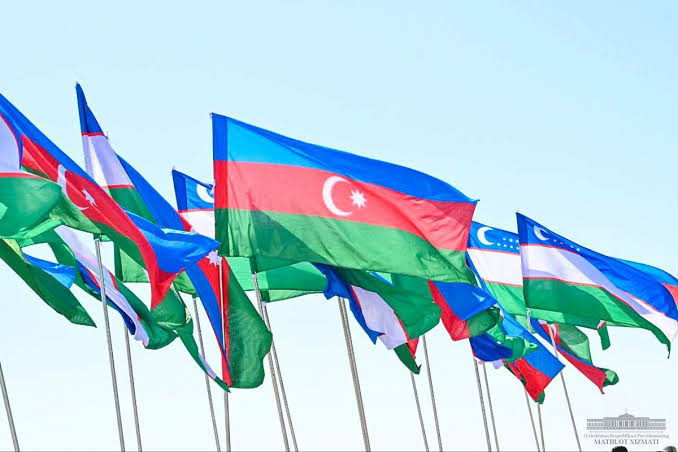
Uzbekistan promotes Initiatives in Central Asia unlocking new opportunities for cooperation
Today, the Consultative Meetings of the Heads of State of Central Asia provide the region’s leaders with a regular platform to align their positions on issues that shape the future of Central Asia as a whole. Over the course of eight summits, direct dialogue has evolved into sustained engagement at the level of national coordinators, relevant ministries and agencies, regions, and business communities. From an economic perspective, it is particularly important that trade, industry, transport, and investment are being addressed with due consideration for the interdependence of national development plans.
Central Asia has arrived at its current model of cooperation within a relatively short period of time. In 2017, President Shavkat Mirziyoyev proposed holding regular meetings of the region’s leaders, and the first such meeting took place in Astana in March 2018. The format was built around direct dialogue, allowing the states themselves to define the range of common issues and coordinate their positions in areas where results depend on the actions of neighboring countries. At the same time, the format has retained its fundamentally consultative nature, based on the independence of its participants.
As the scope of cooperation expanded, the necessary mechanisms were gradually established. In 2021, the establishment of a Business Council was proposed. In 2022, the Treaty on Friendship, Good-Neighbourliness and Cooperation for the Development of Central Asia in the 21st Century was signed. The Council of National Coordinators was established in 2023, and a year later the Central Asia 2040 Concept for the Development of Regional Cooperation was adopted. In this way, political dialogue acquired an institutional and legal framework between summits while preserving the flexibility of the original format.
Uzbekistan’s chairmanship in 2025 significantly strengthened sectoral cooperation. More than 20 major sectoral and interregional events were held, including the Interregional Cooperation Forum at the level of deputy prime ministers. Ahead of the Seventh Consultative Meeting in Tashkent, the first meeting of the Council of Ministers of Trade and Investment of the Central Asian countries and Azerbaijan was held. Discussions focused on practical objectives: increasing mutual trade to USD 20 billion, establishing production facilities under the “Made in Central Asia” brand, and attracting international financial institutions to infrastructure and industrial projects.
The current scale of economic ties makes it possible to pursue more ambitious objectives. By the end of 2025, Uzbekistan’s trade turnover with the Central Asian countries had reached USD 8.3 billion, an increase of 15.2 percent. In the same year, the volume of direct investment and loans attracted from countries in the region amounted to USD 1.3 billion. Growing trade and investment activity is creating a foundation for deeper industrial cooperation and the development of production chains among enterprises across the region.
This is the underlying rationale of “Made in Central Asia.” Enterprises from several countries can participate in the creation of a final product by distributing individual stages of production among themselves. For Uzbek businesses, such a model expands the pool of potential customers and enables production to be planned in response to demand beyond the domestic market. A practical foundation is already taking shape: an Action Plan for the Development of Industrial Cooperation for 2025–2027 has been approved, bilateral investment funds have been established, cross-border trade zones and industrial cooperation centers are being developed, and joint sectoral projects are being implemented.
The economics of production chains is directly dependent on logistics. The China–Kyrgyzstan–Uzbekistan railway, as well as the Trans-Afghan and Trans-Caspian routes, involve different groups of participating countries.
The consultative platform provides an opportunity to coordinate countries’ infrastructure plans, border crossing operations, and logistics hubs in advance. In 2025, Uzbekistan proposed establishing an Infrastructure Development Council at the level of deputy prime ministers in order to place such coordination on a permanent footing.
A more favorable business environment is also being shaped through decisions taken in bilateral and trilateral formats. Since 2023, citizens of Uzbekistan and Kyrgyzstan have been able to cross the shared border using ID cards. In 2025, Uzbekistan, Kyrgyzstan, and Tajikistan signed a treaty on the junction point of their state borders. These measures facilitate travel, business contacts, and cross-border trade.
Azerbaijan’s accession as a full-fledged participant in November 2025 expanded the permanent dialogue toward the South Caucasus and brought into the format a country located along the continuation of the Trans-Caspian routes. This makes it possible to address trade, transport, energy, and investment issues within a broader economic geography.
At the same time, the planning horizon is expanding. The Central Asia 2040 Concept established long-term priorities, while at the Tashkent summit Uzbekistan proposed developing a Comprehensive Regional Program for Trade and Economic Cooperation through 2035, adopting a Declaration on a Common Investment Space, and introducing a joint program for the development of e-commerce. For businesses, these initiatives create a more predictable horizon for planning investments, supply chains, and entry into neighboring markets.
Uzbekistan’s proposal to move toward a strategic “Central Asian Community” format also fits within this longer-term perspective, with the aim of strengthening continuity in the implementation of long-term infrastructure, industrial, and investment initiatives.
Following the conclusion of Uzbekistan’s chairmanship, the focus continued to shift toward new forms of economic connectivity. At the informal meeting of the heads of state of Central Asia and Azerbaijan in July 2026, Uzbekistan proposed substantive work on integrated industrial and technological value chains, shared digital services, and investment platforms.
The mechanisms developed in recent years make it possible to connect suppliers across several countries, establish production facilities serving broader markets, attract capital to projects of regional scale, and incorporate logistics considerations from the earliest stages of investment planning. The established channels of cooperation facilitate the transition from strategic priorities to concrete projects while preserving each state’s independence in decision-making. Translating high-level agreements into programs and measurable results is what defines the substance of the next stage.
For Uzbekistan, this represents a qualitatively new scale of regional economic policy. Central Asia is becoming a space where coordinated decisions expand the potential market for national enterprises, connect production capacities, open new routes, and strengthen the foundation for investment. This is precisely where the strategic significance of the platform lies: the countries of the region are themselves shaping the conditions for long-term growth, while Uzbekistan consistently advances initiatives that translate the potential of good-neighborly relations into tangible economic opportunities.
📅 12.10.2026
Uzbekistan news
Strengthening Transport Connectivity in Asia through the Development of the Trans-Caspian International Transport Corridor
Uzbekistan promotes Initiatives in Central Asia unlocking new opportunities for cooperation
Political mutual trust in the Central Asian region is transforming into economic capital
Uzbekistan attracts specialists from 16 countries to the anniversary international exhibition “Mining, Metallurgy and Metalworking – MiningMetals Uzbekistan 2026”
Uzbekistan has moved its economic cooperation with the Turkic states into a practical dimension
Akramjon Nematov: Central Asia is increasingly emerging as an independent centre for shaping its own economic and technological agenda
Central Asia Is Shaping Its Own Model of Regional Cooperation
Initiatives of Uzbekistan aimed at Economic Results for the Countries of Central Asia and Azerbaijan
Regular dialogue is the Foundation for addressing common water-related challenges in Central Asia
Uzbekistan and Turkmenistan: A New Stage in the Development of Their Strategic Partnership
11th Tashkent International Biennale of Contemporary Art to be held in the capital of Uzbekistan on October 12–16th
OTS Member States - A Crucial Link in the Eurasian Space
Uzbekistan plays an active role in Economic Integration within the framework of the Organization of Turkic States
CICA opens new horizons for financial cooperation
Aquatherm Tashkent 2026 to Showcase Latest Technologies for Construction and Utility Infrastructure
Uzbekistan is securing its place in the Global Hub for Technological Outsourcing
Digital Cooperation among the Turkic States Towards a Unified Technological Ecosystem
Uzbekistan and Azerbaijan are creating a Hub for Startups, Investors and Talent
UZBEKISTAN AND THE UN: FROM NATIONAL INITIATIVES TO THE GLOBAL AGENDA
The 5th Samarkand Forum on Human Rights to take place on September 28–29th
Uzbekistan's key trading partners participate in CICA
Speech by President Shavkat Mirziyoyev at the solemn ceremony dedicated to the thirty-fifth anniversary of the independence of the Republic of Uzbekistan
Uzbekistan Firmly Establishes Itself as a Stable and Predictable Partner for Long-Term International Business
Changing economic priorities of Uzbekistan reshape its engagement with the CIS
Inaugural Central Asia – Republic of Korea Summit at the highest level opens in Seoul
Uzbekistan and Korea: Advancing Green Energy and New Technologies
Uzbekistan and the Republic of Korea in the Emerging Framework for Cooperation with Central Asia
Tashkent brings together leaders and key deals in Polymer Market of Central Asia
The 1st Republic of Korea–Central Asia Summit: Why This Moment Matters
Uzbekistan – Serbia: A New Geography of Industrial Cooperation

-
 Ministry of Foreign Affairs of the Republic of Uzbekistan
 -
 Diplomatic Service of the Ministry of Foreign Affairs
 -
 State Committee for Tourism Development
 -
Ministry of Investments and Foreign Trade of the Republic of Uzbekistan
-
 invest.gov.uz
 -

-

-

-

-

-

-

of Uzbekistan in the Republic
of Latvia
When using the information, a link to www.uzembassy.lv
must be provided.
All rights reserved
Address
Address: Riga c., LV-1010. 11-11 Elizabetes Str., Latvia
Phone: 37167322424
Fax: 37167322306
Email: embassy@uzbekistan.lv
Useful links
HomeIssuance of biometric passport for departure abroad
Certificate to return to Uzbekistan
Withdrawal of citizenship
Loss of citizenship