Phone
Consular Issues
Phone
Uzbekistan news
CICA amid a Crisis of Trust: Uzbekistan’s Role in Strengthening Cooperation in Asia
The seventh summit of the Conference on Interaction and Confidence Building Measures in Asia (CICA) will take place in Baku on 15 October. The meeting comes at a time when the ability of states to sustain dialogue and find common ground is particularly important. In an increasingly complex international environment, CICA’s relevance stems primarily from its role as a multilateral platform that brings together countries with diverse political positions and national interests.
The framework’s principal strength is its inclusive character. CICA is not a military or political bloc and does not constrain its members’ independence in foreign policy. Its work rests on consensus, voluntary participation, equality and mutual respect, enabling states with differing interests to maintain regular dialogue.
These principles underpin Uzbekistan’s consistent approach to engagement within CICA. Tashkent advocates strengthening the forum’s role as a mechanism for implementing confidence-building measures and expanding practical cooperation among Asian states.
President Shavkat Mirziyoyev’s approach to CICA encompasses several interrelated priorities. Together, they seek to preserve trust between states, translate that trust into practical cooperation and strengthen the capacity of multilateral mechanisms to address shared challenges. His addresses at the Dushanbe summit in 2019 and the Astana summit in 2022 developed this approach along three main lines.
First, a comprehensive approach to security.
Uzbekistan recognises that contemporary threats cannot be overcome through political measures and the use of force alone.
The resilience of states also depends on human capital, opportunities for young people to fulfil their potential, the development of education and culture, and the ability to counter radicalisation.
Cooperation in education, culture and youth affairs therefore features prominently in the President’s summit addresses. Uzbekistan’s substantial contribution to advancing CICA’s youth agenda demonstrates this approach in practice. In particular, Uzbekistan’s Youth Affairs Agency served as co-chair of the CICA Youth Council.
Tashkent also assumed a coordinating role in implementing confidence-building measures, reflecting its commitment to translating political initiatives into action through established cooperation mechanisms.
Second, a focus on practical outcomes in multilateral cooperation.
A distinctive feature of Uzbekistan’s approach has been to translate the broad principles of trust into specific areas of joint action. In 2019, this was reflected in proposals to expand trade, support small and medium-sized enterprises, develop transport links and jointly address environmental challenges, including the consequences of the Aral Sea disaster. In 2022, the agenda became more operational, with a focus on food security, digitalisation, innovation, and resilient production and logistics networks. These initiatives share a common premise: states’ shared interest in economic and social progress provides a tangible foundation for stronger mutual trust.
Third, joint responses to regional challenges.
The third priority reflects Tashkent’s commitment to making multilateral mechanisms more effective in addressing problems that no country can resolve on its own.
Afghanistan provides a clear example. The President proposed considering the establishment of a high-level international negotiating group under United Nations auspices.
On environmental issues, Uzbekistan put forward the “Green Asia” initiative, aimed at expanding cooperation among experts on greening efforts and the protection of vulnerable ecosystems.
Both proposals seek to keep pressing regional challenges on the international agenda despite deepening disagreements among major powers.
Together, these priorities capture the central purpose of Uzbekistan’s policy within CICA: to preserve trust between states, reinforce it through practical cooperation and use multilateral mechanisms to address specific challenges facing Asia.
The forthcoming seventh CICA summit in Baku will mark the next stage in advancing this agenda. CICA faces an important task: to build on its achievements while delivering more tangible benefits from cooperation. Transport and economic connectivity, digitalisation, sustainable development, food security and environmental protection will be particularly important.
In this context, CICA’s effectiveness will depend to a considerable extent on progress in three interrelated areas.
The first is stronger political trust. As geopolitical competition intensifies, it is essential to preserve CICA as an open platform for dialogue among states with differing interests and positions.
Economic connectivity is equally important. Transport, trade, energy, investment and digital infrastructure can create lasting links between states, providing additional incentives to maintain stable relations.
Finally, CICA must continue to strengthen its human dimension. Education, youth exchanges, culture, and cooperation among researchers and experts build a foundation of trust that develops over time and retains its value despite changes in the political environment.
Uzbekistan brings practical experience and specific initiatives to all three areas. It consistently promotes an approach within CICA that connects security with economic development and dialogue between societies.
Amid growing uncertainty, Asia’s task is to find mechanisms that enable states to identify common ground even when their interests diverge, rather than allow new divisions to emerge. CICA can serve this purpose by preserving space for political dialogue and creating opportunities for practical cooperation.
Uzbekistan’s contribution lies in the sustained implementation of initiatives that strengthen trust and help shape a secure and prosperous future for the region.
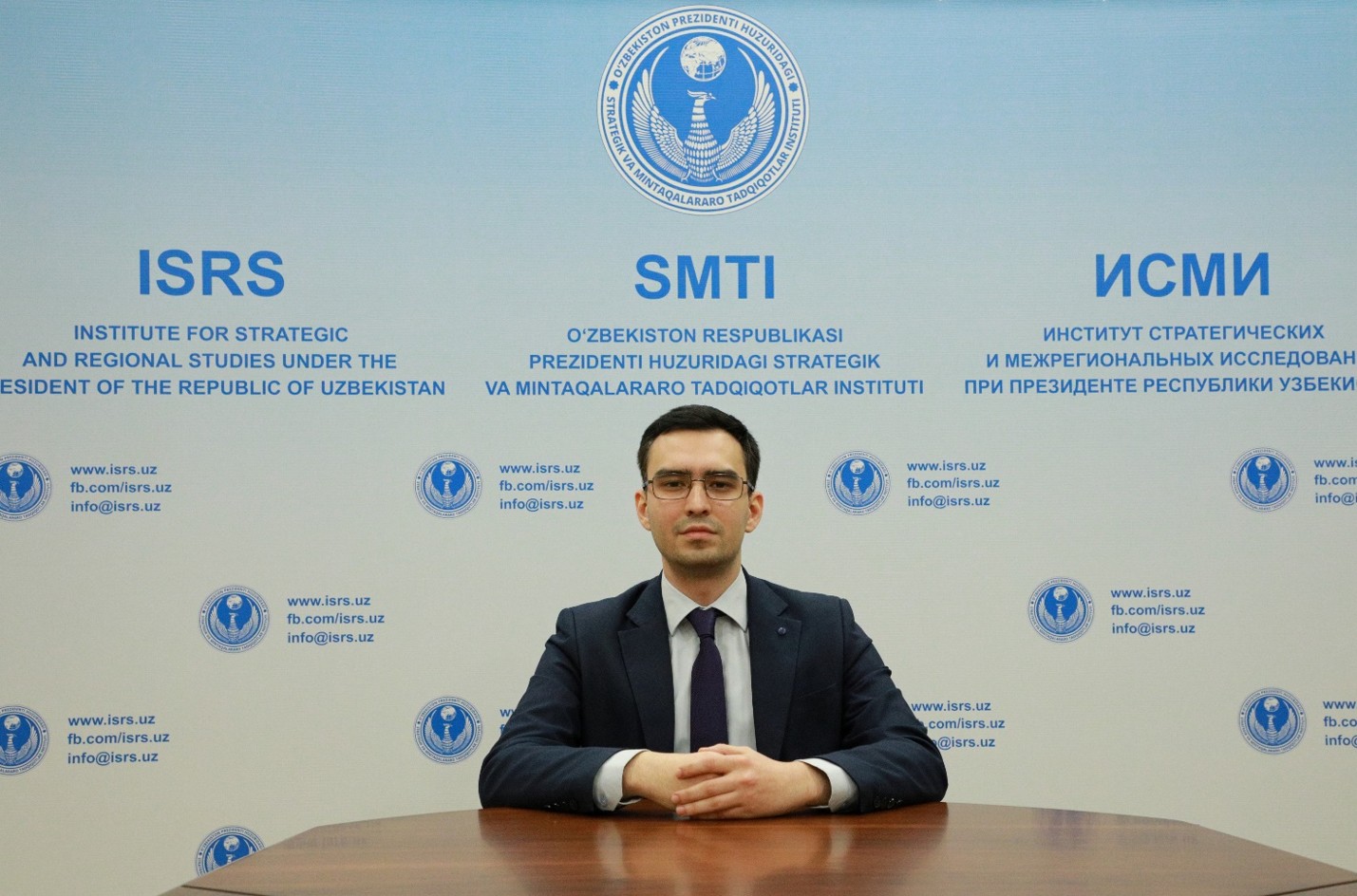
Bekzod Normatov
Leading Research Fellow at the
Institute for Strategic and Regional Studies under the President of the Republic of Uzbekistan
📅 14.10.2026
Uzbekistan news
A New Stage in the Protection of Human Rights
Fair Justice – 2030”: A People-Centred Judicial System, Interregional Judicial Practice and the Era of Digital Justice
A New Stage of Constitutional Development of Uzbekistan: Institutional Guarantees for the Protection of Individual Rights and the Digitalization of Constitutional Justice
The G20 Summit Opens New Opportunities for Uzbekistan in Tourism Cooperation
New Opportunities for Civil Society in Uzbekistan
THE CONSTITUTION OF NEW UZBEKISTAN: FROM STATE INDEPENDENCE TO THE ERA OF HUMAN DIGNITY
THE NEW CONSTITUTION – A LEGAL GUARANTEE OF ECONOMIC FREEDOM AND HUMAN WELL-BEING
The Constitution of Uzbekistan entitles every citizen to exercise their rights
Digital Equality as a Constitutional Priority of New Uzbekistan
The Constitution of New Uzbekistan: Decent Work, Employment, and Poverty Reduction as State Policy Priorities
The Constitutional Right to Social Security in New Uzbekistan: A National Model for Expanded Social Protection
Uzbekistan on the Road to 2030: From Strategies to Results
POLICIES SHAPING THE FUTURE
Mutually beneficial relations with the Gulf States: Developing economic cooperation with Jordan
THE CONSTITUTION AS A STRATEGIC GUIDELINE FOR THE FOREIGN POLICY OF NEW UZBEKISTAN
Samarkand Test for Washington: Has the C5+1 transformed US strategic interest in Central Asia into real investment?
Uzbekistan and Jordan: Giving New Impetus to the Rapprochement between Central Asia and the Middle East
Uzbekistan Simplifies the Process of Launching Tech Business Projects
Uzbekistan’s emerging startup ecosystem: a rising global innovation platform
Uzbekistan and Oman: From Strategic Dialogue to Tangible Results
Uzbekistan and Oman: Capital, Manufacturing and Routes to New Markets
“Unmanned aerial technologies as a data-driven management tool in agriculture”
CULTURE WITHOUT BORDERS: A DIALOGUE BETWEEN TWO NATIONS – UZBEKISTAN AND OMAN
The mutual attraction between the culture and art of Uzbekistan and Jordan
Uzbekistan and Jordan Move Toward a New Stage of Economic Partnership
UZBEKISTAN'S INTERNATIONAL CLIMATE DIPLOMACY AND THE OUTLOOK FOR ITS “GREEN” ECONOMY
“Green” Logistics: The Role of Cooperation Between Uzbekistan and Türkiye in Combating Global Climate Change
Climate Change and Water Resources: Uzbekistan's New Approaches
Uzbekistan–Oman: A New Era and Opportunities for Cooperation
COP31: Uzbekistan to present new climate initiatives and practical solutions to the international community

-
 Ministry of Foreign Affairs of the Republic of Uzbekistan
-
 Diplomatic Service of the Ministry of Foreign Affairs
-
 State Committee for Tourism Development
-
Ministry of Investments and Foreign Trade of the Republic of Uzbekistan
-
 invest.gov.uz
-

-

-

-

-

-

-


of Uzbekistan in the Republic
of Latvia
When using the information, a link to www.uzembassy.lv
must be provided.
All rights reserved
Address
Address: Riga c., LV-1010. 11-11 Elizabetes Str., Latvia
Phone: 37167322424
Fax: 37167322306
Email: embassy@uzbekistan.lv
Useful links
HomeIssuance of biometric passport for departure abroad
Certificate to return to Uzbekistan
Withdrawal of citizenship
Loss of citizenship