Phone
Consular Issues
Phone
Uzbekistan news
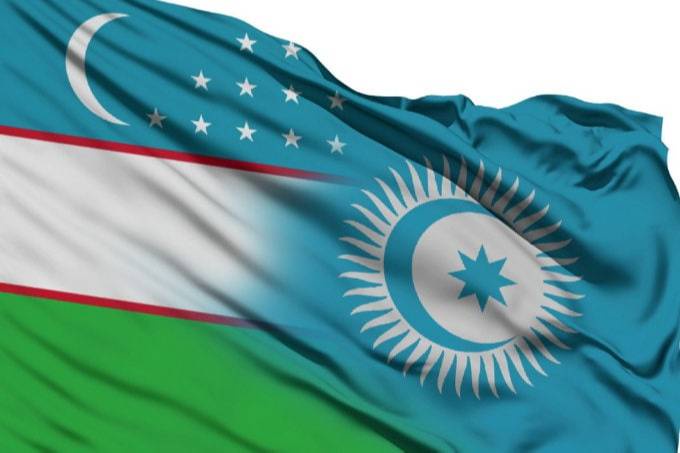
Uzbekistan sees the Organisation of Turkic States as a Platform for new economic opportunities
Uzbekistan views its participation in the Organization of Turkic States (OTS) as an opportunity to give a new industrial dimension to trade relations. The focus is on production chains in which enterprises from different countries participate in the manufacturing of finished products and bring them to international markets. This is one of the key objectives of the “Space of New Economic Opportunities” initiative put forward by President of the Republic of Uzbekistan Shavkat Mirziyoyev.
The OTS brings together Uzbekistan, Azerbaijan, Kazakhstan, Kyrgyzstan and Türkiye. Turkmenistan and Hungary also participate as observer states. This geographical scope connects Central Asia with the South Caucasus, Türkiye and western trade routes. For Uzbekistan, the value of the multilateral format lies in the opportunity to coordinate trade and transport conditions with countries whose decisions influence the development of production links between enterprises.
Uzbekistan’s trade turnover with the other OTS member states, as well as Turkmenistan and Hungary, increased from $4.13 billion in 2017 to $10.82 billion in 2025. In January–July 2026, trade turnover grew by 19.8 percent compared with the same period of the previous year. The presence of partner countries in Uzbekistan’s economy is also expanding. As of early August, 4,871 enterprises with their capital participation were operating in the country.
With trade ties reaching such a scale, the structure of trade is becoming increasingly important. In the first seven months of 2026, Uzbekistan’s exports to these countries amounted to $2.29 billion, while imports reached $4.46 billion. Strengthening export positions requires expanding the production of goods with a higher degree of processing. Industrial cooperation enables Uzbek enterprises to respond to demand in partner markets and expand beyond the OTS region.
This objective has gradually become central to Uzbekistan’s agenda within the OTS. Following Shavkat Mirziyoyev’s participation in the summit of Turkic states in 2018, Uzbekistan became a full member of the then Turkic Council in 2019. In 2022, Uzbekistan hosted the OTS summit in Samarkand and assumed the chairmanship of the Organization. At the summit, the President proposed creating value-added production chains and entering third-country markets with finished products. At the 2024 summit in Bishkek, he put forward an initiative to conclude a strategic partnership agreement that could strengthen the political foundation for long-term projects.
In 2025, Uzbekistan proposed instruments to develop direct business-to-business ties. At the meeting in Budapest, the President called for the creation of the “TURK-TRADE” platform, the development of an industrial cooperation programme, and the establishment of a unified investment portal. These proposals cover successive stages of business cooperation: finding partners, presenting investment opportunities and preparing production projects. Direct contacts were also strengthened at the Trade Forum of the Turkic States in Baku, where Uzbek producers concluded agreements on the supply of finished knitwear and construction materials.
Alongside these proposals, practical decisions have also been adopted. In February 2026, the ministers responsible for economy and trade of the OTS member states signed a memorandum on partnership in trade and approved a roadmap for cooperation in the areas of economy, trade, investment and finance. The Turkic Investment Fund also began its operations that year. The establishment of a Council for Economic Partnership remains subject to further agreement among the participating states.
Bilateral investment ties with partner countries already provide a foundation for developing production facilities. In 2025, investments from Azerbaijan, Kazakhstan, Kyrgyzstan, Türkiye, Turkmenistan and Hungary amounted to $4.29 billion. In 2026, work is underway on 280 projects with a total value of $17.24 billion. Between January and August, $3.84 billion had been actually invested within these projects. The future impact of these investments will depend on the commissioning of new capacities and the resulting production volumes.
One example of bilateral cooperation is located in Kashkadarya Region. There, the first stage of a project by the Azerbaijani company Matanat to produce gypsum products has been completed, while the second stage — the development of gypsum board production capacity — has begun. In this way, partner investment is being channelled into processing and manufacturing activities within Uzbekistan.
The transport sector already offers an example of a result achieved at the level of the Organization as a whole. The E-permit electronic permit system began as a joint project between Uzbekistan and Türkiye and now operates between Uzbekistan and all OTS member states. This experience demonstrates how a solution initially agreed upon by two countries can develop into a common procedure. Further progress in transport connectivity is linked to the coordination of tariffs, digital customs procedures and the operation of logistics hubs. Uzbekistan advocates connecting the Middle Corridor with the China–Kyrgyzstan–Uzbekistan railway currently under construction and the prospective Trans-Afghan route.
Alongside transport connectivity, the digital agenda is also developing. At the 2026 summit in Turkistan, the President of Uzbekistan proposed developing a “Digital Turkic Corridor” that would connect regional data centres through high-speed communication networks. He also invited partners to participate in a venture capital fund being established jointly with Kazakhstan. These initiatives focus on the next potential source of economic growth: technologies, innovation and entrepreneurship capable of operating across multiple markets.
For Uzbekistan, the next stage of cooperation within the OTS will be determined by the quality of economic growth. Trade turnover and investment ties provide scale to industrial cooperation. Its strategic impact will depend on the role Uzbek enterprises play in creating finished products and on how widely the markets for those products can expand. Uzbekistan’s initiatives in industry, investment, transport and technology are aimed precisely at addressing this objective.
📅 23.10.2026
Uzbekistan news
Uzbekistan sees the Organisation of Turkic States as a Platform for new economic opportunities
Economic cooperation – a key direction for the development of Organization of Turkic States
Tashkent to host 22nd International Exhibition “Transport and Logistics - TransLogistica Uzbekistan” on November 10–12th, 2026
CICA Member States Account for More Than 50% of Uzbekistan’s Foreign Trade Turnover
Uzbekistan and the United States: The Economics of Mutual Interest
NEW OPPORTUNITIES IN HIGHER EDUCATION IN THE TURKIC STATES: A COMMON SPACE, SHARED GOALS
Peace and Trust in Asia - essential conditions for sustainable development
CICA amid a Crisis of Trust: Uzbekistan’s Role in Strengthening Cooperation in Asia
Uzbekistan promotes initiatives in Central Asia that unlock new opportunities for cooperation
Strengthening Transport Connectivity in Asia through the Development of the Trans-Caspian International Transport Corridor
Uzbekistan promotes Initiatives in Central Asia unlocking new opportunities for cooperation
Political mutual trust in the Central Asian region is transforming into economic capital
Uzbekistan attracts specialists from 16 countries to the anniversary international exhibition “Mining, Metallurgy and Metalworking – MiningMetals Uzbekistan 2026”
Uzbekistan has moved its economic cooperation with the Turkic states into a practical dimension
Akramjon Nematov: Central Asia is increasingly emerging as an independent centre for shaping its own economic and technological agenda
Central Asia Is Shaping Its Own Model of Regional Cooperation
Initiatives of Uzbekistan aimed at Economic Results for the Countries of Central Asia and Azerbaijan
Regular dialogue is the Foundation for addressing common water-related challenges in Central Asia
Uzbekistan and Turkmenistan: A New Stage in the Development of Their Strategic Partnership
11th Tashkent International Biennale of Contemporary Art to be held in the capital of Uzbekistan on October 12–16th
OTS Member States - A Crucial Link in the Eurasian Space
Uzbekistan plays an active role in Economic Integration within the framework of the Organization of Turkic States
CICA opens new horizons for financial cooperation
Aquatherm Tashkent 2026 to Showcase Latest Technologies for Construction and Utility Infrastructure
Uzbekistan is securing its place in the Global Hub for Technological Outsourcing
Digital Cooperation among the Turkic States Towards a Unified Technological Ecosystem
Uzbekistan and Azerbaijan are creating a Hub for Startups, Investors and Talent
UZBEKISTAN AND THE UN: FROM NATIONAL INITIATIVES TO THE GLOBAL AGENDA
The 5th Samarkand Forum on Human Rights to take place on September 28–29th
Uzbekistan's key trading partners participate in CICA

-
 Ministry of Foreign Affairs of the Republic of Uzbekistan
-
 Diplomatic Service of the Ministry of Foreign Affairs
-
 State Committee for Tourism Development
-
Ministry of Investments and Foreign Trade of the Republic of Uzbekistan
-
 invest.gov.uz
-
-

-
-

-
-

-

of Uzbekistan in the Republic
of Latvia
When using the information, a link to www.uzembassy.lv
must be provided.
All rights reserved
Address
Address: Riga c., LV-1010. 11-11 Elizabetes Str., Latvia
Phone: 37167322424
Fax: 37167322306
Email: embassy@uzbekistan.lv
Useful links
HomeIssuance of biometric passport for departure abroad
Certificate to return to Uzbekistan
Withdrawal of citizenship
Loss of citizenship