Phone
Consular Issues
Phone
Uzbekistan news
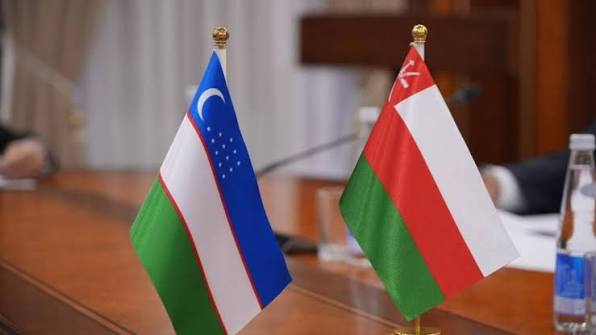
Uzbekistan and Oman: Capital, Manufacturing and Routes to New Markets
For Uzbekistan, partnership with Oman brings together two long-term objectives: attracting capital into the national economy and expanding access for Uzbek products to markets in the Gulf and East Africa. Investment cooperation has already delivered completed projects, while an Omani operator’s acquisition of freight terminals in Tashkent has established a logistical foundation for the next phase. Ahead of President of the Republic of Uzbekistan Shavkat Mirziyoyev’s visit to Muscat, the priority is to connect these opportunities with new manufacturing facilities and regular shipments.
Top-level dialogue has set specific sectoral priorities for this agenda. In March 2026, Shavkat Mirziyoyev and Sultan Haitham bin Tarik Al Said discussed the regional situation and the forthcoming visit to Muscat. In June, while receiving Oman’s Minister of Economy at the Tashkent International Investment Forum, the President of Uzbekistan paid particular attention to projects in transport and logistics, geology, e-commerce and digital infrastructure.
Talks held in Muscat in September by Minister of Investment, Industry and Trade Laziz Kudratov continued this work at the level of government agencies and companies. The parties discussed industrial projects, market access conditions for goods and the use of Omani ports.
Uzbekistan and Oman have an investment mechanism established well before the current expansion of their cooperation agenda. The decision to establish the Uzbek–Oman Investment Company was taken in 2009. Its charter capital now stands at $266 million. Under bilateral cooperation, 12 projects worth a total of $510.8 million have been completed, while a further 16 projects worth $936.3 million are being implemented. The experience gained provides a basis for investing across a wider range of sectors and involving industrial companies from third countries.
In February 2026, the Uzbek–Oman Investment Company and Türkiye’s Hektaş signed an agreement to establish an agrochemical production facility in the Tashkent region, with planned investment of approximately $75 million. Meanwhile, Suhail Bahwan Group is exploring participation in Max Copper, and OQ Group is examining a project to develop battery energy storage systems (BESS). These initiatives are at different stages. Agreement on their commercial and technical parameters will pave the way for increased copper tube production and new capacity in Uzbekistan’s chemical industry.
The industrial agenda is supported by a logistics transaction that has already been completed. In June, Asyad Group, with the participation of Uzbek partners, acquired controlling stakes in Universal Logistics Services and Highway Logistics Center. These Tashkent facilities handle around a quarter of Uzbekistan’s rail container traffic. Their integration into the Omani operator’s network enables practical work on through-freight services connecting to the ports of Sohar, Duqm and Salalah. The establishment of logistics centres in Uzbekistan’s regions is also under consideration to expand export cargo consolidation capacity.
Bilateral trade is already beginning to realise its considerable potential. In January–September 2026, trade turnover rose to 3.4 times the level recorded in the same period of the previous year. Companies are discussing supplies of Uzbek electrical and textile products and dried fruit, as well as Omani food and polymer products. Broadening the product range and moving to contracts for regular deliveries will help sustain this growth and build a cargo base for new routes.
At the same time, the parties are preparing intergovernmental arrangements. The agenda includes a preferential trade agreement, an update to the agreement on investment promotion and protection, the establishment of a business council and the next meeting of the intergovernmental commission. Work on product lists, tariffs, rules of origin and certification is intended to make supply conditions more predictable for companies. Direct Muscat–Tashkent flights, operating since July 2026, are already facilitating business contacts.
Transactions in recent years are changing the scale of cooperation. The investment mechanism, industrial initiatives and the Omani operator’s presence in Uzbekistan’s logistics sector enable the two sides to build an integrated chain from manufacturer to overseas buyer. As new manufacturing facilities and regular freight services come on stream, the partnership will expand the geographical reach of Uzbekistan’s exports and strengthen Oman’s economic ties with Central Asia.
📅 13.11.2026
Uzbekistan news
Uzbekistan and Oman: From Strategic Dialogue to Tangible Results
Uzbekistan and Oman: Capital, Manufacturing and Routes to New Markets
“Unmanned aerial technologies as a data-driven management tool in agriculture”
CULTURE WITHOUT BORDERS: A DIALOGUE BETWEEN TWO NATIONS – UZBEKISTAN AND OMAN
The mutual attraction between the culture and art of Uzbekistan and Jordan
Uzbekistan and Jordan Move Toward a New Stage of Economic Partnership
UZBEKISTAN'S INTERNATIONAL CLIMATE DIPLOMACY AND THE OUTLOOK FOR ITS “GREEN” ECONOMY
“Green” Logistics: The Role of Cooperation Between Uzbekistan and Türkiye in Combating Global Climate Change
Climate Change and Water Resources: Uzbekistan's New Approaches
Uzbekistan–Oman: A New Era and Opportunities for Cooperation
COP31: Uzbekistan to present new climate initiatives and practical solutions to the international community
Uzbekistan’s Participation in COP31: Strengthening Climate Diplomacy
Global Climate Change: Uzbekistan’s Initiatives and the Future of Our National Flora
AI Safety Through International Cooperation
UNESCO Executive Board unanimously approves the Initiative of Uzbekistan to protect Cultural Heritage
Outcomes of meetings and negotiations in Ankara open a new chapter in the Economic Diplomacy of Uzbekistan
Initiatives of Uzbekistan open new opportunities for cooperation among Turkic states
UNESCO Executive Board unanimously approves the initiative of Uzbekistan to protect cultural heritage
Uzbekistan — OTS: A new scale of cooperative ties
Uzbekistan sees the Organisation of Turkic States as a Platform for new economic opportunities
Economic cooperation – a key direction for the development of Organization of Turkic States
Tashkent to host 22nd International Exhibition “Transport and Logistics - TransLogistica Uzbekistan” on November 10–12th, 2026
CICA Member States Account for More Than 50% of Uzbekistan’s Foreign Trade Turnover
Uzbekistan and the United States: The Economics of Mutual Interest
NEW OPPORTUNITIES IN HIGHER EDUCATION IN THE TURKIC STATES: A COMMON SPACE, SHARED GOALS
Peace and Trust in Asia - essential conditions for sustainable development
CICA amid a Crisis of Trust: Uzbekistan’s Role in Strengthening Cooperation in Asia
Uzbekistan promotes initiatives in Central Asia that unlock new opportunities for cooperation
Strengthening Transport Connectivity in Asia through the Development of the Trans-Caspian International Transport Corridor
Uzbekistan promotes Initiatives in Central Asia unlocking new opportunities for cooperation

-
 Ministry of Foreign Affairs of the Republic of Uzbekistan
-
 Diplomatic Service of the Ministry of Foreign Affairs
-
 State Committee for Tourism Development
-
Ministry of Investments and Foreign Trade of the Republic of Uzbekistan
-
 invest.gov.uz
-

-

-

-

-

-

-


of Uzbekistan in the Republic
of Latvia
When using the information, a link to www.uzembassy.lv
must be provided.
All rights reserved
Address
Address: Riga c., LV-1010. 11-11 Elizabetes Str., Latvia
Phone: 37167322424
Fax: 37167322306
Email: embassy@uzbekistan.lv
Useful links
HomeIssuance of biometric passport for departure abroad
Certificate to return to Uzbekistan
Withdrawal of citizenship
Loss of citizenship