Phone
Consular Issues
Phone
Uzbekistan news
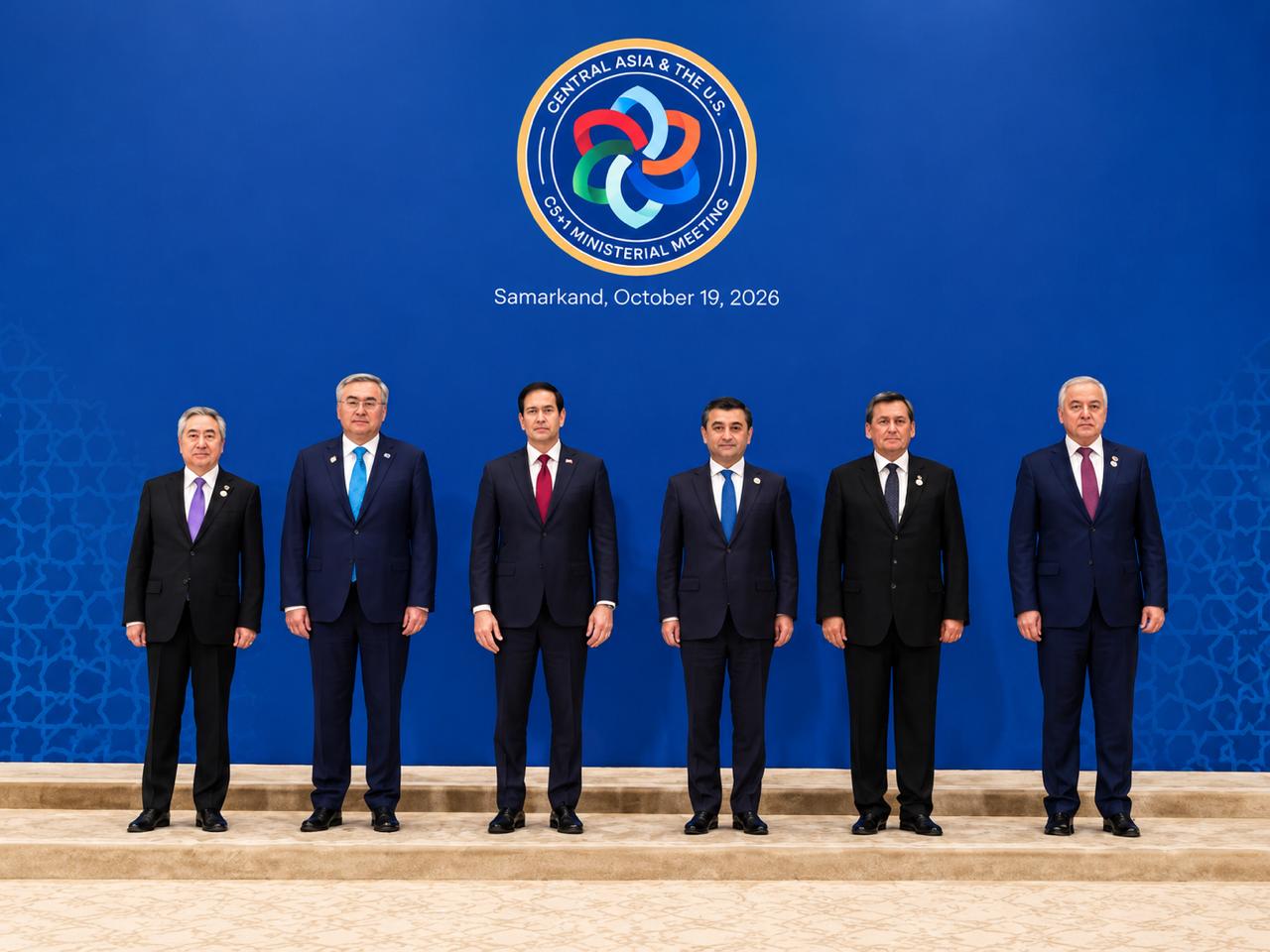
Samarkand Test for Washington: Has the C5+1 transformed US strategic interest in Central Asia into real investment?
October visit of U.S. Secretary of State Marco Rubio to Uzbekistan, accompanied by a delegation of over 100 American companies, is expected to give fresh momentum to U.S. cooperation with the five countries of the region. Yet the key question of the C5+1 meeting is not geopolitical declarations, but whether the sides can reach concrete agreements on financing, infrastructure and market access.
TASHKENT – Central Asia has an opportunity to test how far the United States is prepared to go in deepening economic ties with a region rich in natural resources, strategically positioned along Eurasian transport routes, and seeking to diversify its foreign economic partnerships.
The scale of the delegation lent special significance to the Samarkand meeting, though the sheer number of companies does not in itself translate into committed investments or signed contracts. That is precisely why Samarkand became a test for a new phase of U.S. policy in Central Asia: can Washington move beyond diplomatic presence to sustained commercial engagement in the region's economy?
Why Central Asia matters to Washington
U.S. interest in Central Asia is driven not only by geopolitical considerations but also by tangible economic opportunities.
The region possesses substantial reserves of uranium, copper, and other minerals essential to the energy, electronics, manufacturing, and advanced technology sectors. It is also seeking to expand mineral processing, modernize transport infrastructure, develop renewable energy, and strengthen its digital industries.
For the United States, partnerships with Central Asian countries offer opportunities to diversify supply sources, help American businesses enter new markets, and build more resilient supply chains.
Critical minerals are particularly important. In September 2024, Washington and Tashkent signed a memorandum of understanding on cooperation in this field. The document provides for promoting investment in the mining sector, diversifying global supplies, and adopting environmentally responsible extraction and processing practices.
This demonstrates that preparations for the visit are not starting from scratch. A foundation for closer cooperation already exists, although commercial results must be assessed on a project-by-project basis.
For the Trump administration, this agenda aligns with a broader approach that treats economic agreements, access to resources, and industrial cooperation as instruments of foreign policy.
However, this strategy has its limits. American companies consider not only political ties but also the cost of capital, regulatory stability, infrastructure availability, investment protection, and the prospects of achieving acceptable returns within a reasonable timeframe.
Washington's challenge, therefore, is not simply to strengthen its position in Central Asia, but to develop competitive proposals that make the region attractive to American businesses.
What Samarkand can offer American business
Uzbekistan is well positioned to become a major hub for American economic engagement in Central Asia. It has a sizeable domestic market, is modernizing its industrial base and energy sector, and is developing transport infrastructure while seeking foreign technology and capital.
The significance of the Samarkand meeting, however, extends beyond bilateral U.S.–Uzbekistan relations. The C5+1 framework brings Washington together with all five Central Asian countries, providing a platform for political dialogue, coordination, and joint approaches to shared regional challenges.
Three areas could determine the meeting's practical value.
First, energy and industry. Central Asian countries need investment in electricity generation, grid modernization, energy efficiency, and industrial upgrades. American companies could supply equipment, undertake engineering projects, provide maintenance services, and establish new production facilities. The scope of cooperation will depend on each project's financing structure and commercial viability.
Second, critical minerals. Central Asian countries need to move beyond exporting unprocessed raw materials. Expanding processing capacity, developing engineering expertise, and producing higher-value goods could increase the economic benefits derived from the region's natural resources.
For American partners, this offers an opportunity to diversify supply sources. For regional governments, it could attract capital and technology while improving access to international markets. Achieving these goals will require substantial investment, long-term contracts, environmental safeguards, and predictable operating conditions.
Third, transport and logistics. The Middle Corridor, which links China and Central Asia with Europe via the Caspian Sea and the South Caucasus, has gained importance as international traders seek alternative routes.
Developing this corridor requires more than infrastructure construction. It also involves harmonizing customs procedures and increasing capacity at ports, railways, and border crossings. The United States can help mobilize investment and facilitate commercial partnerships, but the corridor's competitiveness will ultimately depend on regional coordination and transport costs.
The most realistic objective for the Samarkand meeting is therefore to identify specific projects, assign responsibilities, and establish financing mechanisms rather than settle for general declarations of mutual interest.
Five countries, five economic priorities
However, while the C5+1 format presupposes collective engagement, the states of Central Asia have differing economic priorities.
Kazakhstan has a substantial resource base and plays a major role in regional transit. Its priorities include attracting capital, building technological partnerships, and expanding export markets.
Uzbekistan is focused on industrial modernization, energy development, attracting investment, and strengthening regional connectivity. Its sizeable domestic market also offers a platform for projects targeting neighboring countries.
Kyrgyzstan and Tajikistan prioritize energy, infrastructure, sustainable development, and hydropower. Cooperation could help modernize their economies and attract financing for capital-intensive projects.
Turkmenistan, with its substantial natural gas reserves, is interested in energy cooperation and diversifying its external economic relations.
The C5+1 framework gives these countries greater diplomatic leverage by allowing them to address regional issues collectively with one of the world's largest economies. Nevertheless, bilateral negotiations remain essential to protecting national interests.
It is precisely this ability to align regional initiatives with concrete national projects that has become one of the key benchmarks for the effectiveness of the C5+1 format.
Samarkand as a test of a new phase for C5+1
Samarkand meeting carried symbolic weight: the format, established in Samarkand in 2015, returns to Uzbekistan at a time when its agenda is becoming increasingly economically oriented.
Over the past decade, C5+1 has evolved from a diplomatic dialogue into a format that has also hosted presidential-level meetings. Its original focus on security and political coordination has expanded to include investment, critical minerals, transport connectivity, and digital technologies.
The challenge now is to turn this broader agenda into practical results.
For Washington, this means expanding commercial ties with the region, building more diversified supply chains, and creating sustainable opportunities for American businesses. For the five Central Asian states, it means attracting capital and technology without becoming overly reliant on any single external partner.
For Uzbekistan, Samarkand served as a platform to strengthen its role in regional diplomacy while simultaneously advancing its own investment and industrial agenda. Ultimately, however, the final outcome was determined neither by the high-profile nature of the American and other delegations nor by the symbolism of the venue, but by the signed documents, financing terms, launched projects, and the parties' ability to follow through on their commitments.
Thus, Samarkand marked a new phase in relations between the United States and Central Asia.
Farrukh Ermanov
Leading Research Fellow,
Institute for Strategic and Regional Studies
📅 20.11.2026
Uzbekistan news
THE CONSTITUTION AS A STRATEGIC GUIDELINE FOR THE FOREIGN POLICY OF NEW UZBEKISTAN
Samarkand Test for Washington: Has the C5+1 transformed US strategic interest in Central Asia into real investment?
Uzbekistan and Jordan: Giving New Impetus to the Rapprochement between Central Asia and the Middle East
Uzbekistan Simplifies the Process of Launching Tech Business Projects
Uzbekistan’s emerging startup ecosystem: a rising global innovation platform
Uzbekistan and Oman: From Strategic Dialogue to Tangible Results
Uzbekistan and Oman: Capital, Manufacturing and Routes to New Markets
“Unmanned aerial technologies as a data-driven management tool in agriculture”
CULTURE WITHOUT BORDERS: A DIALOGUE BETWEEN TWO NATIONS – UZBEKISTAN AND OMAN
The mutual attraction between the culture and art of Uzbekistan and Jordan
Uzbekistan and Jordan Move Toward a New Stage of Economic Partnership
UZBEKISTAN'S INTERNATIONAL CLIMATE DIPLOMACY AND THE OUTLOOK FOR ITS “GREEN” ECONOMY
“Green” Logistics: The Role of Cooperation Between Uzbekistan and Türkiye in Combating Global Climate Change
Climate Change and Water Resources: Uzbekistan's New Approaches
Uzbekistan–Oman: A New Era and Opportunities for Cooperation
COP31: Uzbekistan to present new climate initiatives and practical solutions to the international community
Uzbekistan’s Participation in COP31: Strengthening Climate Diplomacy
Global Climate Change: Uzbekistan’s Initiatives and the Future of Our National Flora
AI Safety Through International Cooperation
UNESCO Executive Board unanimously approves the Initiative of Uzbekistan to protect Cultural Heritage
Outcomes of meetings and negotiations in Ankara open a new chapter in the Economic Diplomacy of Uzbekistan
Initiatives of Uzbekistan open new opportunities for cooperation among Turkic states
UNESCO Executive Board unanimously approves the initiative of Uzbekistan to protect cultural heritage
Uzbekistan — OTS: A new scale of cooperative ties
Uzbekistan sees the Organisation of Turkic States as a Platform for new economic opportunities
Economic cooperation – a key direction for the development of Organization of Turkic States
Tashkent to host 22nd International Exhibition “Transport and Logistics - TransLogistica Uzbekistan” on November 10–12th, 2026
CICA Member States Account for More Than 50% of Uzbekistan’s Foreign Trade Turnover
Uzbekistan and the United States: The Economics of Mutual Interest
NEW OPPORTUNITIES IN HIGHER EDUCATION IN THE TURKIC STATES: A COMMON SPACE, SHARED GOALS

-
 Ministry of Foreign Affairs of the Republic of Uzbekistan
-
 Diplomatic Service of the Ministry of Foreign Affairs
-
 State Committee for Tourism Development
-
Ministry of Investments and Foreign Trade of the Republic of Uzbekistan
-
 invest.gov.uz
-
-

-

-
-

-

-

of Uzbekistan in the Republic
of Latvia
When using the information, a link to www.uzembassy.lv
must be provided.
All rights reserved
Address
Address: Riga c., LV-1010. 11-11 Elizabetes Str., Latvia
Phone: 37167322424
Fax: 37167322306
Email: embassy@uzbekistan.lv
Useful links
HomeIssuance of biometric passport for departure abroad
Certificate to return to Uzbekistan
Withdrawal of citizenship
Loss of citizenship