Phone
Consular Issues
Phone
Uzbekistan news
Uzbekistan: civil society institutions — a bridge between society and state
Today, civil society institutions, particularly non-governmental non-profit organizations (NGOs), play an active role in Uzbekistan's development and the implementation of the “Uzbekistan – 2030” strategy. It is impossible to build a new Uzbekistan without organizing the activities of NGOs, the most important institution of civil society, according to democratic principles. On this basis, effective work is being done to support NGOs and civil society institutions, strengthen social partnerships with state bodies, implement effective public oversight, and improve the legal framework governing this area.
As a result of the measures implemented, the legal and regulatory framework has been improved to provide legal guarantees for NGOs while also meeting modern democratic requirements and international standards. The laws "On non-governmental non-profit organizations," "On guarantees for the activities of non-governmental non-profit organizations," and "On public oversight," as well as the Presidential Decree "On approval of the civil society development concept for the period 2021-2025" and a number of Governmental decrees, have all been adopted.
The civil society development concept for the period 2021-2025 aims to increase state support for civil society institutions in the form of subsidies, grants, and social orders by 1.8 times, as well as increase the volume of allocated funds to 70 billion soums by 2025.
A number of goals, objectives, and indicators related to the further development of civil society are set out in conceptually significant documents such as the Strategy for Action, the Development Strategy of New Uzbekistan for 2022-2026, and the "Uzbekistan - 2030" Strategy. Upon that basis, it is worth noting that the State programmes adopted annually include provisions for further strengthening the activities of civil society institutions and NGOs.
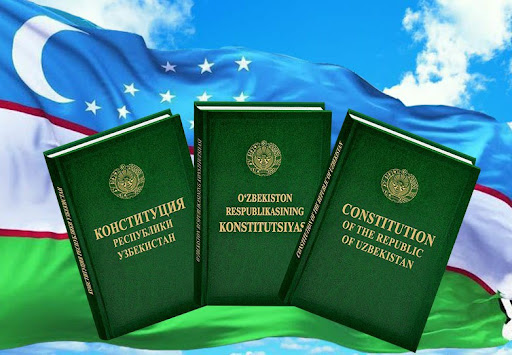
The chapter titled "Civil society institutions" and the term itself were included for the first time in the new version of the Constitution adopted through a referendum in 2023.
It should be mentioned that the President of Uzbekistan prioritizes civil society institutions and NGOs in his publications, speeches, and reports. Shavkat Mirziyoyev's book titled "Strategy of New Uzbekistan" includes a separate paragraph titled "Free and Open Civil Society" and it includes comments on priority areas for civil society development as well as proposals for implementing a number of tasks based on a thorough examination of relevant national legislation, law enforcement practice, and best foreign experience.
According to the figures, there were only 95 NGOs operating in the country on January 1, 1991; by January 1, 2000, there were 2,585, by January 1, 2016, there were 8,417, and by January 1, 2024, there were over 9,000. These NGOs are critical in protecting individuals' and legal entities' rights and legitimate interests, as well as democratic values and the achievement of social, cultural, and educational objectives.
It is also important to note the dynamic growth of support and financial sustainability provided by NGOs. In particular, 513.8 billion soums were allocated from the state budget to support 2,074 NGOs and other civil society institutions between 2017 and 2023. If 12.3 billion soums were allocated in 2017, the figure was 226.4 billion in 2023. It is planned to allocate 1.8 trillion soums in 2024.
Furthermore, the scope of state support for civil society institutions has been broadened, and public funds to support civil society institutions have been established through the local Councils (Kengash) of People's Deputies. The legal basis for allocating funds from the local budget to support civil society institutions in the regions has been strengthened, and social projects are funded through these channels.
It should be acknowledged that favourable conditions are one of the most important factors in the effective operation of non-governmental organizations. In 14 regions of our republic, "Houses of non-governmental non-profit organizations" have been established, housing approximately 500 NGOs and providing them with the necessary office equipment, furniture, items, equipment, and other tools. As a result, the NGOs' problems with the building were resolved, and their socially beneficial activities were resumed. In particular, newly established NGOs carrying out their activities in socially significant spheres were accommodated in these buildings under the right of free use.
To regularly improve the knowledge and skills of NGOs' managers based on the best foreign experience, the Academy of Public Administration under the President of the Republic of Uzbekistan organizes training courses on a special 72-hour training programme. To date, 367 NGO leaders and managers have attended advanced training courses. These advanced training courses are expected to train 134 NGO managers by 2024.
It should be noted that NGOs express proposals and initiatives to improve State programs and legislation in their field, as well as carry out public control measures over the implementation of Regional socioeconomic development programmes and State programmes.
As mentioned above, the 83rd goal of the “Uzbekistan – 2030” strategy prioritizes the expansion of free civil society and media activities, transforming Uzbekistan into a hub for civil society development. It specifically highlights the tasks of increasing the number of projects implemented within the framework of social partnership by at least threefold and increasing the number of NGOs participating in government programs to at least 80.
To summarize, civil society institutions and NGOs are genuine supporters of state bodies and organizations in the process of reforms, sociopolitical and socioeconomic changes, achievement of strategic goals, and serving as a social bridge between society and government.
Anvarjon Mirkomilov,
Head of Department,
Development Strategy Center
📅 01.07.2024
Uzbekistan news
CICA Member States Account for More Than 50% of Uzbekistan’s Foreign Trade Turnover
Uzbekistan and the United States: The Economics of Mutual Interest
NEW OPPORTUNITIES IN HIGHER EDUCATION IN THE TURKIC STATES: A COMMON SPACE, SHARED GOALS
Peace and Trust in Asia - essential conditions for sustainable development
CICA amid a Crisis of Trust: Uzbekistan’s Role in Strengthening Cooperation in Asia
Uzbekistan promotes initiatives in Central Asia that unlock new opportunities for cooperation
Strengthening Transport Connectivity in Asia through the Development of the Trans-Caspian International Transport Corridor
Uzbekistan promotes Initiatives in Central Asia unlocking new opportunities for cooperation
Political mutual trust in the Central Asian region is transforming into economic capital
Uzbekistan attracts specialists from 16 countries to the anniversary international exhibition “Mining, Metallurgy and Metalworking – MiningMetals Uzbekistan 2026”
Uzbekistan has moved its economic cooperation with the Turkic states into a practical dimension
Akramjon Nematov: Central Asia is increasingly emerging as an independent centre for shaping its own economic and technological agenda
Central Asia Is Shaping Its Own Model of Regional Cooperation
Initiatives of Uzbekistan aimed at Economic Results for the Countries of Central Asia and Azerbaijan
Regular dialogue is the Foundation for addressing common water-related challenges in Central Asia
Uzbekistan and Turkmenistan: A New Stage in the Development of Their Strategic Partnership
11th Tashkent International Biennale of Contemporary Art to be held in the capital of Uzbekistan on October 12–16th
OTS Member States - A Crucial Link in the Eurasian Space
Uzbekistan plays an active role in Economic Integration within the framework of the Organization of Turkic States
CICA opens new horizons for financial cooperation
Aquatherm Tashkent 2026 to Showcase Latest Technologies for Construction and Utility Infrastructure
Uzbekistan is securing its place in the Global Hub for Technological Outsourcing
Digital Cooperation among the Turkic States Towards a Unified Technological Ecosystem
Uzbekistan and Azerbaijan are creating a Hub for Startups, Investors and Talent
UZBEKISTAN AND THE UN: FROM NATIONAL INITIATIVES TO THE GLOBAL AGENDA
The 5th Samarkand Forum on Human Rights to take place on September 28–29th
Uzbekistan's key trading partners participate in CICA
Speech by President Shavkat Mirziyoyev at the solemn ceremony dedicated to the thirty-fifth anniversary of the independence of the Republic of Uzbekistan
Uzbekistan Firmly Establishes Itself as a Stable and Predictable Partner for Long-Term International Business
Changing economic priorities of Uzbekistan reshape its engagement with the CIS

-
 Ministry of Foreign Affairs of the Republic of Uzbekistan
 -
 Diplomatic Service of the Ministry of Foreign Affairs
 -
 State Committee for Tourism Development
 -
Ministry of Investments and Foreign Trade of the Republic of Uzbekistan
-
 invest.gov.uz
 -
-

-

-
-
-

-

of Uzbekistan in the Republic
of Latvia
When using the information, a link to www.uzembassy.lv
must be provided.
All rights reserved
Address
Address: Riga c., LV-1010. 11-11 Elizabetes Str., Latvia
Phone: 37167322424
Fax: 37167322306
Email: embassy@uzbekistan.lv
Useful links
HomeIssuance of biometric passport for departure abroad
Certificate to return to Uzbekistan
Withdrawal of citizenship
Loss of citizenship