Phone
Consular Issues
Phone
Embassy messages
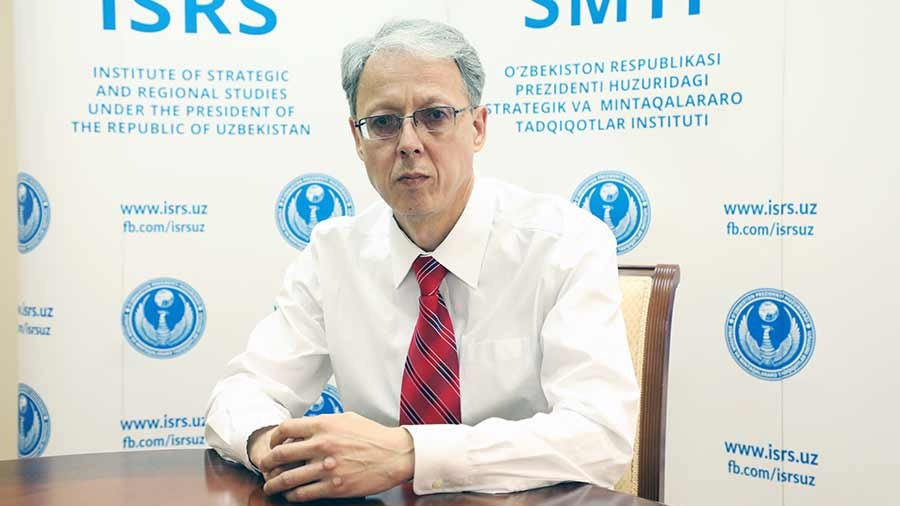
Uzbekistan and Finland: Similar Approaches to Building Good-Neighborly Regional Relations
In an era characterized by growing disunity among global powers, the strategies employed by so-called “middle” states in forging stable regional relations present promising solutions for achieving international peace and cooperation. Uzbekistan, a Central Asian nation situated at the heart of the historic Silk Road, and Finland, a Nordic state with a unique experience as a neutral border state during the Cold War, exemplify how a consistent commitment to dialogue can contribute to regional stability amidst the complexities of global relations.
Geographically separated, these countries have developed strikingly similar approaches to ensuring sustainable development, peace, and stability in their regions. They address key regional security challenges by strengthening multifaceted and mutually beneficial good-neighborly relations with their neighbors. Additionally, they engage in multilateral, long-term partnerships with interested countries and organizations.
While Uzbekistan and Finland have been shaped by different historical contexts, these experiences have contributed to the development of a shared diplomatic philosophy centered around stability, cooperation, sovereign equality, mutual respect, and multilateral interaction.
Central Asia, a region steeped in ancient history, has long been a cultural and historical hub. Centuries ago, it was a unified space where politics, economics, and culture intertwined seamlessly. As one of the cradles of human civilization, Central Asia boasts a rich tapestry of history and a vibrant cultural heritage that has shaped universal values. These values emphasize cooperation over confrontation, tolerance over imposition, and the belief that the well-being of neighbors is intrinsically linked to one’s own.
Since gaining independence in 1991, Uzbekistan has consistently championed a policy of regional interaction. This policy, which gained prominence under President Shavkat Mirziyoyev in 2016, became a cornerstone of Uzbekistan’s foreign policy. Tashkent’s “diplomatic offensive” to enhance intra-regional cooperation became one of the most significant policy changes that transformed relations in modern Central Asia.
Tashkent’s unprecedented focus on dialogue and building trust with neighboring states has transformed Uzbekistan into the primary organizer of cooperation in the region. It has advocated for the development of multilateral interaction mechanisms, spanning various domains such as water resource management, transport corridor expansion, industrial cooperation, border demarcation, and regional security.
The positive impact of these policy changes has reverberated throughout the entire region. After 2016, economic cooperation witnessed a remarkable surge, leading to a nearly doubling of the total GDP of Central Asian states from $273 billion to $520 billion. Trust and strengthened ties between countries have facilitated a 4.5-fold increase in intra-regional trade, soaring from $2.4 billion to $11 billion. Moreover, the number of tourists visiting the region has doubled, further boosting its appeal.
The collective openness and enhanced stability have become attractive factors for third countries, resulting in a significant increase in the region’s foreign trade. This growth has seen a remarkable rise of over 200 percent, from $112 billion to $253 billion.
Finland’s diplomatic traditions were shaped by its unique position at the crossroads of Eastern and Western “spheres of influence.” Its vulnerable geographical location drove its pursuit of interaction and stability.
Finland consistently advocates for strengthening friendly relations with all countries, particularly its neighbors, and fostering ties within Nordic cooperation structures like the Nordic Council, the Council of Ministers of the Nordic Countries, and the Nordic Investment Bank.
This approach is reflected in Finland’s active involvement in the OSCE with aims to enhance dialogue and trust.
Finland’s 2025 OSCE chairmanship, coinciding with the 50th anniversary of the Helsinki Final Act, holds symbolic significance. It exemplifies Finland’s commitment to building bridges, fostering dialogue, and cultivating trust, aligning with its dialogue-based foreign policy. Finnish diplomacy consistently emphasizes the importance of strengthening common positions and approaches among states, reflecting Finland’s consensus-oriented diplomatic style, which Uzbekistan shares as well.
It’s worth noting that both countries adhere to the same fundamental principles of international law. Respect for national sovereignty, non-interference in internal affairs, and the inviolability of borders serve as practical guidelines shaping Uzbekistan and Finland’s foreign policy, regional behavior, and international positioning.
Tashkent’s approaches to regional interaction resonate with Helsinki’s priorities for cooperation with the Nordic and Baltic countries. Uzbekistan’s efforts in resolving border disputes and collaborating on water resources in the region mirror Finland’s approach to peacebuilding and fostering cooperation.
Furthermore, both countries have established themselves as advocates of results-oriented cooperation. They are pragmatic architects of projects that create mutual benefits and strengthen regional stability and interregional connectivity.
Under the leadership of President Sh. Mirziyoyev, Uzbekistan is actively promoting the development of transport infrastructure within Central Asia and with neighboring regions, including the West, East, and South. For instance, the development of the “Middle Corridor” (Trans-Caspian International Transport Route) has led to a remarkable six-fold increase in cargo shipments along it over four years, from 2020 to 2024, reaching a substantial volume of 4.5 million tons. Tashkent is also actively involved in the construction of the China-Kyrgyzstan-Uzbekistan railway and is promoting connectivity between Central and South Asia.
Economic cooperation and environmental protection are additional pillars of Uzbekistan’s regional strategy. These aspects play a crucial role in Uzbekistan’s environmental programs, particularly in mitigating the consequences of the Aral Sea disaster.
Finland, following a similar pattern of project-oriented cooperation, has been an active participant in initiatives of the Nordic Council and the Barents Euro-Arctic Council. These initiatives encompass cross-border cooperation in environmental protection, innovation, and people-to-people contacts. Finland also promotes initiatives of the Trans-European Transport Network and Arctic connectivity.
Known for its leadership in environmental protection, Finland actively participates in cross-border economic projects with partners from the Nordic and Baltic countries.
Alongside their close cooperation with countries in their respective regions, Uzbekistan and Finland pursue a policy of strategic multilateralism. Both countries actively participate in various regional and global institutions, reflecting their shared views that modern challenges require collective responses. They believe that “middle powers” can exert effective influence through institutional engagement.
Since 2016, Uzbekistan has significantly increased its involvement in regional organizations, primarily the Shanghai Cooperation Organization (SCO), the Organization of Turkic States (OTS), and various United Nations bodies.
Additionally, the “Central Asia +” (C5+1) platform, now comprising over 10 partner countries and organizations, actively promotes interregional cooperation. Notably, the inaugural “Central Asia – European Union” summit held in April 2025 resulted in an agreement on “deep and comprehensive cooperation” between the two regions.
Finland’s international engagement, while having a longer history, also follows a similar pattern of active institutional participation. As a member of the European Union since 1995 and multiple international organizations, Finland maintains its traditional interactions with regional structures in Northern and Baltic Europe.
As the international landscape becomes increasingly intricate, Uzbekistan and Finland encounter similar challenges that test their historically established unique diplomatic approaches.
Uzbekistan faces the primary challenge of sustaining the momentum for deepening regional partnership and intensifying cooperation with external actors amidst escalating geopolitical tensions, environmental threats, and economic shocks.
From Uzbekistan’s perspective, responding to the changing geopolitical landscape and the economic transformation needs of Central Asia requires strengthened cooperation, both among Central Asian countries and between regions.
Finland’s challenge lies in finding a balance between its commitments within the EU and NATO and its traditional role as a mediator in building consensus and dialogue, particularly in organizations like the OSCE, where it continues to promote “strengthening dialogue and trust.”
Overall, Uzbekistan and Finland exemplify successful regional cooperation based on a consistent commitment to dialogue and interaction. Despite their distinct geographical and historical contexts, both countries have adopted similar foreign policy approaches focused on conflict prevention, institutional engagement, and pragmatic regionalism.
In an interconnected world characterized by great power rivalry, the diplomatic approaches of Uzbekistan and Finland serve as a reminder that sustainable security and prosperity are achieved through dialogue, cooperation, and practical collaboration, rather than diktat, isolation, or empty rhetoric.
And unsurprisingly, these foreign policy approaches positively impact the lives of their citizens. It’s not a coincidence that Finland consistently ranks as the “happiest country in the world” for the eighth consecutive year in the World Happiness Report. Similarly, Uzbekistan leads in the level of happiness among Central Asian countries in the same ranking.
Sharif Akhmedov,
Chief Researcher at the Institute for Strategic and Regional Studies under the President of the Republic of Uzbekistan
📅 06.11.2025
Embassy messages
The Ministry of Foreign Affairs of the Republic of Uzbekistan has launched the “Consular Services” mobile application
Consular Services Reception Procedure at the Embassy of Uzbekistan in Latvia
Узбекистан и страны Балтии объединяют усилия в борьбе с коррупцией
Uzbek specialists study Latvia’s best practices in veterinary and livestock sectors
Uzbekistan and Finland discussed prospects for cooperation in the field of entrepreneurship support
A holiday of unity: Navruz celebration connects nations in Riga
Trade union delegation of Uzbekistan discusses in Latvia issues of protecting the rights of compatriots – labor migrants
Ambassador of Uzbekistan presented his credentials to the President of Lithuania
Uzbekistan and Finland are preparing for the next meeting of the intergovernmental commission and a business forum within its framework
Discussions on potential areas of cooperation with the Association of European Chambers of Commerce and Industry were held in Riga
Uzbekistan and Latvia agreed to prepare a bilateral agreement on cooperation in the field of labor migration
Uzbekistan and Latvia ready for permanent dialogue in the field of labor migration
Торговый дом Узбекистана в Латвии провел онлайн-тренинг для хокимов и экспортеров Сырдарьинской области
Uzbek delegation studied Finland's experience in preventing violence against children
A festive evening for compatriots was organized in Estonia
Latvia widely celebrated the anniversary of the adoption of the Basic Law of Uzbekistan
Возможности медицинского туризма в Узбекистане презентованы в Риге
New contracts worth over $4 million signed as part of Uzbek exporters' business mission to Latvia
A roundtable discussion on the topic "Mirzo Ulugbek: a great encyclopedist and a famous statesman" was held in Riga
СМИ Латвии: Явка на выборах в Узбекистане составила 74,72%
Досрочное голосование по выборам в Законодательную палату Олий Мажлиса Узбекистана проходит в Латвии
В Латвии и Литве обсуждаются ключевые аспекты предстоящих парламентских выборов в Узбекистане
Issues related to the development of cooperation between Uzbekistan and Latvia in the field of combating crime discussed in Riga
A round table was held in Latvia on the upcoming elections in Uzbekistan to the Legislative Chamber of the Oliy Majlis and Kengashes of People's Deputies
Uzbek exporters familiarized with requirements for import of Uzbek products to Latvian and European markets
Export of agricultural products from Uzbekistan to the Latvian market increases
ЭЪЛОН!
Uzbek ambassador meets Latvian Saeima speaker to discuss prospects for boosting inter-parliamentary cooperation
Diplomats of Uzbekistan held a visiting reception of fellow citizens living in Estonia and Finland
Ambassador of Uzbekistan presents credentials to President of Latvia

-
 Ministry of Foreign Affairs of the Republic of Uzbekistan
 -
 Diplomatic Service of the Ministry of Foreign Affairs
 -
 State Committee for Tourism Development
 -
Ministry of Investments and Foreign Trade of the Republic of Uzbekistan
-
 invest.gov.uz
 -
-

-

-

-

-

-

of Uzbekistan in the Republic
of Latvia
When using the information, a link to www.uzembassy.lv
must be provided.
All rights reserved
Address
Address: Riga c., LV-1010. 11-11 Elizabetes Str., Latvia
Phone: 37167322424
Fax: 37167322306
Email: embassy@uzbekistan.lv
Useful links
HomeIssuance of biometric passport for departure abroad
Certificate to return to Uzbekistan
Withdrawal of citizenship
Loss of citizenship