Phone
Consular Issues
Phone
Embassy messages
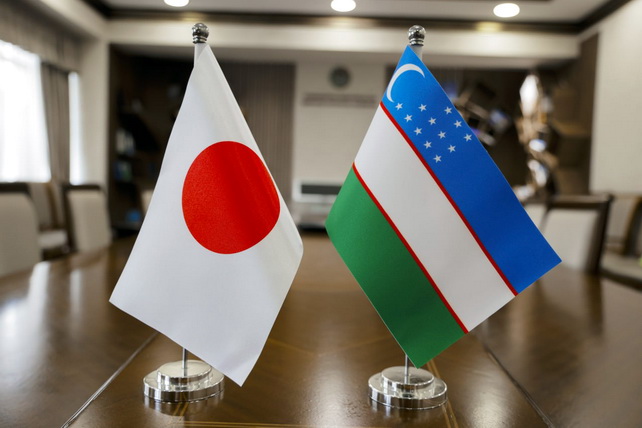
Partnership for Future Generations
Despite the 6,000-kilometer distance between Tashkent and Tokyo, the official visit of President of Uzbekistan Shavkat Mirziyoyev to Japan on December 18-20 elevated Uzbek-Japanese relations to a qualitatively new level of expanded strategic partnership for future generations.
Uzbekistan’s relations with Japan have deep historical roots. For centuries, Samarkand served as one of the key centers of the Great Silk Road, while Nara, the ancient capital of Japan, was its eastern gateway. Trade and the exchange of knowledge along the Great Silk Road, including between Uzbekistan and Japan, played a significant role in the development of international commerce and cultural interaction, forming lasting cultural bridges between civilizations. Today, Samarkand and Nara are twin cities.
Since Uzbekistan gained independence, reliable and stable relations of mutually beneficial cooperation have developed between Uzbekistan and Japan. Since the establishment of diplomatic relations, Japan has been one of Uzbekistan’s key technological and investment partners.
Economic cooperation dynamics
The most dynamic growth in economic cooperation has taken place in recent years, following the launch of comprehensive economic reforms in Uzbekistan. The Japan External Trade Organization (JETRO), the Japan International Cooperation Agency (JICA), and the Japan Bank for International Cooperation (JBIC) play an important role in advancing Uzbek-Japanese economic cooperation.
Cooperation with JICA has, in recent years, reached the level of strategic partnership. The value of the project portfolio has exceeded $8 billion, and additional initiatives worth more than $3 billion are under consideration in areas such as healthcare, energy, transport, education, industry, and other sectors. During the visit, new agreements were signed with JICA concerning the development of economic zones, agriculture, supply of medical equipment, and support for entrepreneurship, as well as the launch of a special economic zone for Japanese investors, to be developed in line with Japanese models and standards.
Cooperation with JBIC is also developing dynamically. Today, the total project portfolio with the bank exceeds $5 billion in sectors such as petrochemicals, energy, telecommunications, infrastructure, and light industry. During the visit, discussions focused on preparing new projects and improving the effectiveness of existing initiatives worth over $10 billion.
Trade relations are also growing dynamically. Between 2017 and 2024, Uzbekistan’s trade turnover with Japan more than doubled, increasing from $166.2 million to $388.5 million. In 2024, growth accelerated, rising by 64.1% compared with 2023, from $236.8 million to $388.6 million. More than 90% of imports from Japan consist of machinery and equipment, while Uzbekistan’s exports to Japan are dominated by services and chemical fertilizers, as well as fruit and vegetable products, textiles, radioactive elements, and jet fuel.
Investment cooperation is expanding as well. Over the past eight years, the number of Japanese enterprises operating in Uzbekistan has increased tenfold, while the combined project portfolio has exceeded $20 billion. Leading Japanese companies such as Sojitz, Toyota Tsusho, Sumitomo, Itochu, Kyoto Plaza, Balcom, and Shikoku Electric are actively operating in Uzbekistan, implementing major projects in energy, geology, tourism, infrastructure development, IT, and other sectors.
For example, Sojitz Corporation is implementing projects including the construction of a combined-cycle power plant in Syrdarya region, a multidisciplinary hospital, a new international airport in Tashkent, and a wind power plant. During the visit, support was expressed for the company’s plans to modernize medical clinics and educational facilities, create a transboundary “green” energy corridor, upgrade gas compressor stations, and participate in establishing a special economic zone for Japanese investors.
Sumitomo Corporation is constructing two solar power plants and energy storage systems in Samarkand region, with a similar wind-power-based project also planned in the Republic of Karakalpakstan. During the visit, the President of Uzbekistan proposed adopting a Cooperation Program with the corporation through 2030.
Uzbekistan has longstanding cooperation with ITOCHU Corporation in mechanical engineering, geology, and infrastructure. Long-term agreements have been reached on the export of critical minerals to Japan. During the visit, new areas of cooperation were discussed, including water purification, automotive manufacturing, modernization of air traffic control systems, as well as implementation of public-private partnership projects in the social sphere.
JOGMEC, together with ITOCHU Corporation, is developing uranium deposits in Navoi and Kashkadarya regions. During the visit, plans by these companies to develop precious-metal deposits at promising sites in Uzbekistan were also reviewed and approved.
Negotiations and outcomes of the visit
During the negotiations, the sides discussed further deepening of the strategic partnership between Uzbekistan and Japan, covering all areas of interstate cooperation. The importance of strengthening existing cooperation formats, including parliamentary friendship groups, economic cooperation committees, and sectoral mechanisms in priority areas, was emphasized.
During the talks between President Shavkat Mirziyoyev and Prime Minister Sanae Takaichi, a number of priority areas for advancing strategic partnership were identified, including green energy and industrial decarbonization, information technology, critical minerals, cooperation in mechanical engineering, modernization of healthcare, and tourism infrastructure.
To implement more than $12 billion worth of new cooperation projects prepared for the visit, the President of Uzbekistan proposed establishing a joint investment platform. Plans were also announced to create a special economic zone in Samarkand region based on Japanese standards and practices, as well as to scale up the “One Village – One Product” program implemented jointly with Japanese partners. It was proposed to hold the first Uzbekistan-Japan Regional Forum in Samarkand next year.
At the meeting between the President of Uzbekistan and Japan’s Minister of Economy, Trade and Industry Ryosei Akazawa, an agreement was reached to develop an action plan to further strengthen business cooperation with the active involvement of JETRO and the Japan Association for Trade with Russia and NIS (ROTOBO).
A key element of the visit was the President’s meeting with leading representatives of Japanese business. The President emphasized that in recent years cooperation between Uzbekistan and Japan has acquired a qualitatively new character. Whereas Japanese companies previously mainly participated as contractors, today they are actively investing in Uzbekistan’s economy, establishing joint ventures, participating in management, transferring technologies, and contributing to human capital development. “As a result of these qualitative shifts, Japan has become one of Uzbekistan’s key economic and technological partners,” the President stressed.
Based on these assessments, priority areas for further cooperation with Japanese business were outlined. These include ensuring energy resilience and advancing the green transition, development of renewable energy sources and storage systems, and reducing the carbon intensity of Uzbekistan’s economy. Particular emphasis was placed on deep processing of critical minerals and establishing full value chains.
Promising areas also include the development of mechanical engineering and industrial equipment to build a modern high-tech industrial economy. Special focus was placed on advancing information technologies, including the implementation of artificial intelligence and digitalization programs.
Another important direction is the creation of modern special economic zones designed to become centers for high-tech, export-oriented industries and platforms for industrial cooperation through automation and digital control systems.
Concluding his speech to the business community, President Mirziyoyev emphasized that Uzbekistan regards Japan not only as an investor, but as a strategic partner in building the industry of the future.
The main outcome of the visit was the signing by President Shavkat Mirziyoyev and Prime Minister Sanae Takaichi of the Joint Statement on Expanded Strategic Partnership for Future Generations, which elevates Uzbek-Japanese relations to a fundamentally new level. A wide package of agreements was also adopted in education, healthcare, environmental protection, water management, transport, urban development, tourism, agriculture, and disaster-risk reduction.
Expanding cooperation potential
Against the backdrop of Uzbekistan’s ongoing technological transformation and innovative development, there is substantial potential to further expand economic cooperation with Japan in trade, investment, and scientific-technical exchange. The agreements reached during the visit form a solid foundation for advancing cooperation to a qualitatively new level.
According to the Center for Economic Research and Reforms, Uzbekistan has significant untapped export potential with respect to Japan. Promising export categories include copper and copper products, textile and apparel goods including home textiles, aluminum and aluminum products, fruits and nuts, as well as electrical equipment and devices.
Japan’s experience in developing innovation clusters may serve as a valuable model for Uzbekistan. In this context, promising areas include the creation of joint venture funds and startup accelerators, support for technology transfer, and commercialization of scientific developments.
Japan’s experience in smart agriculture and agricultural education is also highly relevant for Uzbekistan. Cooperation in this area offers opportunities to modernize agriculture, increase water efficiency, boost productivity, and implement sustainable farming practices.
Thus, the President’s visit to Japan has already become an important driver in deepening and expanding economic cooperation between our two countries, contributing to fuller realization of partnership potential, modernization of Uzbekistan’s economy, and strengthening the presence of Japanese business in Uzbekistan. The strengthened strategic partnership will improve quality of life and broaden opportunities for future generations.
Nozimjon Ortikov,
Center for Economic Research and Reforms📅 22.12.2025
Embassy messages
The Ministry of Foreign Affairs of the Republic of Uzbekistan has launched the “Consular Services” mobile application
Consular Services Reception Procedure at the Embassy of Uzbekistan in Latvia
Узбекистан и страны Балтии объединяют усилия в борьбе с коррупцией
Uzbek specialists study Latvia’s best practices in veterinary and livestock sectors
Uzbekistan and Finland discussed prospects for cooperation in the field of entrepreneurship support
A holiday of unity: Navruz celebration connects nations in Riga
Trade union delegation of Uzbekistan discusses in Latvia issues of protecting the rights of compatriots – labor migrants
Ambassador of Uzbekistan presented his credentials to the President of Lithuania
Uzbekistan and Finland are preparing for the next meeting of the intergovernmental commission and a business forum within its framework
Discussions on potential areas of cooperation with the Association of European Chambers of Commerce and Industry were held in Riga
Uzbekistan and Latvia agreed to prepare a bilateral agreement on cooperation in the field of labor migration
Uzbekistan and Latvia ready for permanent dialogue in the field of labor migration
Торговый дом Узбекистана в Латвии провел онлайн-тренинг для хокимов и экспортеров Сырдарьинской области
Uzbek delegation studied Finland's experience in preventing violence against children
A festive evening for compatriots was organized in Estonia
Latvia widely celebrated the anniversary of the adoption of the Basic Law of Uzbekistan
Возможности медицинского туризма в Узбекистане презентованы в Риге
New contracts worth over $4 million signed as part of Uzbek exporters' business mission to Latvia
A roundtable discussion on the topic "Mirzo Ulugbek: a great encyclopedist and a famous statesman" was held in Riga
СМИ Латвии: Явка на выборах в Узбекистане составила 74,72%
Досрочное голосование по выборам в Законодательную палату Олий Мажлиса Узбекистана проходит в Латвии
В Латвии и Литве обсуждаются ключевые аспекты предстоящих парламентских выборов в Узбекистане
Issues related to the development of cooperation between Uzbekistan and Latvia in the field of combating crime discussed in Riga
A round table was held in Latvia on the upcoming elections in Uzbekistan to the Legislative Chamber of the Oliy Majlis and Kengashes of People's Deputies
Uzbek exporters familiarized with requirements for import of Uzbek products to Latvian and European markets
Export of agricultural products from Uzbekistan to the Latvian market increases
ЭЪЛОН!
Uzbek ambassador meets Latvian Saeima speaker to discuss prospects for boosting inter-parliamentary cooperation
Diplomats of Uzbekistan held a visiting reception of fellow citizens living in Estonia and Finland
Ambassador of Uzbekistan presents credentials to President of Latvia

-
 Ministry of Foreign Affairs of the Republic of Uzbekistan
 -
 Diplomatic Service of the Ministry of Foreign Affairs
 -
 State Committee for Tourism Development
 -
Ministry of Investments and Foreign Trade of the Republic of Uzbekistan
-
 invest.gov.uz
 -
-

-

-

-

-

-

of Uzbekistan in the Republic
of Latvia
When using the information, a link to www.uzembassy.lv
must be provided.
All rights reserved
Address
Address: Riga c., LV-1010. 11-11 Elizabetes Str., Latvia
Phone: 37167322424
Fax: 37167322306
Email: embassy@uzbekistan.lv
Useful links
HomeIssuance of biometric passport for departure abroad
Certificate to return to Uzbekistan
Withdrawal of citizenship
Loss of citizenship