Phone
Consular Issues
Phone
Embassy messages
Influence of Amir Temur on Western Culture
The beginning of the 15th century presented profound lessons, primarily for Europe and, moreover, for the entire world. These were the fruits of the activities of Amir Temur (Tamerlane), who was raised in the spirit of the traditions of Turanian statehood, drew inspiration from the life-giving ideas of Islam and elevated social thought to a new level by analyzing his life through the scales of genius.
With the brilliant personality of Amir Temur, the period known globally as the Middle Ages - an evolutionary era that brought numerous innovations to human civilization - came to an end and a new era based on industrial and intellectual revolutions began. Amir Temur’s lessons also had a positive impact on the development of the old continent, Europe. We can clearly observe this through specific parameters.
First of all, the luminous personality of Amir Temur redefined concepts such as ruler, king, and emperor for Europe. In an environment where absolute monarchy and other systems prevailed, the right to rule was passed down from generation to generation based on inheritance. The question of who would hold the reins of the state remained a matter of fate (cases of mentally challenged or disabled individuals ascending the throne occurred in European history).
Furthermore, there were periods when the internal structures of power lacked integrity: the administration functioned on its own, the military sphere acted according to the demands of the situation and the economy developed based on natural potential. Although such circumstances created a practical need for a single, strong hand to unify authority, there were no established legal or social foundations to legitimize such centralized power.
This kind of fragmentation and, moreover, chaos led to various conflicts. From this perspective, “palace games” and “palace intrigues” were commonplace and caused significant headaches. Through Amir Temur’s activities, however, it was proven in practice that one person could manage all tasks (and that a head of state could simultaneously be a military commander, a reformer in economic and spiritual spheres, a patron of science and even a creator). Consequently, concept of a state leader and guide acquired a broader meaning and essence.
Through his activities, the Sahibkiran (Sovereign) elevated Eurasian cooperation to a new level. Although conquerors from Asia such as Attila, Balamber, Genghis Khan, Batu and others captured significant parts of Europe during various historical shifts, leaving a certain mark on its history and managing to impose their policies, the traces left by their nature as steppe nomads -characterized by cruelty, intransigence and severity - came to be remembered in the life of these regions through ruins and atrocities.
Amir Temur’s policy based on compromise, safety and peace he granted to peoples who voluntarily came under his rule without resistance, as well as his creative activities (there is ample evidence of him restoring neglected graves, constructing buildings and digging canals to establish agriculture wherever he went), fundamentally changed the witnesses' perception of the Eastern ruler. Gradually, stereotypes such as “barbarians” and “savages” began to break down. Overall, views towards the East, Asia and specifically the Islamic religion shifted for the better and interest grew.
In Europe, the influence of the church was powerful and often played a brutal role. Campaigns known as the Crusades claimed countless lives. Conflicts arising from tensions between Catholics and Protestants, as well as the Inquisition - which burned enlightened thinkers like Giordano Bruno at the stake and movements like the Jesuits, were opposed to any freedom-seeking endeavor. In Amir Temur’s state, the separation of religion from the state and the clear definition of religion's role and functions within the empire represented a significant progress. This situation laid the foundation for the introduction of progressive ideas into the governance of European states.
In this regard, specific criteria began to be established and were refined over the years. Whereas previously science and education were under the control of the church, the state now began to involve itself in these sectors. Consequently, secular directions were strengthened in educational institutions, which led to the advancement of science.
The personality and name of the Sahibkiran (Sovereign) became famous throughout the world. As the “Saviour of Europe”, a golden statue of him adorned the halls of the Louvre in Paris. English playwright Christopher Marlowe initiated the process of creating the image of Amir Temur in world literature by writing the tragedy ‘Tamburlaine the Great’ (1587). In 1681, another English writer, Charles Saunders, wrote and staged the tragedy “Tamerlane”.
Those who viewed Amir Temur with an impartial eye recognized and valued him as a statesman and military leader who influenced and initiated the European Renaissance and as the one who saved Europe and Russia.
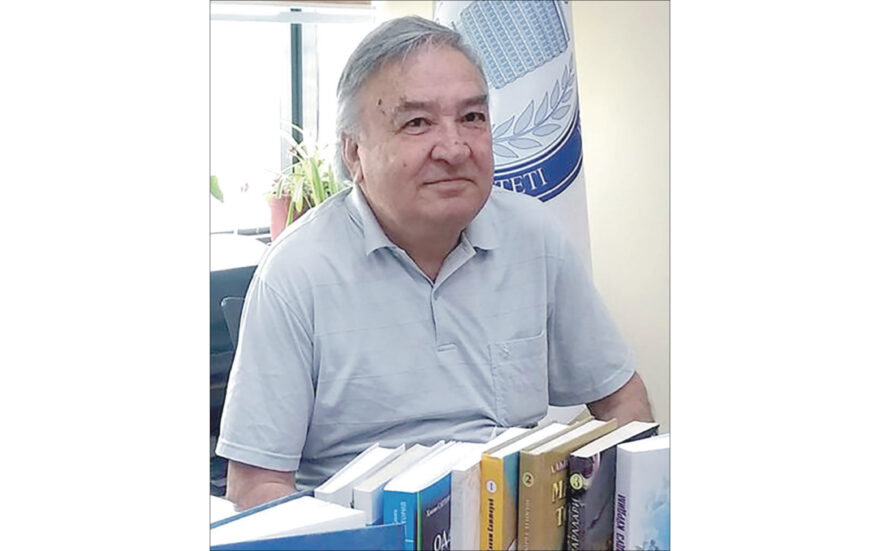
Hakim SATTORIY,
Writer📅 18.03.2026
Embassy messages
The Ministry of Foreign Affairs of the Republic of Uzbekistan has launched the “Consular Services” mobile application
Consular Services Reception Procedure at the Embassy of Uzbekistan in Latvia
Узбекистан и страны Балтии объединяют усилия в борьбе с коррупцией
Uzbek specialists study Latvia’s best practices in veterinary and livestock sectors
Uzbekistan and Finland discussed prospects for cooperation in the field of entrepreneurship support
A holiday of unity: Navruz celebration connects nations in Riga
Trade union delegation of Uzbekistan discusses in Latvia issues of protecting the rights of compatriots – labor migrants
Ambassador of Uzbekistan presented his credentials to the President of Lithuania
Uzbekistan and Finland are preparing for the next meeting of the intergovernmental commission and a business forum within its framework
Discussions on potential areas of cooperation with the Association of European Chambers of Commerce and Industry were held in Riga
Uzbekistan and Latvia agreed to prepare a bilateral agreement on cooperation in the field of labor migration
Uzbekistan and Latvia ready for permanent dialogue in the field of labor migration
Торговый дом Узбекистана в Латвии провел онлайн-тренинг для хокимов и экспортеров Сырдарьинской области
Uzbek delegation studied Finland's experience in preventing violence against children
A festive evening for compatriots was organized in Estonia
Latvia widely celebrated the anniversary of the adoption of the Basic Law of Uzbekistan
Возможности медицинского туризма в Узбекистане презентованы в Риге
New contracts worth over $4 million signed as part of Uzbek exporters' business mission to Latvia
A roundtable discussion on the topic "Mirzo Ulugbek: a great encyclopedist and a famous statesman" was held in Riga
СМИ Латвии: Явка на выборах в Узбекистане составила 74,72%
Досрочное голосование по выборам в Законодательную палату Олий Мажлиса Узбекистана проходит в Латвии
В Латвии и Литве обсуждаются ключевые аспекты предстоящих парламентских выборов в Узбекистане
Issues related to the development of cooperation between Uzbekistan and Latvia in the field of combating crime discussed in Riga
A round table was held in Latvia on the upcoming elections in Uzbekistan to the Legislative Chamber of the Oliy Majlis and Kengashes of People's Deputies
Uzbek exporters familiarized with requirements for import of Uzbek products to Latvian and European markets
Export of agricultural products from Uzbekistan to the Latvian market increases
ЭЪЛОН!
Uzbek ambassador meets Latvian Saeima speaker to discuss prospects for boosting inter-parliamentary cooperation
Diplomats of Uzbekistan held a visiting reception of fellow citizens living in Estonia and Finland
Ambassador of Uzbekistan presents credentials to President of Latvia

-
 Ministry of Foreign Affairs of the Republic of Uzbekistan
 -
 Diplomatic Service of the Ministry of Foreign Affairs
 -
 State Committee for Tourism Development
 -
Ministry of Investments and Foreign Trade of the Republic of Uzbekistan
-
 invest.gov.uz
 -
-

-

-

-

-

-


of Uzbekistan in the Republic
of Latvia
When using the information, a link to www.uzembassy.lv
must be provided.
All rights reserved
Address
Address: Riga c., LV-1010. 11-11 Elizabetes Str., Latvia
Phone: 37167322424
Fax: 37167322306
Email: embassy@uzbekistan.lv
Useful links
HomeIssuance of biometric passport for departure abroad
Certificate to return to Uzbekistan
Withdrawal of citizenship
Loss of citizenship