Phone
Consular Issues
Phone
Embassy messages
New Uzbekistan: A Builder of Peace and Trust
Zilola Akhmedova,
Dunyo IA.
At the border checkpoint, the line moves slowly forward. A border guard opens a passport, glances through its pages for a second, and presses down a fresh stamp. The traveler continues on their way undisturbed. At first glance, this is an ordinary, everyday procedure. Yet behind those few seconds lie years of intergovernmental negotiations, complex agreements, mutual trust and balanced diplomacy.
On the eve of the 35th Anniversary of Independence, looking back at the path Uzbekistan has traversed, one can say with confidence that one of its most critical achievements has been the creation of an atmosphere of open and trusting good-neighborliness.
After all, Independence is not merely political sovereignty. Independence is a nation's right to live freely, to determine its own destiny, to build peaceful and mutually beneficial cooperation with neighboring states, and to engage in equal dialogue with the global community.
However, today's open borders and the environment of trustful good-neighborliness did not emerge on their own. Borders test not only history, but diplomacy itself. What now seems natural and familiar is the result of years of painstaking work, political will and a shared commitment to consensus.
Following the collapse of the Soviet Union in 1991, five Independent States appeared on the map of Central Asia. While political sovereignty was proclaimed, a significant portion of state borders remained unratified under international law. Lines that were considered mere administrative boundaries during the Soviet era turned into international frontiers overnight. The situation was particularly complex in the Fergana Valley, where borders cut through residential settlements, irrigation systems, pastures and motorways.
In those years, border demarcation was more than a political or legal issue - it directly impacted the daily lives of thousands of people. To travel from one village to a neighboring one located across the border, residents often had to make a detour of dozens of kilometers. Family visits became complicated and logistics costs for local entrepreneurs surged dramatically.
In this context, I would like to share a childhood story that deeply impacted me and one I still cannot recall without tears.
Exactly fourteen years ago, when I was twelve years old, my parents and I went on a trip across Uzbekistan. Along the way, we stopped for lunch. A woman was sitting at the adjacent table. Watching my father and me laugh and joke lightheartedly, she suddenly burst into tears. For a moment, I was confused and did not know what to do. Then she spoke:
“My name is Gulzoda. I was also the only and beloved daughter of my father. When I grew up, I married into a neighboring village. Only ten to fifteen minutes separated us from my parents' home. But then the border divided us. Our village remained in Uzbekistan, while my parents ended up in Tajikistan...”
She paused for a second as tears rolled down her cheeks again.
“A few years later, my father passed away. And I could not be there to bid him a final farewell. They did not let me cross the border...”
Now that I am older, I understand that a border is not just a line on a map. It is something that can profoundly shape human destinies.
Therefore, resolving border issues meant far more than simply drawing state lines. It restored trust between nations, served as a crucial step toward reviving economic ties, and laid a solid foundation for the overall development of the entire region.
A New Diplomatic Paradigm
Ongoing shifts in the global geopolitical landscape demanded new approaches, different policies and a fresh mindset capable of securing a strong international standing for the nation. It was under these conditions that the past decade became a period of profound transformation, new opportunities and rapid progress for Uzbekistan.
Foreign policy of New Uzbekistan designated Central Asia as its core priority. Open dialogue with neighboring states, practical cooperation, and the principle of mutual benefit formed the bedrock of this new diplomatic strategy. Its core idea was straightforward: the sustainable development of the region depends not on the isolated achievements of individual states, but on the harmonious alignment of their shared interests.
This policy translated into concrete action through the opening of new border crossing points, the revival of transport links and the steady expansion of trade and economic ties.
For instance, on March 1st, 2018, “Jartepa – Sarazm” checkpoints on the Uzbek-Tajik border resumed operations. In August 2025, “Khovosobod – Zafarobod” and “Bekobod Auto – Khashtiyak” checkpoints in the Syrdarya region were officially granted international status. This enabled seamless border crossings for third-country citizens as well as passenger vehicles.
Along the Kyrgyz border, “Uch-Kurgan Auto” checkpoint in the Namangan region and the “Ken-Sai Auto” checkpoint in Kyrgyzstan were reopened. Today, they serve as a major transport corridor capable of processing over 500 cargo trucks and 300 passenger cars daily. Operations were also restored at the “Khanabad – Bek-Abad” checkpoints connecting the Andijan region with Kyrgyzstan, alongside the opening of the modern “Mingtepa – Kara-Bagysh” post. Furthermore, “Ak-Kiya” checkpoint leading to Shakhimardan and “Chashma” checkpoint serving the Sokh district were modernized and converted to 24/7 operations. On the border between the Fergana and Batken regions, new “Sogment – Chorbagh” border complex was launched.
On the Uzbek-Turkmen border, a New Free Trade Zone was launched near the “Shavat – Dashoguz” border checkpoint in the adjacent territories of the Khorezm and Dashoguz regions.
On the Kazakh front, the largest and busiest checkpoint, “Gishtkuprik – Zhibek Zholy”, underwent large-scale reconstruction. As a result, its daily capacity increased from 30,000 to 70,000 people, while its vehicle processing capacity exceeded 2,000 passenger cars per day. “Navoi – Kaplanbek” checkpoint in the Tashkent region was similarly modernized: traffic lanes were expanded from two to six, reducing average border crossing times to 30 minutes.
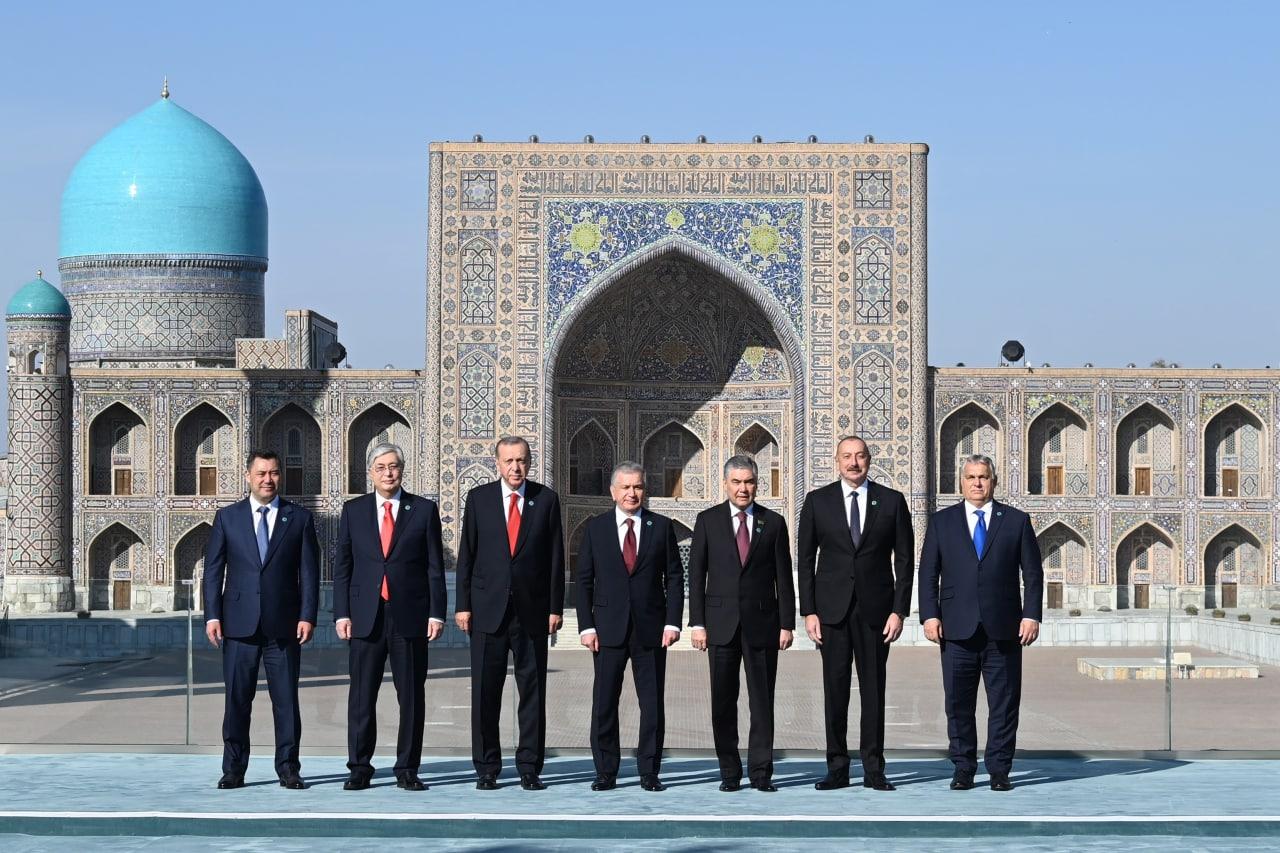
March 31st, 2025, holds a special place in the modern history of Central Asia. On this day in Khujand, one of the region's most significant political and diplomatic events took place. Presidents Shavkat Mirziyoyev, Emomali Rahmon and Sadyr Japarov signed a historic Treaty on the Junction Point of the State Borders of the three nations. Simultaneously, Khujand Declaration was adopted and a symbolic Friendship Stele was unveiled at the border intersection.
History values specific documents not only for their legal weight, but for their power to transform the spirit of an era. The landmark agreements reached in Khujand marked the beginning of a fundamentally new chapter in Central Asian diplomacy. The legal settlement of border issues - long one of the region's most complex challenges - transformed not only the nature of relations between the three states, but the entire political climate of Central Asia, positively impacting the lives of millions today and for generations to come.
In geopolitics, trust is considered one of the most valuable assets. Where trust takes root, new transport corridors open, investments flow, trade volumes grow and security strengthens.
Concrete numbers clearly illustrate the practical outcomes of this trust. While Uzbekistan's trade turnover with Central Asian countries stood at approximately $2.5 billion in 2016, it exceeded $8 billion by the end of 2025.
Bilateral trade with Kazakhstan reached $5 billion, accounting for 60.2% of Uzbekistan's total regional trade. Trade volume with Turkmenistan and Kyrgyzstan reached $1.2 billion each, while trade turnover with Tajikistan surpassed $900 million.
Global Recognition and a New Geopolitical Reality
In recent years, regional cooperation initiatives put forward by Uzbekistan have gained strong backing within the United Nations. The adoption of UN General Assembly resolutions aimed at strengthening peace, stability, and sustainable development in Central Asia serves as practical proof that Uzbekistan's foreign policy is earning international confidence.
In the assessments of international experts, Central Asia is increasingly viewed as a region moving along a shared course, bound by solidarity, brotherhood, and common aspirations for the future. Uzbekistan's policy of resolving issues with neighboring states through negotiation has fostered mutual trust, accelerated transport and logistics projects, and created a more favorable climate for foreign investors. Particular significance is attached to the legal resolution of border issues, which is seen as a key step toward transforming Central Asia into a unified, interconnected economic space.
Specifically, according to Li Yonghui, Senior Research Fellow at the Institute of Russia, Eastern Europe and Central Asia at the Chinese Academy of Social Sciences, President of Uzbekistan's visit to Khujand and his trilateral meeting with the leaders of Tajikistan and Kyrgyzstan represented a pivotal moment in strengthening regional cooperation and stability in Central Asia. “The unveiling of the Friendship Stele symbolizes the strengthening of good-neighborly relations, trust, and strategic partnership among the three brotherly nations”, the expert noted.
Tazin Akhtar, Editor of “Pakistan in the World”, highlighted:
“In an era of global instability, strengthening regional alliances provides a solid foundation for stability and mutual support. Achievements in border delimitation, rising trade volumes, and joint infrastructure projects make Central Asia more open to external partnerships. Uzbekistan has demonstrated a firm commitment to constructive diplomacy, creation, and integration”.
Overall, Uzbekistan's foreign policy today built on openness, pragmatism and mutual benefit is cultivating a new atmosphere of friendship and trust across Central Asia. Borders between neighboring brotherly states have transformed from dividing lines into symbols of cooperation, trade and dialogue.
Return to the Border Post
...The border guard takes the next passport, verifies the document, applies the stamp and the gate opens. The traveler moves forward without looking back. They may not even realize how much political will sits behind that brief moment. Yet that is precisely the greatest success of state policy: it frees individuals from anxiety and obstacles on their journey, allowing them to focus on their goals and dreams.
Past decade of independence has been a period for New Uzbekistan not only to reinforce its sovereign statehood, but to construct a new architecture of trust and collaboration in Central Asia. Open borders, lasting good-neighborliness and the vision of shared development are now becoming part of everyday life.
📅 14.08.2026
Embassy messages
The Ministry of Foreign Affairs of the Republic of Uzbekistan has launched the “Consular Services” mobile application
Consular Services Reception Procedure at the Embassy of Uzbekistan in Latvia
Узбекистан и страны Балтии объединяют усилия в борьбе с коррупцией
Uzbek specialists study Latvia’s best practices in veterinary and livestock sectors
Uzbekistan and Finland discussed prospects for cooperation in the field of entrepreneurship support
A holiday of unity: Navruz celebration connects nations in Riga
Trade union delegation of Uzbekistan discusses in Latvia issues of protecting the rights of compatriots – labor migrants
Ambassador of Uzbekistan presented his credentials to the President of Lithuania
Uzbekistan and Finland are preparing for the next meeting of the intergovernmental commission and a business forum within its framework
Discussions on potential areas of cooperation with the Association of European Chambers of Commerce and Industry were held in Riga
Uzbekistan and Latvia agreed to prepare a bilateral agreement on cooperation in the field of labor migration
Uzbekistan and Latvia ready for permanent dialogue in the field of labor migration
Торговый дом Узбекистана в Латвии провел онлайн-тренинг для хокимов и экспортеров Сырдарьинской области
Uzbek delegation studied Finland's experience in preventing violence against children
A festive evening for compatriots was organized in Estonia
Latvia widely celebrated the anniversary of the adoption of the Basic Law of Uzbekistan
Возможности медицинского туризма в Узбекистане презентованы в Риге
New contracts worth over $4 million signed as part of Uzbek exporters' business mission to Latvia
A roundtable discussion on the topic "Mirzo Ulugbek: a great encyclopedist and a famous statesman" was held in Riga
СМИ Латвии: Явка на выборах в Узбекистане составила 74,72%
Досрочное голосование по выборам в Законодательную палату Олий Мажлиса Узбекистана проходит в Латвии
В Латвии и Литве обсуждаются ключевые аспекты предстоящих парламентских выборов в Узбекистане
Issues related to the development of cooperation between Uzbekistan and Latvia in the field of combating crime discussed in Riga
A round table was held in Latvia on the upcoming elections in Uzbekistan to the Legislative Chamber of the Oliy Majlis and Kengashes of People's Deputies
Uzbek exporters familiarized with requirements for import of Uzbek products to Latvian and European markets
Export of agricultural products from Uzbekistan to the Latvian market increases
ЭЪЛОН!
Uzbek ambassador meets Latvian Saeima speaker to discuss prospects for boosting inter-parliamentary cooperation
Diplomats of Uzbekistan held a visiting reception of fellow citizens living in Estonia and Finland
Ambassador of Uzbekistan presents credentials to President of Latvia

-
 Ministry of Foreign Affairs of the Republic of Uzbekistan
 -
 Diplomatic Service of the Ministry of Foreign Affairs
 -
 State Committee for Tourism Development
 -
Ministry of Investments and Foreign Trade of the Republic of Uzbekistan
-
 invest.gov.uz
 -
-

-

-

-

-

-

of Uzbekistan in the Republic
of Latvia
When using the information, a link to www.uzembassy.lv
must be provided.
All rights reserved
Address
Address: Riga c., LV-1010. 11-11 Elizabetes Str., Latvia
Phone: 37167322424
Fax: 37167322306
Email: embassy@uzbekistan.lv
Useful links
HomeIssuance of biometric passport for departure abroad
Certificate to return to Uzbekistan
Withdrawal of citizenship
Loss of citizenship