Phone
Consular Issues
Phone
Embassy messages
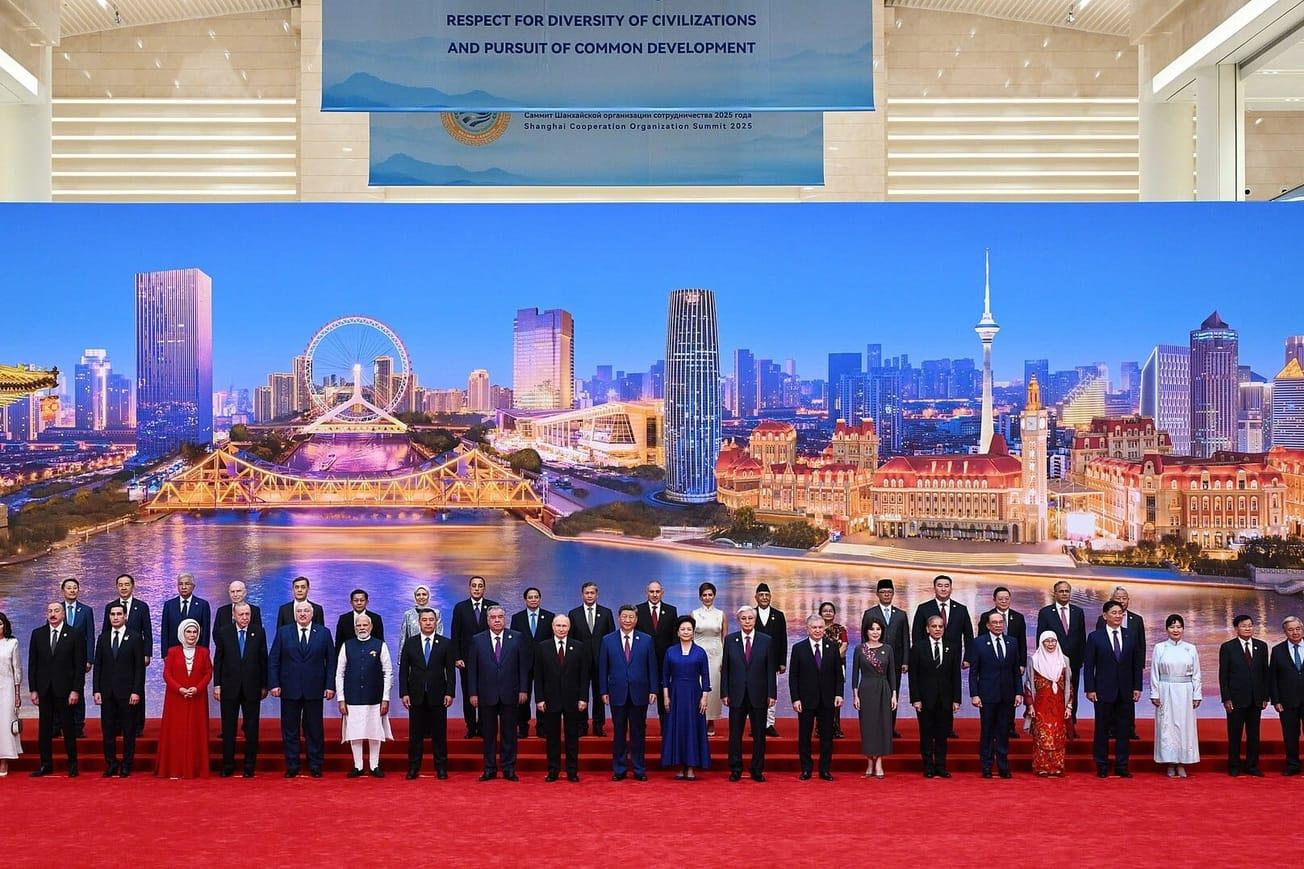
THE SCO’S NEW FINANCIAL ARCHITECTURE: FROM COORDINATION TO PRACTICAL DEVELOPMENT MECHANISMS
At present, geopolitical tensions, the fragmentation of trade and investment flows, disruptions to global supply chains and the high cost of financial resources are creating new challenges for countries across the global economy. Under these conditions, establishing sustainable financial mechanisms for regional cooperation is becoming an important factor not only in promoting economic growth, but also in ensuring long-term stability.
From this perspective, taking financial cooperation within the Shanghai Cooperation Organization to a new level is of particular importance. The SCO region accounts for more than 40 per cent of the world’s population and over a quarter of global gross domestic product. Such vast economic potential provides a solid foundation for developing a modern financial architecture capable of supporting trade, investment and industrial cooperation within the Organization.
The expanding scope of economic cooperation has also increased the importance of its financial support. In this regard, developments observed within the SCO in recent years indicate that the Organization’s distinctive new financial infrastructure is gradually taking shape.
New Economic Realities — New Financial Needs
The expansion of the SCO’s financial infrastructure is primarily driven by the economic changes taking place within the Organization itself.
The first factor is the expanding scale of economic cooperation. Alongside trade and investment, the development of industrial cooperation, energy, digitalization and technological collaboration across the SCO region has increased demand for long-term financial resources.
The second factor is the growing number and scale of cross-border projects. The implementation of transport corridors, power grids, logistics centres and other infrastructure facilities spanning several countries generally requires large-scale, long-term investment.
The third factor is the expansion of the SCO’s membership and the diversity of its economies. The Organization includes both economies with large capital markets and landlocked countries with significant infrastructure investment needs. This has generated demand for multilateral financial mechanisms capable of accommodating the interests of diverse economies.
The fourth factor is the transformation of the global financial environment. Volatility in the cost of international capital, external shocks and currency risks have increased the importance of diversifying regional sources of financing. In this context, expanding settlements in national currencies has also become a distinct area of the SCO’s financial agenda. In 2022, the Samarkand Summit approved a roadmap for gradually increasing the share of national currencies in mutual settlements.
Thus, the need for new financial institutions has emerged not as a stand-alone initiative, but as an objective process resulting from the growing scale of trade, investment and cross-border economic relations within the SCO region.
A New Stage — New Financial Mechanisms
At the SCO Summit held in Astana in 2024, President of the Republic of Uzbekistan Shavkat Mirziyoyev emphasized the importance of promoting mutual investment, primarily in infrastructure, high technologies and services, introducing mechanisms for the financial support of such projects, and revisiting the issue of establishing the SCO Development Fund and Development Bank.
One year later, on 1 September 2025, at the 25th meeting of the SCO Council of Heads of State in Tianjin, the interested Member States reached a political consensus on establishing the SCO Development Bank.
The establishment of the Development Bank is expected to provide impetus for the SCO’s financial infrastructure to enter a new stage of development.
At the same time, the expansion of settlements in national currencies and the development of interbank cooperation, co-financing instruments and collaboration in the digitalization of public finance demonstrate that the SCO’s financial infrastructure is not limited to a single institution.
The SCO’s new financial architecture should not be confined solely to establishing one bank. Rather, it should integrate mutually complementary financial institutions and instruments into a unified system.
In this regard, it is important to establish effective cooperation mechanisms among the SCO Development Bank, the SCO Interbank Consortium, the national development institutions of Member States, commercial banks and investment funds. Opportunities for co-financing may also be pursued in cooperation with existing multilateral institutions such as the Asian Infrastructure Investment Bank, the New Development Bank, the Asian Development Bank, the Islamic Development Bank and the Eurasian Development Bank.
New Opportunities for Uzbekistan
The development of the SCO’s financial infrastructure offers a number of objective economic benefits for Uzbekistan.
First and foremost, Uzbekistan’s geographical location gives this process particular significance. Situated at the heart of Central Asia, the country serves as an important link in transport routes connecting the SCO region’s major economies with the markets of South and Central Asia. The construction of the China–Kyrgyzstan–Uzbekistan railway is one of the most prominent examples.
Therefore, expanding opportunities to finance cross-border projects within the SCO would also enable Uzbekistan to attract additional long-term resources for its transport, energy and logistics infrastructure.
Second, the new financial mechanisms would broaden the financial base for industrial cooperation. Uzbekistan’s efforts to modernize industry, manufacture high-value-added products and develop joint production chains are becoming increasingly connected with the SCO’s major markets. From this perspective, expanding the range of instruments available for financing regional projects would help diversify the sources of finance for joint investment projects.
Third, the development of the SCO’s financial infrastructure would provide greater opportunities to diversify sources of financing. For Uzbekistan, this means complementing its existing cooperation with international financial institutions and bilateral creditors with new regional financial mechanisms.
A New Stage of Financial Cooperation
The SCO is entering a new stage of its development. While security and political dialogue occupied a central place during the Organization’s initial period, today there is a growing need to support economic cooperation through concrete projects and effective financial instruments.
Therefore, the principal criterion for developing a new financial architecture within the SCO should not be the number of new institutions, but their practical effectiveness. Every new mechanism should contribute to increasing trade and investment, strengthening infrastructure connectivity, promoting industrial cooperation and mobilizing private capital.
Most importantly, effective financial mechanisms must be created that are capable of transforming the SCO’s vast economic potential into tangible investment projects. This would elevate cooperation within the Organization from coordination and dialogue to a level of practical partnership that delivers real investment, new production capacities, modern infrastructure and shared economic development.
📅 24.08.2026
Embassy messages
The Ministry of Foreign Affairs of the Republic of Uzbekistan has launched the “Consular Services” mobile application
Consular Services Reception Procedure at the Embassy of Uzbekistan in Latvia
Узбекистан и страны Балтии объединяют усилия в борьбе с коррупцией
Uzbek specialists study Latvia’s best practices in veterinary and livestock sectors
Uzbekistan and Finland discussed prospects for cooperation in the field of entrepreneurship support
A holiday of unity: Navruz celebration connects nations in Riga
Trade union delegation of Uzbekistan discusses in Latvia issues of protecting the rights of compatriots – labor migrants
Ambassador of Uzbekistan presented his credentials to the President of Lithuania
Uzbekistan and Finland are preparing for the next meeting of the intergovernmental commission and a business forum within its framework
Discussions on potential areas of cooperation with the Association of European Chambers of Commerce and Industry were held in Riga
Uzbekistan and Latvia agreed to prepare a bilateral agreement on cooperation in the field of labor migration
Uzbekistan and Latvia ready for permanent dialogue in the field of labor migration
Торговый дом Узбекистана в Латвии провел онлайн-тренинг для хокимов и экспортеров Сырдарьинской области
Uzbek delegation studied Finland's experience in preventing violence against children
A festive evening for compatriots was organized in Estonia
Latvia widely celebrated the anniversary of the adoption of the Basic Law of Uzbekistan
Возможности медицинского туризма в Узбекистане презентованы в Риге
New contracts worth over $4 million signed as part of Uzbek exporters' business mission to Latvia
A roundtable discussion on the topic "Mirzo Ulugbek: a great encyclopedist and a famous statesman" was held in Riga
СМИ Латвии: Явка на выборах в Узбекистане составила 74,72%
Досрочное голосование по выборам в Законодательную палату Олий Мажлиса Узбекистана проходит в Латвии
В Латвии и Литве обсуждаются ключевые аспекты предстоящих парламентских выборов в Узбекистане
Issues related to the development of cooperation between Uzbekistan and Latvia in the field of combating crime discussed in Riga
A round table was held in Latvia on the upcoming elections in Uzbekistan to the Legislative Chamber of the Oliy Majlis and Kengashes of People's Deputies
Uzbek exporters familiarized with requirements for import of Uzbek products to Latvian and European markets
Export of agricultural products from Uzbekistan to the Latvian market increases
ЭЪЛОН!
Uzbek ambassador meets Latvian Saeima speaker to discuss prospects for boosting inter-parliamentary cooperation
Diplomats of Uzbekistan held a visiting reception of fellow citizens living in Estonia and Finland
Ambassador of Uzbekistan presents credentials to President of Latvia

-
 Ministry of Foreign Affairs of the Republic of Uzbekistan
 -
 Diplomatic Service of the Ministry of Foreign Affairs
 -
 State Committee for Tourism Development
 -
Ministry of Investments and Foreign Trade of the Republic of Uzbekistan
-
 invest.gov.uz
 -
-

-

-

-

-

-

of Uzbekistan in the Republic
of Latvia
When using the information, a link to www.uzembassy.lv
must be provided.
All rights reserved
Address
Address: Riga c., LV-1010. 11-11 Elizabetes Str., Latvia
Phone: 37167322424
Fax: 37167322306
Email: embassy@uzbekistan.lv
Useful links
HomeIssuance of biometric passport for departure abroad
Certificate to return to Uzbekistan
Withdrawal of citizenship
Loss of citizenship