Phone
Consular Issues
Phone
Embassy messages
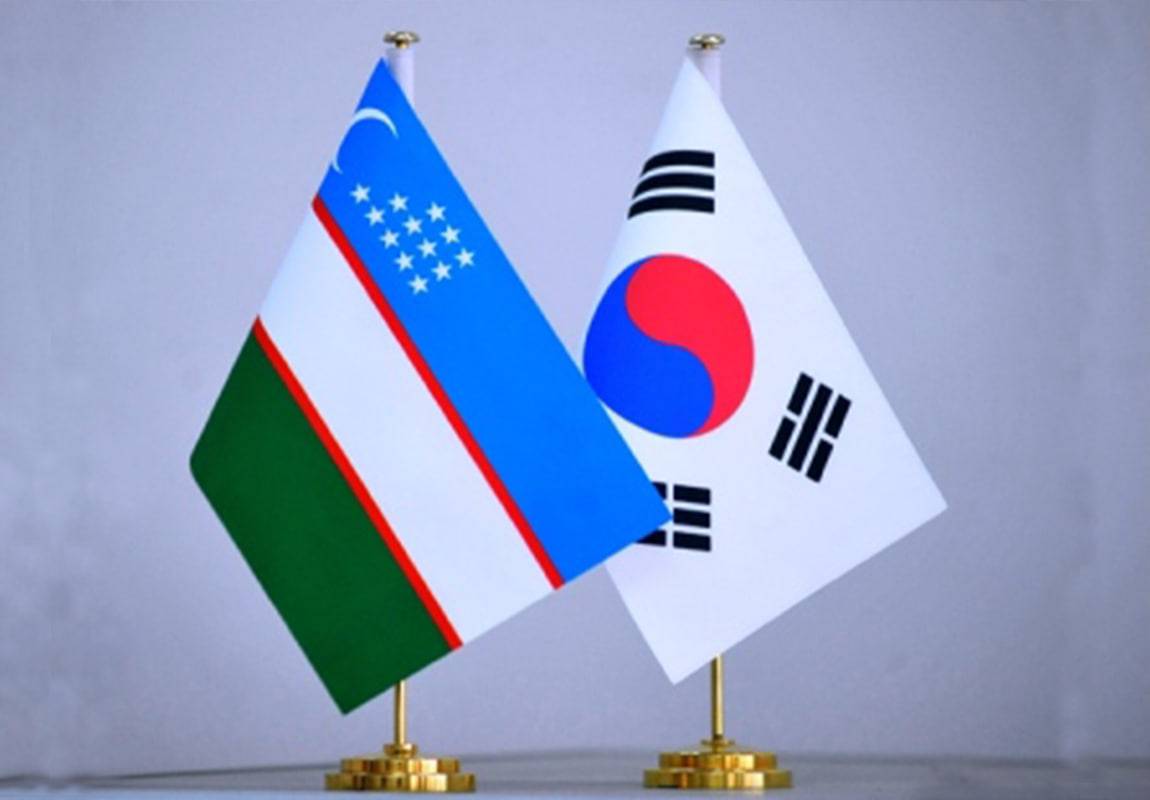
Uzbekistan and the Republic of Korea in the Emerging Framework for Cooperation with Central Asia
Three decades of dialogue between Uzbekistan and the Republic of Korea have built a strong foundation of trust, supported by cooperation ranging from major industrial facilities and modern healthcare to education programs and digital government. Today, this partnership is moving to the next level.
The Central Asia–Republic of Korea format offers an opportunity to combine bilateral achievements with the scale of the five countries’ collective market, moving from individual projects toward integrated technology value chains, joint raw material processing, and workforce development for the new economy.
A Partnership That Has Stood the Test of Time
Uzbekistan and the Republic of Korea established diplomatic relations in January 1992. From the outset, ties developed through regular political dialogue at the highest level. A series of reciprocal presidential visits in the 1990s and 2000s established the legal framework for cooperation, opened the door to Korean investment, and strengthened cultural and people-to-people ties. Relations were elevated to a strategic partnership in 2006, and in 2014 the two countries reaffirmed their commitment to further developing and deepening that partnership.
This foundation gave rise to projects that became symbols of bilateral cooperation. One of the most prominent is the Ustyurt Gas Chemical Complex, an approximately $4 billion facility commissioned in 2016. It demonstrated the ability of Uzbekistan and Korean companies to jointly deliver capital-intensive, technologically complex projects, extending cooperation beyond equipment supplies and trade in finished goods.
A new phase began with President Shavkat Mirziyoyev’s state visit to Seoul in November 2017. The visit resulted in a Joint Declaration on the Comprehensive Deepening of the Strategic Partnership and more than 60 documents. The agenda covered e-commerce, support for Uzbekistan’s accession to the World Trade Organization, a knowledge-sharing program, financing from the Export-Import Bank of Korea, and cooperation with Uzbekistan’s Fund for Reconstruction and Development.
The President of Uzbekistan proposed establishing a Korean Business Center as a permanent platform to support businesses and investment projects. Even then, it was clear that relations needed to rest not only on government contacts but also on lasting institutional support for business cooperation.
President Moon Jae-in’s reciprocal state visit to Tashkent in April 2019 marked a major step forward, as the two countries announced a special strategic partnership. The package of agreements and projects exceeded $12 billion, covering investment protection, science and innovation, the peaceful use of outer space, healthcare, energy, mechanical engineering, textiles, and pharmaceuticals.
During President Shavkat Mirziyoyev’s next state visit to the Republic of Korea in December 2021, the agenda centered on three priorities: green development, digitalization, and stronger social protection. His initiatives included establishing an Uzbek–Korean semiconductor and electronics cluster in Tashkent Region that would combine manufacturing, research, and specialist training; creating a regular dialogue between universities and a forum of rectors; and expanding programs run by the Korea International Cooperation Agency (KOICA).
The lending ceiling under the Economic Development Cooperation Fund (EDCF) was increased to $1 billion for the period through 2023.
The state visit of President Yoon Suk Yeol of the Republic of Korea in June 2024 brought the partnership’s technological focus into sharper relief. The two sides agreed to develop strategic cooperation in critical minerals, renewable energy, transport, agriculture, healthcare, pharmaceuticals, and education. A new package of investment agreements worth $9.6 billion was assembled, while the EDCF lending ceiling for 2024–2027 was raised to $2 billion.
At their meeting in New York in September 2025, President Shavkat Mirziyoyev and President Lee Jae Myung of the Republic of Korea agreed to prepare a long-term program for technological and industrial partnership. Building on earlier cooperation, the proposed program would cover advanced processing of critical raw materials, chemicals, mechanical engineering, agriculture, transport, aviation, and biotechnology.
The Evolution of the Central Asia Plus Format
Today’s challenges increasingly require solutions that extend beyond national borders. Transport corridors do not end at border checkpoints, resilient supply chains depend on multiple interconnected links, and major investors need market scale and compatible regulatory frameworks. The Central Asia Plus format is therefore becoming an increasingly practical tool for development.
This trend has already taken shape as an established framework for cooperation. The C5+1 dialogue between the United States and the five Central Asian countries has operated since 2015 and reached the leaders’ level for the first time in September 2023. In April 2025, Samarkand hosted the first Central Asia–European Union summit, where relations were elevated to a strategic partnership and a €12 billion Global Gateway investment package was announced.
In December 2025, Tokyo hosted the first Central Asia Plus Japan leaders’ summit, although the dialogue itself dates back to 2004. The Republic of Korea has engaged with the region through a multilateral format since 2007. This mechanism is now also being elevated to the highest political level.
The first Central Asia–Republic of Korea summit is scheduled for September 16, 2026, in Seoul. The five countries of the region offer an interconnected market, shared transport routes, and complementary industrial capabilities. Four areas are of particular interest for bilateral discussions: transport and logistics; water, energy, and climate; critical minerals; and digital standards, education, and the mobility of skilled professionals.
The forthcoming summit’s agenda already reflects this logic. Discussions are being prepared on industrial cooperation, critical minerals, artificial intelligence, digital manufacturing, energy, and supply chain resilience. The Republic of Korea has also proposed regular C5+Korea meetings of industry ministers and a business summit.
Central Asia’s Trade with the Republic of Korea
The economic foundations for taking trade to the next level are already in place. According to calculations by the Center for Economic Research and Reforms (CERR), trade between Central Asian countries and the Republic of Korea grew by a factor of 1.7 between 2017 and 2025, reaching $5.7 billion. The region’s exports totaled approximately $1 billion, while imports amounted to $4.7 billion.
Trade has expanded considerably but remains uneven. Central Asia mainly purchases Korean machinery, equipment, vehicles, electronics, chemicals, and pharmaceuticals, while its own presence in the Korean market remains limited.
Kazakhstan accounted for $3.2 billion, or approximately 56% of the region’s trade with Korea, and Uzbekistan for $1.7 billion, or just over 30%. Together, the two countries represented approximately 87% of Central Asia’s trade with Korea. Trade with Kyrgyzstan, Tajikistan, and Turkmenistan amounted to $508 million, $196 million, and $45.2 million, respectively.
Investment flows also point to the availability of capital for the next stage of cooperation. In 2025, total direct investment and loans from the Republic of Korea to the region exceeded $1.5 billion. Kazakhstan received approximately $1 billion and Uzbekistan $474.5 million. More than 1,700 enterprises with Korean capital operate across Central Asia.
Uzbekistan’s Trade with the Republic of Korea
In 2025, trade between Uzbekistan and the Republic of Korea totaled $1.7 billion. Korea ranked fifth among Uzbekistan’s trading partners in both total trade and imports. Since 2017, bilateral trade has increased by 25.2%, or $350.2 million.
Exports and imports, however, moved in opposite directions. Uzbekistan’s exports declined from $143.3 million to $61.7 million, while imports from Korea rose from $1.2 billion to $1.68 billion. This gap largely reflects the investment-driven nature of the relationship: Uzbekistan imports equipment and production lines to modernize its industries. In 2025, machinery and transport equipment accounted for 60.7% of imports from Korea, chemicals for 12.8%, and manufactured goods and finished products for more than 16%. In other words, a substantial share of the trade deficit is associated with upgrading production capacity rather than importing consumer goods.
Services accounted for 67.6% of Uzbekistan’s exports to Korea in 2025, followed by raw materials at 13.6%, food products at 5.3%, and finished goods, including textiles, at 3.7%.
Meanwhile, preliminary figures for the first half of 2026 show that bilateral trade increased by 11.5% to $940 million. Exports rose by 21.6% to $33.3 million, while imports grew by 11.2% to $906.8 million.
The potential to expand exports is substantial. The Republic of Korea imports hundreds of billions of dollars’ worth of goods each year, including clothing, cables and wires, footwear, jewelry, polymers, plastics, fertilizers, cotton fabrics, copper pipes, home textiles, nuts, and fresh fruit. Uzbekistan already has an established production base in many of these categories. The constraints often lie in meeting quality certification requirements, order volumes, packaging standards, and delivery schedules. These factors need to be taken into account when developing future export strategies.
Investment with Room to Grow
As of August 1, 2026, Uzbekistan was home to 730 enterprises with Korean capital, including 186 joint ventures and 544 wholly Korean-owned companies. Between 2016 and 2025, direct investment and loans from Korea approached $2 billion, with $474.5 million received in 2025 alone.
Korean investors are active in oil and gas, chemicals, automotive manufacturing, textiles, pharmaceuticals, agriculture, energy, healthcare, transport, construction, and services.
The next phase of investment could build on this foundation by expanding local production, training engineers, and developing industrial clusters. Korean expertise can help establish standards, while the regional market provides the scale needed to launch major new industrial projects and joint production initiatives.
Artificial intelligence could play a particularly important role. Joint pilot projects between Korean technology companies and Uzbek enterprises could quickly demonstrate measurable economic benefits and subsequently be scaled up across other Central Asian countries.
The same logic applies to critical minerals. Central Asia needs to move beyond raw material supplies by developing geological exploration, mineral processing, and the production of high-purity materials and components. Joint projects could combine Korean technology and financing with the region’s resource base.
Bilateral and regional cooperation should be deliberately developed as complementary tracks. The Uzbekistan–Republic of Korea format is well suited to launching targeted local projects, while the Central Asia–Republic of Korea format offers a more effective platform for coordinating transport corridors, supply chains, cross-border standards, and projects that require access to all five markets.
Success at either level reinforces the other: strong national projects can serve as models for the wider region, while regional scale enhances their commercial appeal.
Conclusion
Relations between Uzbekistan and the Republic of Korea are entering a phase in which accumulated trust must translate into a more technologically advanced and diversified economy. Over three decades, the two countries have progressed from establishing diplomatic relations to building a special strategic partnership, delivering major industrial and social infrastructure projects and fostering trust at the highest political level.
The forthcoming Central Asia–Republic of Korea summit could bring regional scale to this progress. It offers an opportunity to turn natural resources into advanced materials, a strategic transit location into efficient logistics services, and a young population into a strong base of human capital. With the region’s most extensive history of cooperation with Korea, Uzbekistan can both benefit from the new format and help shape its agenda and serve as a major center for its implementation.
Developing transport services, industrial zones, and export infrastructure will enable Korean companies to operate across several countries in the region, while helping Uzbek enterprises join international supply chains and enter new markets.
Edvard Romanov
Center for Economic Research and Reforms
📅 12.09.2026
Embassy messages
The Ministry of Foreign Affairs of the Republic of Uzbekistan has launched the “Consular Services” mobile application
Consular Services Reception Procedure at the Embassy of Uzbekistan in Latvia
Узбекистан и страны Балтии объединяют усилия в борьбе с коррупцией
Uzbek specialists study Latvia’s best practices in veterinary and livestock sectors
Uzbekistan and Finland discussed prospects for cooperation in the field of entrepreneurship support
A holiday of unity: Navruz celebration connects nations in Riga
Trade union delegation of Uzbekistan discusses in Latvia issues of protecting the rights of compatriots – labor migrants
Ambassador of Uzbekistan presented his credentials to the President of Lithuania
Uzbekistan and Finland are preparing for the next meeting of the intergovernmental commission and a business forum within its framework
Discussions on potential areas of cooperation with the Association of European Chambers of Commerce and Industry were held in Riga
Uzbekistan and Latvia agreed to prepare a bilateral agreement on cooperation in the field of labor migration
Uzbekistan and Latvia ready for permanent dialogue in the field of labor migration
Торговый дом Узбекистана в Латвии провел онлайн-тренинг для хокимов и экспортеров Сырдарьинской области
Uzbek delegation studied Finland's experience in preventing violence against children
A festive evening for compatriots was organized in Estonia
Latvia widely celebrated the anniversary of the adoption of the Basic Law of Uzbekistan
Возможности медицинского туризма в Узбекистане презентованы в Риге
New contracts worth over $4 million signed as part of Uzbek exporters' business mission to Latvia
A roundtable discussion on the topic "Mirzo Ulugbek: a great encyclopedist and a famous statesman" was held in Riga
СМИ Латвии: Явка на выборах в Узбекистане составила 74,72%
Досрочное голосование по выборам в Законодательную палату Олий Мажлиса Узбекистана проходит в Латвии
В Латвии и Литве обсуждаются ключевые аспекты предстоящих парламентских выборов в Узбекистане
Issues related to the development of cooperation between Uzbekistan and Latvia in the field of combating crime discussed in Riga
A round table was held in Latvia on the upcoming elections in Uzbekistan to the Legislative Chamber of the Oliy Majlis and Kengashes of People's Deputies
Uzbek exporters familiarized with requirements for import of Uzbek products to Latvian and European markets
Export of agricultural products from Uzbekistan to the Latvian market increases
ЭЪЛОН!
Uzbek ambassador meets Latvian Saeima speaker to discuss prospects for boosting inter-parliamentary cooperation
Diplomats of Uzbekistan held a visiting reception of fellow citizens living in Estonia and Finland
Ambassador of Uzbekistan presents credentials to President of Latvia

-
 Ministry of Foreign Affairs of the Republic of Uzbekistan
 -
 Diplomatic Service of the Ministry of Foreign Affairs
 -
 State Committee for Tourism Development
 -
Ministry of Investments and Foreign Trade of the Republic of Uzbekistan
-
 invest.gov.uz
 -
-

-

-
-
-

-

of Uzbekistan in the Republic
of Latvia
When using the information, a link to www.uzembassy.lv
must be provided.
All rights reserved
Address
Address: Riga c., LV-1010. 11-11 Elizabetes Str., Latvia
Phone: 37167322424
Fax: 37167322306
Email: embassy@uzbekistan.lv
Useful links
HomeIssuance of biometric passport for departure abroad
Certificate to return to Uzbekistan
Withdrawal of citizenship
Loss of citizenship