Phone
Consular Issues
Phone
Embassy messages
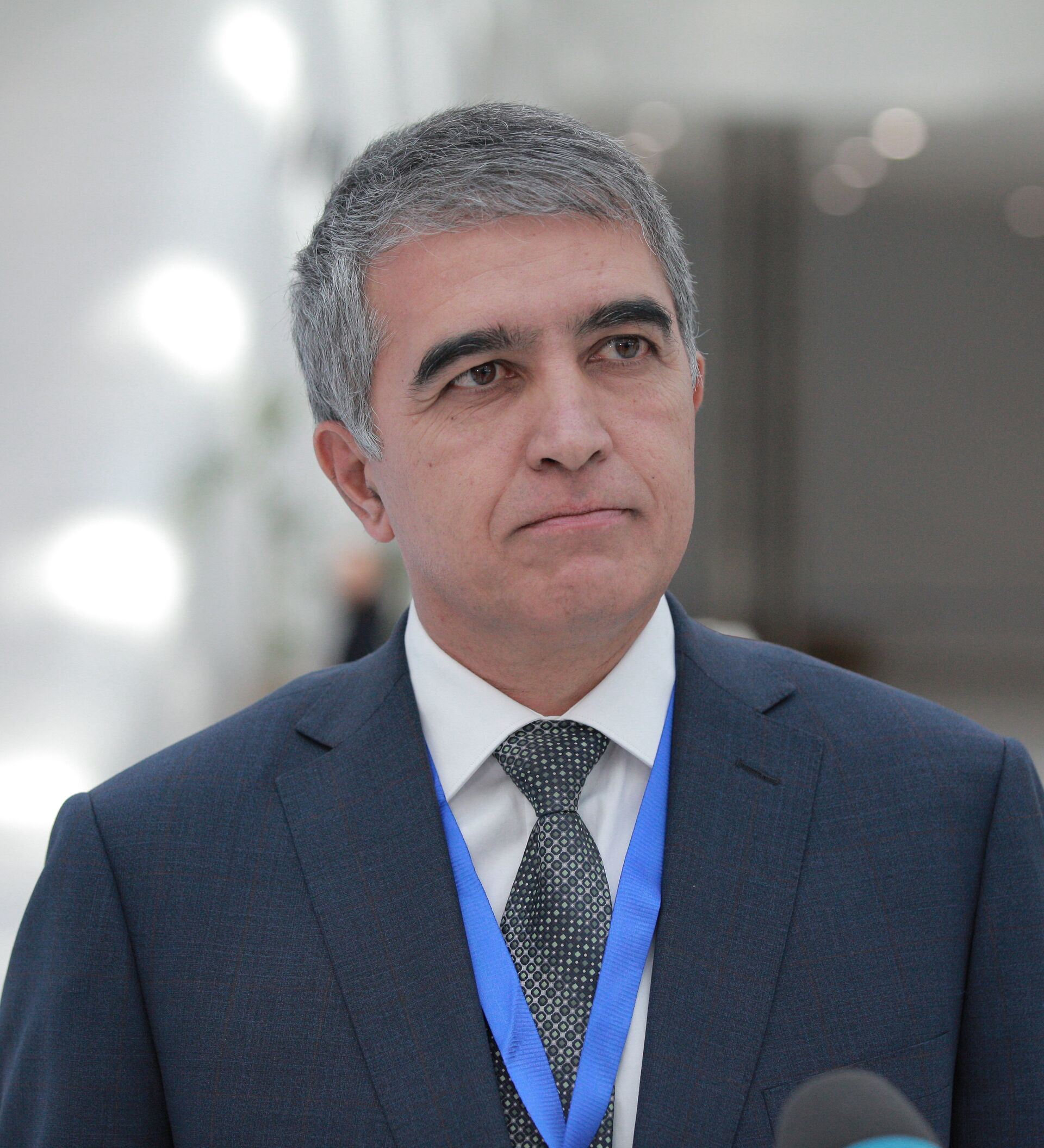
Regular dialogue is the Foundation for addressing common water-related challenges in Central Asia
For centuries, life in Central Asia has been inseparable from water. Across the Amu Darya and Syr Darya basins, settlements, agriculture and trade developed around rivers, canals and irrigation systems. Water has therefore never been merely a natural resource for the region; it has been one of the foundations of its economic life, social stability and shared history.
Today, the water challenge is more pressing than ever. Climate change, population and economic growth, shrinking glaciers, droughts and increasingly frequent extreme weather events are placing mounting pressure on water resources. One conclusion is clear: no single country can ensure water security in Central Asia on its own. The only sustainable path lies in cooperation, mutual trust, accurate measurement and shared responsibility.
One River Basin, Shared Interests
Central Asia’s major rivers originate in some countries and flow through others. The Syr Darya is of vital importance to Kyrgyzstan, Tajikistan, Uzbekistan and Kazakhstan, while the Amu Darya is equally significant for Tajikistan, Afghanistan, Uzbekistan and Turkmenistan.
This geographical reality makes it essential to avoid framing the interests of upstream and downstream countries as inherently opposed. For one state, water may be a key source of hydropower; for another, it is indispensable for irrigated agriculture. At the same time, preserving river ecosystems, improving the environmental situation in the Aral Sea region and ensuring access to safe drinking water are common priorities for all countries.
Around 90 per cent of water in Central Asia is used in agriculture. Water management therefore cannot be shaped solely around the interests of one sector or one country. What is needed is a regional approach that recognises the close interdependence of water, energy, food security and the environment.
Open Dialogue, Practical Results
In recent years, dialogue among the countries of Central Asia has become more open and constructive. This has had a direct impact on cooperation in the water sector. Whereas discussions once focused primarily on seasonal water allocation, the agenda today is considerably broader, encompassing water-energy cooperation, joint management of shared facilities, digitalisation, improved water accounting, scientific collaboration and professional training.
At the Seventh Consultative Meeting of the Heads of State of Central Asia, held in Tashkent in November 2025, the President of Uzbekistan drew attention to growing water scarcity and proposed declaring 2026–2036 the “Decade of Practical Action for the Rational Use of Water in Central Asia”. The establishment of a Regional Competence Centre for Water Management at the Tashkent Institute of Irrigation and Agricultural Mechanization Engineers National Research University was also proposed.
At the summit of the International Fund for Saving the Aral Sea in April 2026, the President of Uzbekistan outlined priority tasks for the country’s chairmanship of the Fund in 2027–2029. These include improving the Fund’s organisational and legal mechanisms, increasing the effectiveness of programmes in the Aral Sea basin, attracting international financing, promoting a culture of responsible water use and strengthening professional capacity in the sector.
Agreements as the Practical Basis of Cooperation
Regional dialogue produces lasting results only when it is backed by concrete agreements and practical cooperation.
On 15 November 2025, Uzbekistan and Kazakhstan signed an Agreement on the Joint Management and Rational Use of Transboundary Water Bodies. The agreement is designed to establish systematic cooperation between the two countries in the water sector, improve coordination among responsible agencies and ensure more effective use of shared water resources and infrastructure.
With the Kyrgyz Republic, issues related to water use, the operation of hydraulic structures and the distribution of water during the irrigation season are regularly addressed through joint mechanisms. On 15 May 2026, the eighth meeting of the Uzbek-Kyrgyz Joint Commission on Water Management was held in Namangan. In June, Uzbekistan, Kazakhstan and Kyrgyzstan also agreed on water release volumes and electricity supplies for the 2026 irrigation season.
Within the framework of the joint Working Group with Tajikistan, the parties regularly discuss transboundary water-management projects, exchange experience in managing water resources and address other practical matters.
Uzbekistan, Tajikistan and Kazakhstan also cooperate in coordinating the summer operating regime of the Bahri Tojik Reservoir. This issue is agreed annually at working-level meetings involving representatives of the three countries and is formalised through the relevant protocols.
A joint intergovernmental commission on water issues operates between Uzbekistan and Turkmenistan. Cooperation covers water-saving technologies, the reconstruction of collector-drainage networks, scientific exchange and professional training in irrigation. In 2025, for example, the second stage of the reconstruction of the Ozyorny and Daryolik main collectors in Turkmenistan was completed.
These examples demonstrate an important shift: water cooperation in Central Asia is moving beyond general declarations towards concrete mechanisms — commissions, agreements, technical projects and water-energy exchanges.
Accurate Data as a Foundation of Trust
In water relations, trust is built not only through political declarations but also through accurate and transparent data.
How much water is flowing in a river? What volumes are stored in reservoirs? How much water has been released, how much has reached users and how much has been lost along the way? These questions must be answered on the basis of reliable information that all parties can trust.
This is why it is increasingly important to automate transboundary hydrological gauging stations, enable remote data transmission, introduce digital water accounting and harmonise information-exchange systems among countries.
In July 2026, the World Bank approved the Regional Cooperation Project to Improve the Efficiency of Water Resources Use in Central Asian Countries (CAWEC), aimed at strengthening transboundary water cooperation in the region.
The project envisages a US$20 million grant to the Executive Committee of the International Fund for Saving the Aral Sea. The funds are intended to support the digitalisation of water accounting in the Amu Darya and Syr Darya basins, modernise information systems and strengthen the professional capacity of specialists.
By 2031, the project is also expected to support the preparation of mutually beneficial transboundary investment projects involving at least two Central Asian countries, including preliminary feasibility studies, design and cost documentation, and environmental and social assessments.
It is expected that around 40 million people will benefit directly or indirectly from the project’s results.
Water Conservation in Uzbekistan Also Serves Regional Interests
The rational use of transboundary water resources begins with the responsibility of each country to use water efficiently within its own territory.
In 2017, water-saving technologies were applied on 28,000 hectares in Uzbekistan. By the end of 2025, this figure had reached 2.6 million hectares — nearly 60 per cent of the country’s irrigated land. Since the beginning of 2026, water-saving technologies have been introduced on a further 640,000 hectares.
Around 174,000 kilometres of irrigation networks are used to supply water to 4.3 million hectares of irrigated land in Uzbekistan. Public funding for modernising this extensive system, reducing water losses in canals and improving efficiency has increased steadily. In 2017, 842 billion soums were allocated to irrigation and land-reclamation works; in 2020, the figure rose to 1.7 trillion soums, and in 2025 to 3 trillion soums.
In 2026, 4.1 trillion soums were allocated from the state budget for irrigation and land-reclamation facilities — 4.9 times the 2017 level.
By the end of 2026, Uzbekistan plans to save 11 billion cubic metres of water through the wider use of water-saving technologies, laser land levelling, the repair and concrete lining of irrigation networks, digitalisation, optimisation of crop patterns and improved agricultural practices. Under the state programme for 2025–2028, this figure is expected to rise to 12 billion cubic metres in 2027 and 13 billion cubic metres in 2028.
These figures matter not only for Uzbekistan, but for the region as a whole. Every cubic metre of water saved in one country reduces pressure on the shared river basin. Water conservation is therefore not merely a national objective; it is also a practical expression of good-neighbourly responsibility.
Five Pillars for the Future
Five areas are particularly important if Central Asia is to take water cooperation to a new level.
First, interstate cooperation mechanisms need to be adapted to contemporary realities. Clear legal arrangements are required for water allocation, the use of shared infrastructure and the exchange of information.
Second, water accounting should be further digitalised, with timely exchange of data on water availability and flows. Reliable information is the foundation of reliable cooperation.
Third, the region needs more joint investment projects to modernise ageing canals, hydraulic structures, pumping stations and water-metering facilities. The uninterrupted operation of a single facility in one country may directly serve the interests of several neighbouring states.
Fourth, water and energy issues should be addressed in an integrated manner. Better coordination of reservoir operating regimes, electricity supplies and seasonal water needs can significantly improve the efficiency of resource use.
Fifth, greater attention must be paid to science, human capital and a culture of responsible water use. Modern technologies alone are not enough. They require skilled specialists, farmers who have a clear incentive to conserve water, and a society that understands the true value of this resource.
Water conservation is not the responsibility of water professionals alone. It is also a matter of economic thinking, environmental responsibility and everyday culture.
Water as a Shared Responsibility for a Common Future
The history of Central Asia shows that water has not only sustained communities; it has also connected them. Villages, cities, markets and cultural ties developed along rivers, canals and irrigation channels. Preserving that unifying role of water is just as important today.
In the twenty-first century, effective water management is determined not only by how much water is available. It also depends on the quality of cooperation between countries, the efficiency with which water is used, and the accuracy with which it is measured and accounted for.
The challenges ahead are substantial. Demand for water is rising, the climate is changing and economies are expanding. Yet Central Asia has also developed a stronger culture of cooperation. Regular dialogue among heads of state, bilateral and multilateral agreements, modern technologies and support from international partners are creating practical opportunities to address shared challenges together.
Joint efforts to conserve water contribute to peace and stability. Rational use of this vital resource is an investment in economic development. Above all, it is an investment in a more prosperous, resilient and sustainable future for the entire region.
Shavkat KHAMRAEV,
Minister of Water Resources of the Republic of Uzbekistan,
Honored Irrigator of Uzbekistan
📅 05.10.2026
Embassy messages
The Ministry of Foreign Affairs of the Republic of Uzbekistan has launched the “Consular Services” mobile application
Consular Services Reception Procedure at the Embassy of Uzbekistan in Latvia
Узбекистан и страны Балтии объединяют усилия в борьбе с коррупцией
Uzbek specialists study Latvia’s best practices in veterinary and livestock sectors
Uzbekistan and Finland discussed prospects for cooperation in the field of entrepreneurship support
A holiday of unity: Navruz celebration connects nations in Riga
Trade union delegation of Uzbekistan discusses in Latvia issues of protecting the rights of compatriots – labor migrants
Ambassador of Uzbekistan presented his credentials to the President of Lithuania
Uzbekistan and Finland are preparing for the next meeting of the intergovernmental commission and a business forum within its framework
Discussions on potential areas of cooperation with the Association of European Chambers of Commerce and Industry were held in Riga
Uzbekistan and Latvia agreed to prepare a bilateral agreement on cooperation in the field of labor migration
Uzbekistan and Latvia ready for permanent dialogue in the field of labor migration
Торговый дом Узбекистана в Латвии провел онлайн-тренинг для хокимов и экспортеров Сырдарьинской области
Uzbek delegation studied Finland's experience in preventing violence against children
A festive evening for compatriots was organized in Estonia
Latvia widely celebrated the anniversary of the adoption of the Basic Law of Uzbekistan
Возможности медицинского туризма в Узбекистане презентованы в Риге
New contracts worth over $4 million signed as part of Uzbek exporters' business mission to Latvia
A roundtable discussion on the topic "Mirzo Ulugbek: a great encyclopedist and a famous statesman" was held in Riga
СМИ Латвии: Явка на выборах в Узбекистане составила 74,72%
Досрочное голосование по выборам в Законодательную палату Олий Мажлиса Узбекистана проходит в Латвии
В Латвии и Литве обсуждаются ключевые аспекты предстоящих парламентских выборов в Узбекистане
Issues related to the development of cooperation between Uzbekistan and Latvia in the field of combating crime discussed in Riga
A round table was held in Latvia on the upcoming elections in Uzbekistan to the Legislative Chamber of the Oliy Majlis and Kengashes of People's Deputies
Uzbek exporters familiarized with requirements for import of Uzbek products to Latvian and European markets
Export of agricultural products from Uzbekistan to the Latvian market increases
ЭЪЛОН!
Uzbek ambassador meets Latvian Saeima speaker to discuss prospects for boosting inter-parliamentary cooperation
Diplomats of Uzbekistan held a visiting reception of fellow citizens living in Estonia and Finland
Ambassador of Uzbekistan presents credentials to President of Latvia

-
 Ministry of Foreign Affairs of the Republic of Uzbekistan
 -
 Diplomatic Service of the Ministry of Foreign Affairs
 -
 State Committee for Tourism Development
 -
Ministry of Investments and Foreign Trade of the Republic of Uzbekistan
-
 invest.gov.uz
 -
-

-

-

-

-

-

of Uzbekistan in the Republic
of Latvia
When using the information, a link to www.uzembassy.lv
must be provided.
All rights reserved
Address
Address: Riga c., LV-1010. 11-11 Elizabetes Str., Latvia
Phone: 37167322424
Fax: 37167322306
Email: embassy@uzbekistan.lv
Useful links
HomeIssuance of biometric passport for departure abroad
Certificate to return to Uzbekistan
Withdrawal of citizenship
Loss of citizenship