Phone
Consular Issues
Phone
Embassy messages
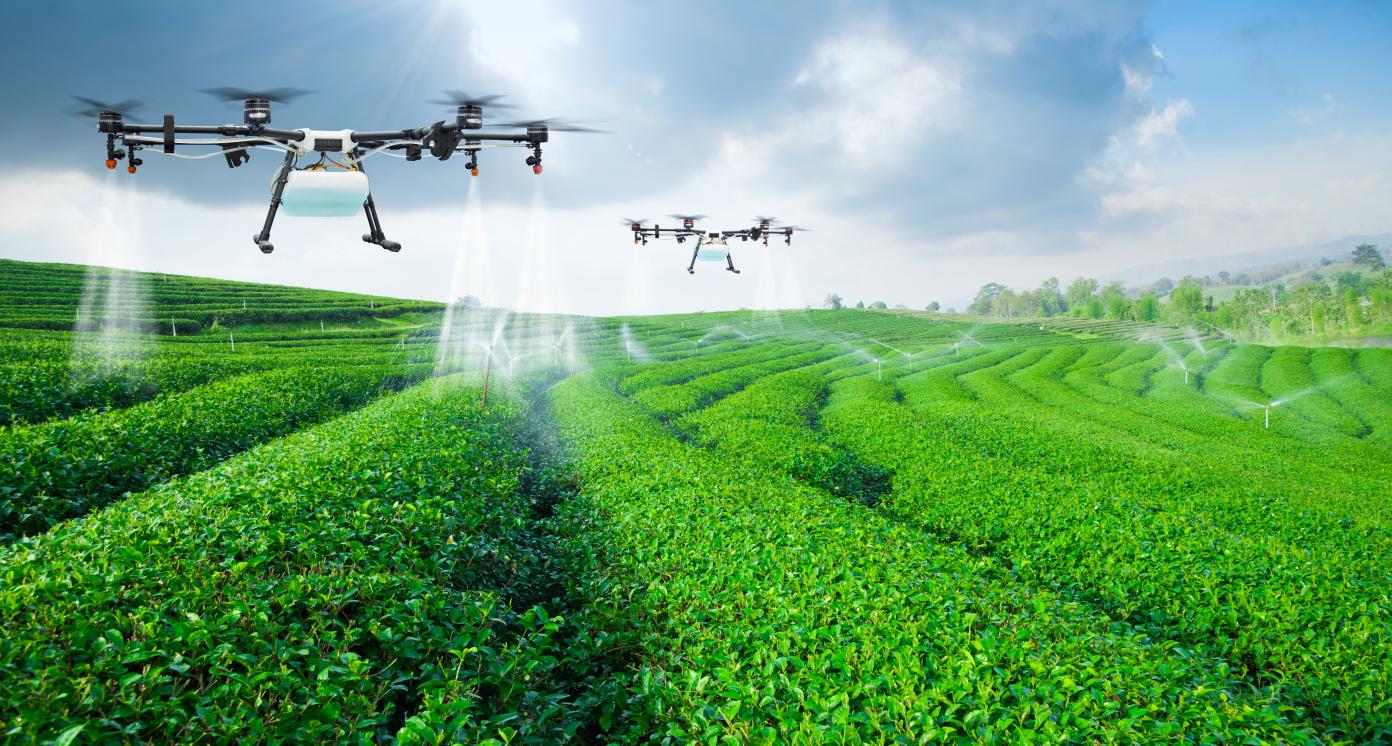
“Unmanned aerial technologies as a data-driven management tool in agriculture”
Introduction
Effective public administration increasingly relies on measurable results and the efficient use of resources. Presidential Decree No. UP-243 of 6 December 2025 identifies results-based management and the development of regional potential among public administration priorities [4]. These principles are particularly relevant to agriculture, where land, water, labour and production inputs must be managed carefully. Effective management requires not only identifying regional opportunities but also linking each intervention to a specific, measurable outcome. Digital technologies, including unmanned aerial vehicles (UAVs), can support such decisions by supplying timely and geographically referenced information. Their value is best understood as part of the chain “data — analysis — decision — result,” rather than merely as the introduction of new equipment.
UAVs in Uzbekistan’s Agriculture
Agriculture contributes substantially to Uzbekistan’s economy and employment, while consuming a major share of its water resources [2]. Improving efficiency therefore requires reliable information about field conditions. UAVs can survey extensive areas more rapidly than many conventional ground-based methods, producing digital maps and helping identify crop damage, moisture stress, weeds, diseases and other problems. This information helps direct water, fertilizers, plant protection products and labour to locations where they are needed, rather than applying identical quantities across an entire field. For Uzbekistan, such targeted interventions offer opportunities to reduce unnecessary expenditure and support more efficient management of limited land and water resources.
Monitoring and Precision Agriculture
UAVs equipped with cameras and sensors can monitor plant growth, detect water stress, map weeds and help identify early signs of pests and diseases [1, 3]. These applications support precision agriculture, which treats a field as a set of areas with differing conditions rather than a uniform surface. Instead of applying identical inputs everywhere, farmers can adjust interventions to the needs of each area. UAV observations may also be integrated with satellite imagery, meteorological information and soil-moisture data to provide a broader picture of agricultural land. Combining several sources helps place local observations into context and can improve the timing of farming operations. Scientific reviews also identify applications in monitoring plant development and collecting information relevant to expected yields [1, 3]. The main benefit is therefore not aerial photography itself, but processing, analysing and using the collected information to make practical decisions.
Data-Driven Management Efficiency
The contribution of UAVs should be assessed through their impact on agricultural outcomes. First, aerial monitoring can shorten the time needed to assess large territories. Second, earlier identification of crop damage or moisture shortages may enable more timely responses. Third, spatial data support targeted allocation of scarce inputs. Finally, repeated surveys provide a basis for comparing conditions over time and evaluating the results of previous measures. Data accumulated over several growing periods can also help distinguish persistent problems from temporary conditions. Together, these functions can improve operational planning and the evaluation of results, provided that the collected data inform actual management decisions. The effectiveness of digitalization should thus be measured by changes in resource use, timeliness and production outcomes, not simply by the quantity of equipment acquired.
Legal Framework in Uzbekistan
Uzbekistan has progressively established legal and institutional conditions for agricultural UAV use. Presidential Resolution No. PP-5006 of 24 February 2021 provided for UAV-based monitoring of agricultural land and crops in accordance with established procedures [5]. Cabinet of Ministers Resolution No. 658 of 15 November 2022 set out the general rules governing UAV use and storage [6]. Presidential Decree No. UP-130 of 12 August 2025 further addressed the use of modern technologies in agriculture, including mechanisms for requesting UAV-based services through Agroportal, concluding agreements with service providers and making payments [7]. The 2025 decree reflects attention to the organization and accessibility of drone-based agricultural services through digital tools. Taken together, these instruments illustrate the gradual development of legal and institutional mechanisms for using UAVs in the agricultural sector.
Conclusion
UAVs can strengthen agricultural monitoring, precision farming and resource allocation in Uzbekistan. Their potential, however, depends on combining aerial observations with other digital sources and translating the findings into timely action. UAVs should therefore complement existing agricultural practices rather than be treated as stand-alone solutions. Combining these sources can help farmers identify problems earlier, select appropriate interventions and examine their effects over time. The key measure of success is not the number of drones deployed, but verifiable improvements in the use of water and other resources, production processes and management decisions. In this respect, drone technologies are best understood as an enabling tool for results-oriented agricultural management.
Odil Nabiev
Staff Member of the Agency for Public Administration Efficiency
under the President of the Republic of Uzbekistan
📅 13.11.2026
Embassy messages
How is global climate change reshaping Uzbekistan’s riverside ecosystems?
The Ministry of Foreign Affairs of the Republic of Uzbekistan has launched the “Consular Services” mobile application
Consular Services Reception Procedure at the Embassy of Uzbekistan in Latvia
Узбекистан и страны Балтии объединяют усилия в борьбе с коррупцией
Uzbek specialists study Latvia’s best practices in veterinary and livestock sectors
Uzbekistan and Finland discussed prospects for cooperation in the field of entrepreneurship support
A holiday of unity: Navruz celebration connects nations in Riga
Trade union delegation of Uzbekistan discusses in Latvia issues of protecting the rights of compatriots – labor migrants
Ambassador of Uzbekistan presented his credentials to the President of Lithuania
Uzbekistan and Finland are preparing for the next meeting of the intergovernmental commission and a business forum within its framework
Discussions on potential areas of cooperation with the Association of European Chambers of Commerce and Industry were held in Riga
Uzbekistan and Latvia agreed to prepare a bilateral agreement on cooperation in the field of labor migration
Uzbekistan and Latvia ready for permanent dialogue in the field of labor migration
Торговый дом Узбекистана в Латвии провел онлайн-тренинг для хокимов и экспортеров Сырдарьинской области
Uzbek delegation studied Finland's experience in preventing violence against children
A festive evening for compatriots was organized in Estonia
Latvia widely celebrated the anniversary of the adoption of the Basic Law of Uzbekistan
Возможности медицинского туризма в Узбекистане презентованы в Риге
New contracts worth over $4 million signed as part of Uzbek exporters' business mission to Latvia
A roundtable discussion on the topic "Mirzo Ulugbek: a great encyclopedist and a famous statesman" was held in Riga
СМИ Латвии: Явка на выборах в Узбекистане составила 74,72%
Досрочное голосование по выборам в Законодательную палату Олий Мажлиса Узбекистана проходит в Латвии
В Латвии и Литве обсуждаются ключевые аспекты предстоящих парламентских выборов в Узбекистане
Issues related to the development of cooperation between Uzbekistan and Latvia in the field of combating crime discussed in Riga
A round table was held in Latvia on the upcoming elections in Uzbekistan to the Legislative Chamber of the Oliy Majlis and Kengashes of People's Deputies
Uzbek exporters familiarized with requirements for import of Uzbek products to Latvian and European markets
Export of agricultural products from Uzbekistan to the Latvian market increases
ЭЪЛОН!
Uzbek ambassador meets Latvian Saeima speaker to discuss prospects for boosting inter-parliamentary cooperation
Diplomats of Uzbekistan held a visiting reception of fellow citizens living in Estonia and Finland

-
 Ministry of Foreign Affairs of the Republic of Uzbekistan
-
 Diplomatic Service of the Ministry of Foreign Affairs
-
 State Committee for Tourism Development
-
Ministry of Investments and Foreign Trade of the Republic of Uzbekistan
-
 invest.gov.uz
-
-

-

-

-

-

-

of Uzbekistan in the Republic
of Latvia
When using the information, a link to www.uzembassy.lv
must be provided.
All rights reserved
Address
Address: Riga c., LV-1010. 11-11 Elizabetes Str., Latvia
Phone: 37167322424
Fax: 37167322306
Email: embassy@uzbekistan.lv
Useful links
HomeIssuance of biometric passport for departure abroad
Certificate to return to Uzbekistan
Withdrawal of citizenship
Loss of citizenship