Phone
Consular Issues
Phone
Embassy messages
The Constitution of Uzbekistan entitles every citizen to exercise their rights
In December 2026, Uzbekistan will mark the 34th anniversary of the adoption of its Constitution. This anniversary holds particular significance in light of the constitutional reform of 2023, when a revised Constitution was adopted by nationwide referendum on 30 April. The significance of the reform lies not merely in the expansion of the Constitution from 128 to 155 articles, but primarily in the strengthening of human rights guarantees and the clearer definition of state obligations. Article 1 establishes Uzbekistan as a state governed by the rule of law and as a social state, while Article 13 recognises human life, freedom, honour and dignity as supreme values.
These constitutional provisions reflect principles enshrined in the Universal Declaration of Human Rights and international human rights covenants. The Constitution prohibits the death penalty, torture and degrading treatment (Articles 25–26). Arrest and detention in custody require judicial authorisation, while detention without a court decision may not exceed 48 hours (Article 27). The presumption of innocence, the right to remain silent and the right to qualified legal assistance (Articles 28–29) provide fundamental safeguards for individuals in criminal proceedings.
Article 31 addresses contemporary challenges by guaranteeing the protection of personal data, the confidentiality of correspondence and the right to request the correction of inaccurate information or the deletion of data collected unlawfully or no longer retained on lawful grounds. These safeguards are complemented by freedoms of expression and conscience, as well as the rights to participate in public administration and petition state authorities. The constitutional principle of equality between women and men (Article 58) is also relevant to developments in political representation. The proportion of women in the Legislative Chamber increased from 32% in 2019 to 39.2% in 2025.
The constitutional commitment to a social state is reflected in guarantees of decent work, social security, housing and healthcare, alongside state obligations concerning employment and poverty reduction (Articles 42–43 and 46–48). Pensions, benefits and other forms of statutory social assistance may not be set below the officially established minimum consumer expenditure level. Social support is also provided through Inson Social Services Centres. According to the National Statistics Committee, the poverty rate declined from 11% in 2023 to 5.8% in 2025. This improvement reflects broader socioeconomic developments and cannot be attributed solely to the constitutional reform.
Constitutional guarantees extend to education and environmental protection. Articles 50–52 provide for free and compulsory general secondary education, inclusive education, competitive access to state-funded higher education and the protection of teachers’ status and professional development. The number of students enrolled in higher education increased from 808,400 in the 2021/2022 academic year to 1.535 million in 2025/2026. Article 49 guarantees the right to a favourable environment and reliable information about its condition. It also provides for public discussion of draft urban planning documents and measures to protect and restore the ecosystem of the Aral Sea region.
The practical significance of these constitutional guarantees depends on their effective enforcement. Article 55 guarantees judicial protection against unlawful decisions, actions and omissions by public authorities, as well as compensation for resulting harm. Articles 15 and 20 establish the Constitution’s direct effect, require proportionality in measures applied by state bodies and provide for the interpretation of legislative ambiguities in favour of individuals in their relations with public authorities. Presidential Decree No. UP-67 of 8 May 2023 reinforced these requirements by prohibiting public authorities from refusing to apply constitutional provisions on the grounds that specific implementing legislation was absent.
Judicial practice illustrates how these protections operate. According to the Supreme Court, administrative courts heard 15,373 public-law cases in 2024, restoring the rights of 6,338 individuals and legal entities. With the Ombudsman’s assistance, a court ruled in 2025 that a refusal to grant a preferential pension due to an employer’s unpaid insurance contributions was unlawful. In 2026, following an Ombudsman lawsuit, an injured school employee received benefits and non-pecuniary damages totalling more than 22 million Uzbek soums.
The protection of constitutional rights is further supported by the Constitutional Court and national human rights institutions. Under Article 133, the Constitutional Court considers complaints concerning the constitutionality of laws applied in specific cases, subject to the conditions established by the Constitution, including the exhaustion of other available legal remedies. International treaties also form an integral part of Uzbekistan’s legal system. Furthermore, Article 55 guarantees the right to apply to international human rights bodies after domestic remedies have been exhausted, in accordance with applicable legislation and international treaties.
The constitutional reform of 2023 strengthened both the protection of fundamental rights and the mechanisms for their effective enforcement. The “Person – Society – State” principle places human dignity at the centre of public decision-making. From this perspective, the effectiveness of the Constitution is determined not only by the rights it guarantees, but also by the extent to which individuals can exercise those rights in practice and obtain effective legal remedies when violations occur.
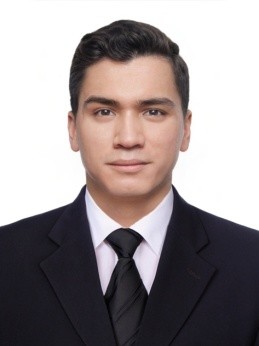
Dilyor Doniyorov
Leading Research Fellow
Institute of Legislation and Legal Policy
under the President of the Republic of Uzbekistan
📅 25.11.2026
Embassy messages
How is global climate change reshaping Uzbekistan’s riverside ecosystems?
The Ministry of Foreign Affairs of the Republic of Uzbekistan has launched the “Consular Services” mobile application
Consular Services Reception Procedure at the Embassy of Uzbekistan in Latvia
Узбекистан и страны Балтии объединяют усилия в борьбе с коррупцией
Uzbek specialists study Latvia’s best practices in veterinary and livestock sectors
Uzbekistan and Finland discussed prospects for cooperation in the field of entrepreneurship support
A holiday of unity: Navruz celebration connects nations in Riga
Trade union delegation of Uzbekistan discusses in Latvia issues of protecting the rights of compatriots – labor migrants
Ambassador of Uzbekistan presented his credentials to the President of Lithuania
Uzbekistan and Finland are preparing for the next meeting of the intergovernmental commission and a business forum within its framework
Discussions on potential areas of cooperation with the Association of European Chambers of Commerce and Industry were held in Riga
Uzbekistan and Latvia agreed to prepare a bilateral agreement on cooperation in the field of labor migration
Uzbekistan and Latvia ready for permanent dialogue in the field of labor migration
Торговый дом Узбекистана в Латвии провел онлайн-тренинг для хокимов и экспортеров Сырдарьинской области
Uzbek delegation studied Finland's experience in preventing violence against children
A festive evening for compatriots was organized in Estonia
Latvia widely celebrated the anniversary of the adoption of the Basic Law of Uzbekistan
Возможности медицинского туризма в Узбекистане презентованы в Риге
New contracts worth over $4 million signed as part of Uzbek exporters' business mission to Latvia
A roundtable discussion on the topic "Mirzo Ulugbek: a great encyclopedist and a famous statesman" was held in Riga
СМИ Латвии: Явка на выборах в Узбекистане составила 74,72%
Досрочное голосование по выборам в Законодательную палату Олий Мажлиса Узбекистана проходит в Латвии
В Латвии и Литве обсуждаются ключевые аспекты предстоящих парламентских выборов в Узбекистане
Issues related to the development of cooperation between Uzbekistan and Latvia in the field of combating crime discussed in Riga
A round table was held in Latvia on the upcoming elections in Uzbekistan to the Legislative Chamber of the Oliy Majlis and Kengashes of People's Deputies
Uzbek exporters familiarized with requirements for import of Uzbek products to Latvian and European markets
Export of agricultural products from Uzbekistan to the Latvian market increases
ЭЪЛОН!
Uzbek ambassador meets Latvian Saeima speaker to discuss prospects for boosting inter-parliamentary cooperation
Diplomats of Uzbekistan held a visiting reception of fellow citizens living in Estonia and Finland

-
 Ministry of Foreign Affairs of the Republic of Uzbekistan
-
 Diplomatic Service of the Ministry of Foreign Affairs
-
 State Committee for Tourism Development
-
Ministry of Investments and Foreign Trade of the Republic of Uzbekistan
-
 invest.gov.uz
-
-

-

-

-

-

-

of Uzbekistan in the Republic
of Latvia
When using the information, a link to www.uzembassy.lv
must be provided.
All rights reserved
Address
Address: Riga c., LV-1010. 11-11 Elizabetes Str., Latvia
Phone: 37167322424
Fax: 37167322306
Email: embassy@uzbekistan.lv
Useful links
HomeIssuance of biometric passport for departure abroad
Certificate to return to Uzbekistan
Withdrawal of citizenship
Loss of citizenship