Phone
Consular Issues
Phone
Embassy messages
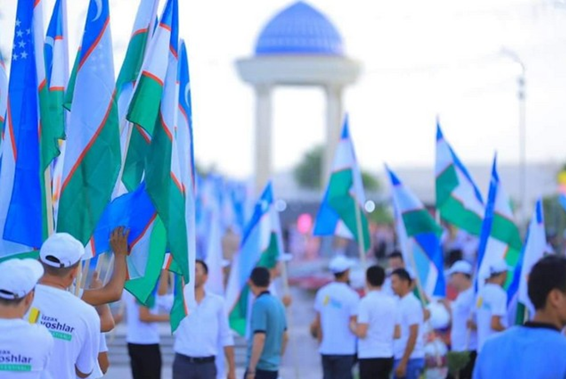
New Opportunities for Civil Society in Uzbekistan
“Above all, we need a strong civil society, because every reform must begin in each of our hearts and minds.”
Sh. Mirziyoyev
In recent years, our country has introduced a series of reforms to make it easier for non-governmental non-profit organisations (NGOs) to operate. State fees for NGO registration and re-registration have been reduced, online services have been introduced, and procedures for receiving foreign funding have been simplified. Legal safeguards protecting NGOs’ independence have also been strengthened.
Constitutional and Legal Guarantees
Constitutional guarantees underpin this process. The revised Constitution of the Republic of Uzbekistan, adopted on 30 April 2023, requires the state to safeguard the rights and legitimate interests of NGOs and to create equal legal opportunities for their participation in public life. It also enshrines the prohibition on interference in NGO activities by state bodies and officials.
This guarantee is also reflected in legislation, which establishes specific administrative liability for unlawful interference by officials of state bodies in the activities of NGOs. This provides a legal means of protecting NGOs’ independence.
Under the Law on Non-Governmental Non-Profit Organisations, foreign citizens and stateless persons may be founders or members of NGOs on an equal basis with citizens of Uzbekistan.
NGO Registration Procedures and Safeguards
The procedures for the state registration of NGOs and the authorities responsible are clearly defined. International and nationwide NGOs, as well as representative offices and branches of foreign NGOs, are registered with the Ministry of Justice, while regional NGOs are registered with the relevant regional justice authorities.
The time limits for the state registration and re-registration of NGOs, as well as for the state registration of their symbols, have also been revised.
Specifically, legislative amendments of 3 March 2021 reduced the time limit for NGO re-registration and the state registration of their symbols from one month to fifteen days.
Applicants’ rights are also protected during the registration process. A subjective judgement that establishing an organisation would be inexpedient cannot serve as grounds for refusal. A refusal decision or a failure to meet the prescribed time limit may be challenged in court. Once any deficiencies have been remedied, applicants may, as a general rule, reapply within three months without paying the state fee again.
Further Relief through Lower State Fees
Lower registration costs are particularly important for local initiatives. Under legislative amendments of 21 August 2025, the state fee for regional NGOs was set at 50 per cent of the basic calculation amount (BCA). For nationwide NGOs, the fee was set at three times the BCA.
Additional relief has also been introduced for NGOs of social importance. Under legislative amendments of 17 December 2025, public associations of persons with disabilities, veterans, women and children are charged half the applicable state fee for registration. This directly reduces the cost of establishing organisations that protect people’s interests and supports their creation.
Digitalisation in Every Sphere through a Single Portal for Online Services
Access to remote services has also expanded. The Ministry of Justice’s e-ngo.uz portal brings together services for registering and re-registering NGOs and their subdivisions, accrediting foreign staff, obtaining approval and submitting notifications for the receipt of funds from foreign sources, notifying the authorities of events and submitting reports. The portal also provides an open register of NGOs.
The scope of an NGO’s activities is determined by the objectives set out in its charter. Within the framework of the law, NGOs may implement projects in human rights protection, education, environmental protection, healthcare and social assistance, and establish international ties. An NGO may also earn income from business activities consistent with its charter objectives and use that income to pursue those objectives.
New Opportunities through Grants and Social Contracts
Social projects also receive state support. The Public Fund for the Support of Civil Society Institutions under the Oliy Majlis of the Republic of Uzbekistan and its regional branches support NGOs by awarding state grants and social contracts.
Tax relief has also been introduced for projects financed by this Public Fund through state grants and social contracts. With effect from 1 October 2024, the rates of personal income tax on the remuneration of specialists engaged in these projects and social tax on project payroll expenditure were reduced by 50 per cent.
A measure has also been adopted to reduce costs for public funds. Under legislative amendments of 21 August 2025, if a public fund has no turnover in its bank accounts during a calendar year, an audit for that year is voluntary. This removes the cost of a mandatory audit for periods in which no financial transactions have taken place.
NGOs may also submit their own project proposals directly to state bodies in the relevant areas of activity. If the public council issues a favourable opinion, a social contract for the project worth up to 1,000 times the BCA may be awarded directly and financed from the state body’s extrabudgetary funds.
When Approval Is Not Required for Foreign Funding
There are also simplified procedures for obtaining foreign funding. Under legislative amendments introduced by the Cabinet of Ministers on 4 October 2023, the threshold for funds and property that may be received without approval from the justice authorities was increased from 20 times the BCA to 100 times the BCA. In such cases, notification alone is sufficient, provided it is submitted before the funds are received and in accordance with the prescribed procedure and time limits.
Approval is not required for funding received directly from international organisations of which Uzbekistan is a member, or from their specialised agencies. The same exemption applies to funds allocated by parent organisations to the representative offices and branches of foreign and international NGOs to cover administrative expenses.
Foreign-funded projects worth up to 1,000 times the BCA are implemented independently by NGOs. This gives organisations greater freedom to make their own decisions when implementing such projects.
Furthermore, legislative amendments of 13 October 2026 made it possible to submit all applications and notifications relating to foreign funding through the NGO electronic portal. This enables documents to be submitted remotely.
The practical value of these opportunities lies in using them to serve the public. Combining the local experience of Uzbekistan’s NGOs with the knowledge and resources of foreign partners can provide a basis for developing social services, supporting people in need and implementing community initiatives.
The Minister of Justice
of the Republic of Uzbekistan ,
Akbar Djurabayevich Tashkulov.
📅 26.11.2026
Embassy messages
How is global climate change reshaping Uzbekistan’s riverside ecosystems?
The Ministry of Foreign Affairs of the Republic of Uzbekistan has launched the “Consular Services” mobile application
Consular Services Reception Procedure at the Embassy of Uzbekistan in Latvia
Узбекистан и страны Балтии объединяют усилия в борьбе с коррупцией
Uzbek specialists study Latvia’s best practices in veterinary and livestock sectors
Uzbekistan and Finland discussed prospects for cooperation in the field of entrepreneurship support
A holiday of unity: Navruz celebration connects nations in Riga
Trade union delegation of Uzbekistan discusses in Latvia issues of protecting the rights of compatriots – labor migrants
Ambassador of Uzbekistan presented his credentials to the President of Lithuania
Uzbekistan and Finland are preparing for the next meeting of the intergovernmental commission and a business forum within its framework
Discussions on potential areas of cooperation with the Association of European Chambers of Commerce and Industry were held in Riga
Uzbekistan and Latvia agreed to prepare a bilateral agreement on cooperation in the field of labor migration
Uzbekistan and Latvia ready for permanent dialogue in the field of labor migration
Торговый дом Узбекистана в Латвии провел онлайн-тренинг для хокимов и экспортеров Сырдарьинской области
Uzbek delegation studied Finland's experience in preventing violence against children
A festive evening for compatriots was organized in Estonia
Latvia widely celebrated the anniversary of the adoption of the Basic Law of Uzbekistan
Возможности медицинского туризма в Узбекистане презентованы в Риге
New contracts worth over $4 million signed as part of Uzbek exporters' business mission to Latvia
A roundtable discussion on the topic "Mirzo Ulugbek: a great encyclopedist and a famous statesman" was held in Riga
СМИ Латвии: Явка на выборах в Узбекистане составила 74,72%
Досрочное голосование по выборам в Законодательную палату Олий Мажлиса Узбекистана проходит в Латвии
В Латвии и Литве обсуждаются ключевые аспекты предстоящих парламентских выборов в Узбекистане
Issues related to the development of cooperation between Uzbekistan and Latvia in the field of combating crime discussed in Riga
A round table was held in Latvia on the upcoming elections in Uzbekistan to the Legislative Chamber of the Oliy Majlis and Kengashes of People's Deputies
Uzbek exporters familiarized with requirements for import of Uzbek products to Latvian and European markets
Export of agricultural products from Uzbekistan to the Latvian market increases
ЭЪЛОН!
Uzbek ambassador meets Latvian Saeima speaker to discuss prospects for boosting inter-parliamentary cooperation
Diplomats of Uzbekistan held a visiting reception of fellow citizens living in Estonia and Finland

-
 Ministry of Foreign Affairs of the Republic of Uzbekistan
-
 Diplomatic Service of the Ministry of Foreign Affairs
-
 State Committee for Tourism Development
-
Ministry of Investments and Foreign Trade of the Republic of Uzbekistan
-
 invest.gov.uz
-
-

-

-

-

-

-

of Uzbekistan in the Republic
of Latvia
When using the information, a link to www.uzembassy.lv
must be provided.
All rights reserved
Address
Address: Riga c., LV-1010. 11-11 Elizabetes Str., Latvia
Phone: 37167322424
Fax: 37167322306
Email: embassy@uzbekistan.lv
Useful links
HomeIssuance of biometric passport for departure abroad
Certificate to return to Uzbekistan
Withdrawal of citizenship
Loss of citizenship