Phone
Consular Issues
Phone
Embassy messages
A New Stage of Constitutional Development of Uzbekistan: Institutional Guarantees for the Protection of Individual Rights and the Digitalization of Constitutional Justice
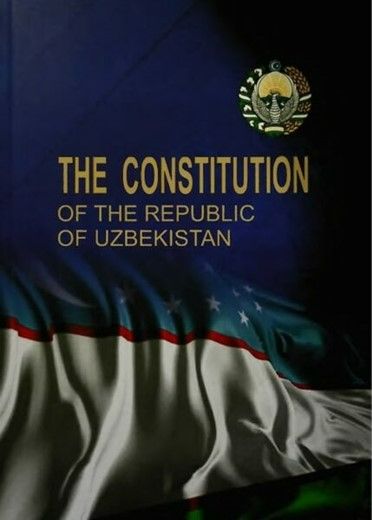
On December 8th, 2026, 34 years will have passed since the adoption of the Constitution of the Republic of Uzbekistan. Development can be presented in three stages: 1992: the formation of constitutional statehood; 2023: a new reading of constitutional values, in which the individual, their rights, honor and dignity became the central criterion of state activity; 2025–2026: the development of institutional and procedural mechanisms (the Presidential Decree of 18 December 2025 No. UP-253 and the Constitutional Law of 14 October 2026 No. ZRU-1181 “On the Constitutional Court of the Republic of Uzbekistan”). The new stage is defined by a shift from the normative recognition of guarantees to mechanisms for their practical implementation.
The central thesis of the article is that the effectiveness of a constitutional guarantee is measured not by the recognition of the right but by whether a violation has been identified, the remedy works, the decision has been enforced and the legal problem has been eliminated. This requires an accessible mechanism for realization, an independent protective institution, the binding enforcement of decisions, and the feedback effect of protection outcomes on legislation and law enforcement.
The article proposes an original analytical model, the “life cycle of constitutional guarantees: from value to practical result”. It comprises six links: constitutional value: recognition and entrenchment of the right, freedom, honor and dignity (Article 54 of the Constitution); the state’s positive obligations: creating the legal and organizational conditions for exercising rights; the legal mechanism: procedure, powers, time limits and procedural guarantees; institutional guarantee: the activity of competent and independent bodies protecting rights; enforcement and accountability: implementation of decisions, elimination of identified violations, open data; feedback: improvement of legislation and law-enforcement practice. The model is not a procedure established by law; it is an analytical tool.
The scholarly novelty lies in treating guarantees as an interrelated system whose effectiveness is determined by the consistency of their institutional implementation. Unlike approaches that mainly consider constitutional guarantees through the content of legal norms and the powers of constitutional review bodies, the proposed model makes it possible to assess the sequence of their practical implementation: from the recognition of a right to the enforcement of a judicial decision and the elimination of the identified normative problem. The object of analysis thus becomes not a single element of a guarantee but the effectiveness of the whole system: separate assessments show whether a right is entrenched and whether a protective body has been created, but not whether a specific case has reached an enforced decision; the model identifies the gaps between the links of the cycle.
The concept is expressed in three theses. First: a norm and its practical result are different things; proclaiming a right does not guarantee its realization. Second: the effectiveness of the Constitutional Court is determined not by the number of cases considered but by the influence of its decisions on legislation, the elimination of gaps and the restoration of rights. Third: the digitalization of constitutional justice has independent significance only insofar as it increases the accessibility of judicial protection, ensures equality of participants and does not restrict traditional means of applying to the court. Methods: formal-legal and systemic.
- The 2023 Constitution: The Human-Centered Foundation of the New Stage and Legal Guarantees for the Protection of Individual Rights
The 2023 Constitution increased the number of articles from 128 to 155; 90.21% of participants in the referendum of 30th April 2023 voted for the new version. The key provisions are as follows: Article 54 designates ensuring human rights and freedoms as the supreme goal of the state; Article 15 establishes the supreme legal force and direct effect of the Constitution; Article 133 allows an individual constitutional complaint against a law applied in the applicant’s case, subject to admissibility conditions, in particular after other remedies have been exhausted. Their interconnection links the recognition of a right, the binding nature of constitutional norms and the possibility of judicial review of a law.
The President of the Republic of Uzbekistan has emphasized that the protection of the individual, their rights, freedoms, honor and dignity is “at the center of our constitutional reforms”, and that the principle “individual — society — state” must be embedded in the Constitution, in legislation and in everyday life. The Head of State’s instruction to interpret ambiguities in laws in favor of the individual is related to the principle of legal certainty; however, the real effectiveness of rights protection depends not only on proclaiming the principle but also on its consistent implementation by law-enforcement bodies. The political position of the Head of State expresses the aim of the reforms; the effectiveness of the corresponding mechanisms is determined by statutory norms, judicial practice and legal consequences.
The author builds on A. Saidov’s approach to public participation and human rights institutions, applying it to the assessment of the practical result of protection; develops O. Khusanov’s position on legality and justice by showing that these principles are secured by specific procedures of constitutional proceedings; supplements I. Khamedov’s idea of the link between the national and international vectors of reform with the question of how domestic mechanisms relate to international standards; and compares A. Gafurov’s conclusions on constitutional control with the reforms of 2026. The procedural conditions for admitting complaints and the effectiveness of constitutional justice are also analyzed in the most recent works; the article complements them with an assessment of the practical result of protection.
- The Institutional Program: Decree of 18 December 2025 No. UP-253
The Decree was preceded by a presentation (17th December 2025) on mechanisms for protecting the constitutional rights of citizens and entrepreneurs and on the digitalization of the court. The proposals to simplify the consideration of applications, to review judicial decisions when a law is declared unconstitutional, to enable remote participation in hearings and to implement the court’s annual proposals were supported; thus the links of enforcement and feedback were built in already at the stage of defining state policy.
The Decree entered into force on 19th December 2025 and contains four blocks: access to the court (simplified applications, notification of the applicant, referrals by the Supreme Court); legislative support (a draft separate constitutional law by 1 June 2026); digitalization (a program for 2026–2027, a pilot launch of the “E-KSUD” system from 1 August 2027); and organizational measures.
Decree No. UP-253 is primarily of organizational and institutional significance: it improves access to the court and introduces digital technologies, but it does not replace the legislative regulation of constitutional proceedings. In terms of the model, this is the link of the “state’s positive obligations”; the directions provided for by the Decree have received further procedural entrenchment in the new Constitutional Law. The Law was adopted by the Legislative Chamber on 29 September, approved by the Senate on 2 October and signed by the President on 14 October 2026.
- The Constitutional Complaint as a Mechanism for Protecting Individual Rights: From Legal Basis to Procedural Guarantees
Constitutional Law No. ZRU-1181 replaces the 2021 version (No. ZRU-687: 13 chapters and 101 articles); it consists of 17 chapters and 120 articles and entered into force for the most part on 15 October 2026. The Law does not introduce the institution “from scratch” but improves it procedurally: it defines the procedure for filing, the stages and the time limits. The constitutional complaint (the right to apply) and constitutional proceedings (the procedure for consideration) should be distinguished.
The development of the constitutional complaint has gone through three stages. The 2021 Constitutional Law established the possibility of lodging a complaint against a law applied in a specific case; the 2023 reform gave this mechanism a constitutional basis in Article 133; the 2026 Law specified the procedure for applying, preliminary examination, time limits and the consequences of consideration. The 2026 changes are a development of a previously created institution, which is consistent with A. Gafurov’s position.
The key procedural provisions of the 2026 Law are as follows:
– filing: no later than one year from the date of the last judicial act in the case (Article 102), provided that other judicial remedies have been exhausted; written or electronic form is permitted; the complaint serves to verify the constitutionality of a law and not to review a judicial decision;
– admission: preliminary examination: 15 days from the date the application is assigned to a judge (Article 49); a ruling refusing admission is issued within one month, and a copy is sent to the applicant within five days (Article 50); a ruling on admission is likewise issued within one month, and the participants are notified within five days (Article 51); an application from a person not entitled to apply directly may be forwarded to an authorized entity in the manner provided by law; if the entity does not bring the matter before the court, the applicant is notified (Article 48; Decree of 2025);
– referral by the Supreme Court: it is conditioned on the courts’ initiative in a specific case and is not an alternative to an individual complaint; proceedings in the case are suspended and the question is resolved within one month (Article 103);
– consequences: an act or part of an act declared unconstitutional ceases to have effect; the body that adopted the act is obliged to bring it into conformity with the Constitution no later than three months (previously one month) or within the period set by the court’s decision; decisions of state bodies based on it are reviewed within one month, and judicial acts are reviewed in accordance with the procedure established by law (Article 85); the overall time limit for deciding a case is up to three months (Article 45).
The significance of the complaint goes beyond an individual dispute and manifests itself at three levels: protection of the individual right, constitutional control and normative impact (the elimination of an unconstitutional provision affects the entire legal system).
The legislation provides organizational, procedural, functional and financial guarantees of the independence of the Constitutional Court: nine judges are elected by the Senate on the President’s nomination for a term of ten years without the right to re-election; judges are subject only to the Constitution, and interference is prohibited; the court’s acts are binding on all bodies and persons (Article 8), and the procedure for their enforcement is determined by Article 85; the court is financed by a separate line of the State Budget (Article 109). However, the practical effectiveness of these guarantees depends on the real independence of the court in exercising its powers, so independence should be assessed at two levels: statutory guarantees and the practical conditions for taking independent decisions.
- Digital Transformation of Constitutional Justice
The digital component is being implemented in two stages. The 2025 Decree defined the 2026–2027 program and the pilot launch of “E-KSUD” from 1 August 2027; the Law gave these decisions a legal form: Article 10 obliges the court to create an information system for electronic applications, tracking the progress of a case, participation in hearings by video link and broadcasting of open hearings. The provisions on electronic proceedings and videoconferencing (Article 29, part two of Article 58, Article 59) enter into force on 1 January 2028. These dates should be distinguished; E-KSUD has not yet been put into operation, so its assessment is prospective. Articles 28–29 establish written and electronic forms of proceedings and the equal legal force of documents: digitalization is not a replacement for the traditional procedure but an additional form of its conduct.
The legal assessment of digitalization is determined not by technical capabilities but by its impact on individual rights: it should be assessed not by the number of electronic services but by the expansion of access to protection, the reduction of costs and the equality of participants. The main legal problems are the identification of the applicant, the protection of personal data and cybersecurity, the digital divide, and the procedural equivalence of electronic and traditional means of applying: the electronic format must not restrict the opportunities of persons who lack digital skills. A. Saidov sees the digital divide as a challenge and proposes entrenching digital rights in the constitution. International approaches combine technological accessibility with legal guarantees, transparency and the protection of participants. In his message to the participants of the VII Congress of the Association of Asian Constitutional Courts and Equivalent Institutions (1 October 2026), President of the Republic of Uzbekistan Shavkat Mirziyoyev noted: “By verifying the conformity of laws with the Constitution, the system of constitutional justice protects the interests of the individual”, and proposed using artificial intelligence to protect rights.
The legal status of participants’ electronic actions during the pilot period requires separate regulation.
- The Practical Effectiveness of Constitutional Guarantees: An Original Assessment Model
The Law builds in the links of enforcement, accountability and feedback: Chapter 14 (Articles 92–94) provides for annual information on the state of constitutional legality, its submission to the chambers of the Oliy Majlis and to the President, and mandatory consideration of the proposals it contains. So that this information reveals constitutional problems, three blocks of criteria are proposed (see the Table): accessibility and procedural certainty (the number and means of filing applications, time limits, grounds for admission or refusal); quality and enforcement (the reasoning of decisions, compliance with enforcement deadlines, elimination of violations); and the final legal result (restoration of rights, openness of the annual information, the impact of decisions on legislation and practice). The criteria are methodological and of the author’s own design and are not a mandatory reporting form established by law. Three results are distinguished: enforcement of the decision, restoration of the applicant’s right and elimination of the normative problem.
Quantitative indicators do not by themselves prove the effectiveness of constitutional justice: an increase in the number of applications may signify either greater accessibility of the court or unresolved problems, and the number of cases does not show the quality of justice. Since E-KSUD has not yet been launched, the criteria are a model of future assessment and not the results of an empirical study of digital justice.
By its decision of 22 September 2026 No. PKS-8, on the application of the Human Rights Commissioner (Ombudsman) of the Oliy Majlis, which was based on six citizens’ complaints for 2025–2026, the Constitutional Court found part two of Article 288 of the Code of Administrative Responsibility incompatible with part three of Article 27 of the Constitution insofar as it provides for the detention of violators of the border regime for up to three days, and for up to ten days with the prosecutor’s sanction. This example shows that constitutional review can identify not only an individual problem but also the normative basis for restricting a right, the elimination of which matters for an indefinite range of persons. The result for citizens depends on the enforcement of the decision.
Table. An original model of criteria for the practical effectiveness of constitutional guarantees
|
Criteria group |
Criterion |
Possible indicator |
|
1. Accessibility and procedural certainty |
Access to constitutional protection |
Number of applications and means of filing |
|
Predictability of consideration |
Time limits and grounds for admission or refusal |
|
|
2. Quality and enforcement |
Reasoning of decisions |
Completeness of constitutional-legal argumentation |
|
Enforcement of decisions |
Share of decisions enforced within the set time limits |
|
|
3. Final legal result |
Restoration of the applicant’s right |
Number of complaints granted; cases of review of judicial acts in the applicant’s favor |
|
Openness |
Completeness and timeliness of publication of the annual information |
|
|
Elimination of the normative problem |
Number of unconstitutional provisions eliminated and court proposals implemented |
The theoretical basis comprises H. Kelsen’s concept of specialized constitutional review, T. Ginsburg’s research on the role of constitutional courts in new democracies and A. Barak’s approach to the proportionality of restrictions on rights. The model supplements them with an assessment of the enforcement of decisions.
Risks. The balance between filtering and access: filtering applications is necessary for the court’s work but must not become an unjustified restriction of access to constitutional justice; clear admissibility criteria and reasoned rulings of refusal are important (Article 50). The enforcement period: the three-month period for bringing an act into conformity with the Constitution is explained by the length of the legislative cycle, but the applicant’s rights are protected independently of it: the act ceases to have effect, and decisions based on it are subject to review (Article 85).
The study allows the following conclusions to be drawn. First, the new stage of constitutional development of Uzbekistan is characterized by a shift from the entrenchment of human rights and freedoms to the improvement of procedural and institutional mechanisms for their protection.
Second, the constitutional complaint is an important mechanism for protecting individual rights: its significance is determined not only by the review of the constitutionality of the applied law but also by the consequences of the court’s decisions for law-enforcement practice.
Third, the independence of the Constitutional Court and the binding nature of its acts are necessary conditions for realizing guarantees; the effectiveness of protection depends on the enforcement of decisions and the elimination of identified violations.
Fourth, the digitalization of constitutional justice should be assessed through the expansion of access to judicial protection, the equality of participants and information security.
The scholarly and practical significance of the life cycle model of constitutional guarantees is that it makes it possible to assess guarantees not in isolation but as an interrelated system (from the recognition of a right to a practical result) and to identify gaps where protection does not reach an enforced decision and the elimination of the normative problem. The model is applicable in preparing the annual information on the state of constitutional legality and in assessing the introduction of E-KSUD.
Isabaev Akmaljon Teshabaevich, PhD, Chief Consultant,
Constitutional Court of the Republic of Uzbekistan
📅 26.11.2026
Embassy messages
How is global climate change reshaping Uzbekistan’s riverside ecosystems?
The Ministry of Foreign Affairs of the Republic of Uzbekistan has launched the “Consular Services” mobile application
Consular Services Reception Procedure at the Embassy of Uzbekistan in Latvia
Узбекистан и страны Балтии объединяют усилия в борьбе с коррупцией
Uzbek specialists study Latvia’s best practices in veterinary and livestock sectors
Uzbekistan and Finland discussed prospects for cooperation in the field of entrepreneurship support
A holiday of unity: Navruz celebration connects nations in Riga
Trade union delegation of Uzbekistan discusses in Latvia issues of protecting the rights of compatriots – labor migrants
Ambassador of Uzbekistan presented his credentials to the President of Lithuania
Uzbekistan and Finland are preparing for the next meeting of the intergovernmental commission and a business forum within its framework
Discussions on potential areas of cooperation with the Association of European Chambers of Commerce and Industry were held in Riga
Uzbekistan and Latvia agreed to prepare a bilateral agreement on cooperation in the field of labor migration
Uzbekistan and Latvia ready for permanent dialogue in the field of labor migration
Торговый дом Узбекистана в Латвии провел онлайн-тренинг для хокимов и экспортеров Сырдарьинской области
Uzbek delegation studied Finland's experience in preventing violence against children
A festive evening for compatriots was organized in Estonia
Latvia widely celebrated the anniversary of the adoption of the Basic Law of Uzbekistan
Возможности медицинского туризма в Узбекистане презентованы в Риге
New contracts worth over $4 million signed as part of Uzbek exporters' business mission to Latvia
A roundtable discussion on the topic "Mirzo Ulugbek: a great encyclopedist and a famous statesman" was held in Riga
СМИ Латвии: Явка на выборах в Узбекистане составила 74,72%
Досрочное голосование по выборам в Законодательную палату Олий Мажлиса Узбекистана проходит в Латвии
В Латвии и Литве обсуждаются ключевые аспекты предстоящих парламентских выборов в Узбекистане
Issues related to the development of cooperation between Uzbekistan and Latvia in the field of combating crime discussed in Riga
A round table was held in Latvia on the upcoming elections in Uzbekistan to the Legislative Chamber of the Oliy Majlis and Kengashes of People's Deputies
Uzbek exporters familiarized with requirements for import of Uzbek products to Latvian and European markets
Export of agricultural products from Uzbekistan to the Latvian market increases
ЭЪЛОН!
Uzbek ambassador meets Latvian Saeima speaker to discuss prospects for boosting inter-parliamentary cooperation
Diplomats of Uzbekistan held a visiting reception of fellow citizens living in Estonia and Finland

-
 Ministry of Foreign Affairs of the Republic of Uzbekistan
-
 Diplomatic Service of the Ministry of Foreign Affairs
-
 State Committee for Tourism Development
-
Ministry of Investments and Foreign Trade of the Republic of Uzbekistan
-
 invest.gov.uz
-

-

-

-

-

-

-


of Uzbekistan in the Republic
of Latvia
When using the information, a link to www.uzembassy.lv
must be provided.
All rights reserved
Address
Address: Riga c., LV-1010. 11-11 Elizabetes Str., Latvia
Phone: 37167322424
Fax: 37167322306
Email: embassy@uzbekistan.lv
Useful links
HomeIssuance of biometric passport for departure abroad
Certificate to return to Uzbekistan
Withdrawal of citizenship
Loss of citizenship