Phone
Consular Issues
Phone
Embassy messages
We recommend
Uzbek specialists study Latvia’s best practices in veterinary and livestock sectors
📅 10.07.2025
RIGA, July 9. /Dunyo IA/. A training seminar was held in Latvia for specialists of the Committee for Veterinary Medicine and Livestock Development and Production Center for Breeding of Uzbekistan, reports Dunyo IA correspondent.
The seminar, organized by the Embassy of Uzbekistan in Riga in cooperation with the Latvian breeding center "Siguldas", aimed to expand opportunities for livestock breeding through artificial insemination under Uzbekistan’s climatic conditions, introduce modern technologies, and study international experience in this field.
During the seminar, participants received detailed information on Latvia’s best practices in veterinary and livestock management, technologies used in insemination processes, laboratory research, genetic quality assessment, and breeding selection methods.
Following the training, specialists from both countries agreed to further cooperation, joint research, and the organization of seminars on pressing topics.

Consular Services Reception Procedure at the Embassy of Uzbekistan in Latvia
📅 12.04.2026
PROCEDURE FOR RECEIVING APPLICATIONS
Consular District:
The consular district of the Embassy of the Republic of Uzbekistan in Latvia covers the following countries: Latvia, Lithuania, Estonia, and Finland.
Accordingly, persons residing in these countries must contact the Consular Section of the Embassy of the Republic of Uzbekistan in Latvia for all consular matters.
Reception Hours:
Consular reception is held on: Monday, Tuesday, Thursday, Friday — 09:00 to 18:00 Wednesday — no reception Weekends and public holidays — closed.
Appointment Booking:
Before visiting the Embassy, you must register for an appointment in advance by selecting a convenient date and time at: https://e-navbat.mfa.uz/texnolog/usluga?id=27
A confirmation will be sent to your email address after booking. You may only visit the Embassy after receiving this confirmation. Visits without confirmation are not valid.
Contact Information:
Phone: +371 67 322306 / +371 67 322304
Email: consulate@uzbekistan.lv
Telegram: @uzembassylv
Appointment booking: https://e-navbat.mfa.uz/texnolog/usluga?id=27
IMPORTANT!
If a consular officer is busy with a reception or phone call, the system does not produce a "busy" signal — a normal ringing tone continues while the incoming call is displayed on their monitor. If your call goes unanswered, this does not mean staff are absent; they are simply attending to another applicant. Please call again after a short while. Calls are only accepted from identifiable numbers — calls from withheld numbers are not processed by the system.
When contacting by email or Telegram, please provide your full details: full name (surname, first name, patronymic); passport details; residential address in Uzbekistan and in your country of residence; contact phone number.
Without this information, the application is considered anonymous and, pursuant to Article 29 of the Law of the Republic of Uzbekistan "On the Procedure for Reviewing Applications from Individuals and Legal Entities," will not be processed.
Public Holidays of the Republic of Uzbekistan January 1 — New Year's Day March 8 — International Women's Day March 21 — Navruz May 9 — Day of Memory and Honor September 1 — Independence Day of the Republic of Uzbekistan October 1 — Teachers' and Mentors' Day December 8 — Constitution Day of the Republic of Uzbekistan Ramazan Hayit (lunar calendar) Kurban Hayit (lunar calendar)
Note: In accordance with Uzbekistan legislation, additional days off may be declared on the eve of public holidays.

Diplomats of Uzbekistan held a visiting reception of fellow citizens living in Estonia and Finland
📅 21.06.2024
RIGA, June 21. /IA Dunyo/. The Embassy of Uzbekistan in Riga has organized a consular reception for fellow citizens living in Estonia and Finland, Dunyo news agency's correspondent reports.
Diplomats visited places of residence and labor activity of Uzbek citizens. During the reception they were given legal consultations on issues of interest to them and practical consular and legal assistance.
During the meeting with compatriots the discussion was about the reforms being implemented in Uzbekistan to organize safe and legal external labor migration, as well as the opportunities created for temporary labor activity in foreign countries.
There was a discussion on the negative consequences of illegal migration, human trafficking, falling under the influence of foreign ideas and participation in mass riots, as well as the need to comply with the legislation of the host country.
The visit of the Ferghana Oblast delegation to Latvia was fruitful
📅 29.04.2024
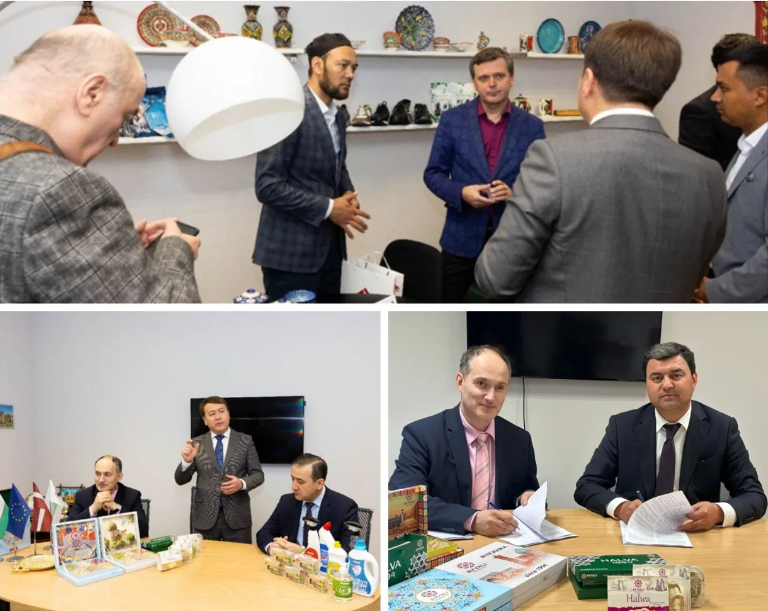
RIGA, April 29. /IA "Dunyo"/. A delegation of Uzbekistan headed by Deputy Khokim of Fergana region Nuriddin Mamajanov visited Latvia, Dunyo news agency's correspondent reported. Within the framework of the visit, the sides held talks on further development of trade and economic relations, increasing exports of national products and attracting direct investments in our country's economy.
In particular, during the meeting with Riga Deputy Mayor Linda Ozola the prospects of developing relations in trade-economic, investment, tourism, educational and cultural spheres were discussed, as well as an agreement was reached on participation of Fergana region representatives in cultural events to be held in Riga.
The delegation also held talks with Edgars Suna, Deputy Director of the Freeport of Riga (FPR). During the event, the sides discussed the issue of increasing exports of Uzbek products to Latvia and other EU countries, including active utilization of the port's terminal infrastructure. The issues of purchasing or renting warehouses in the territory of the REP by Uzbek entrepreneurs, granting them privileges and preferences were discussed. In turn, Edgars Suna said that the port management is ready to help in this matter. An agreement was reached to sign a memorandum on mutual cooperation between the parties in a short period of time.
Within the framework of the delegation's stay at the Uzbek Trade House in Riga, a B2B meeting between businessmen of the two countries was held. At this event, information about investment and export potential of Uzbekistan, including Fergana region, was presented. As a result of meetings and negotiations, agreements were reached on supplying agricultural products, household chemicals, confectionery and textile products to the Latvian market, and export contracts worth 25 million US dollars were signed.
At the same time, the opening ceremony of the exhibition hall of Fergana region in the Uzbek Trade House was held within the framework of the event.
Members of the delegation also held a meeting in Latvian company "KGS Group" and discussed the establishment of agro-logistic complex in Fergana region. The Latvian side expressed interest in the implementation of this project and readiness to invest 10 million dollars in it.
Translated with DeepL.com (free version)
Export of agricultural products from Uzbekistan to the Latvian market increases
📅 02.10.2024
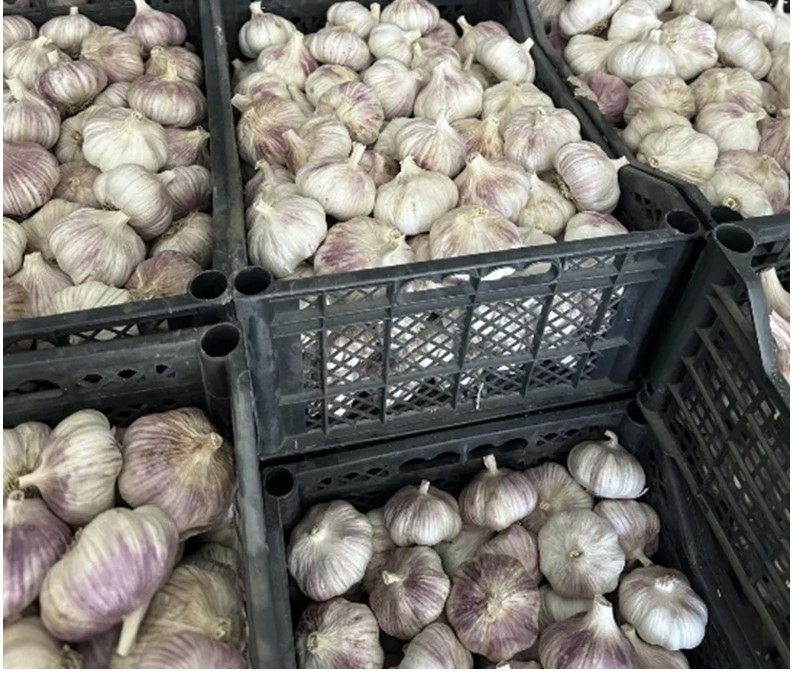
RIGA, September 20. /IA “Dunyo”/. With the support of our country's embassy, the volume of garlic exports from Uzbekistan to the Latvian market is increasing, Dunyo news agency's correspondent reports.
In particular, the products with a total volume of about 20 tons were supplied to Latvian company “KGS Group” by exporting company “Oksus” Ltd. from Uzbekistan, which went on sale in large shopping centers on September 16. It is planned to further increase the volume of supplies of these products to the markets of the Baltic States.
Negotiations are also underway with major importing companies to increase the range of Uzbek national products sold in the markets of these countries.
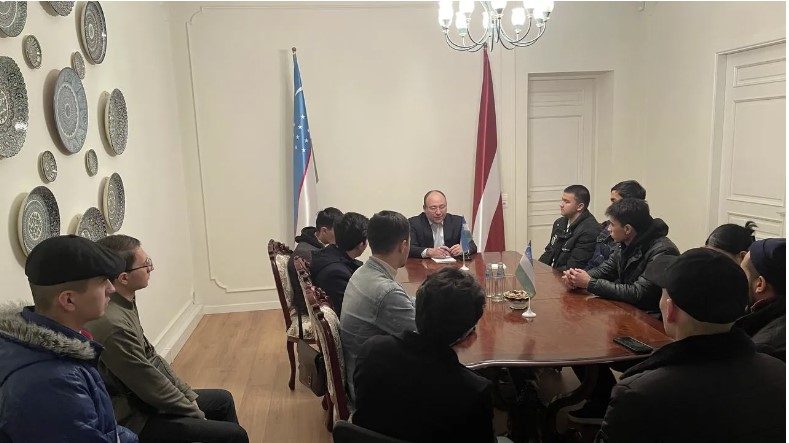
A roundtable discussion on the topic "Mirzo Ulugbek: a great encyclopedist and a famous statesman" was held in Riga
📅 26.11.2024The text of the article is in Uzbek!
Uzbek exporters familiarized with requirements for import of Uzbek products to Latvian and European markets
📅 02.10.2024
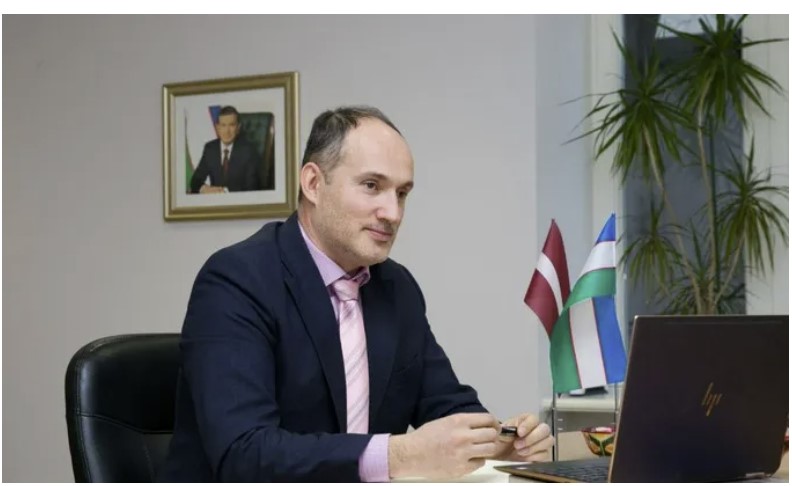
RIGA, September 21. /IA Dunyo/. The Embassy of Uzbekistan together with the Plant Protection Agency organized an online seminar-training on the topic “Export to Europe” with the participation of the head of the Uzbek Trade House in Latvia, Honorary Consul Vladimir Galperin, Dunyo news agency's correspondent reports.
The event was devoted to disclosure of peculiarities of normative and technical regulation and other specific requirements for export of locally produced products to Latvian and European markets.
Latvian expert provided detailed information on requirements and conditions related to export of agricultural products to Europe, certification, food packaging standards, processing technologies, beverage production, licensing of production technologies.
It is worth noting that 50 Uzbek exporters participated in the training seminar.
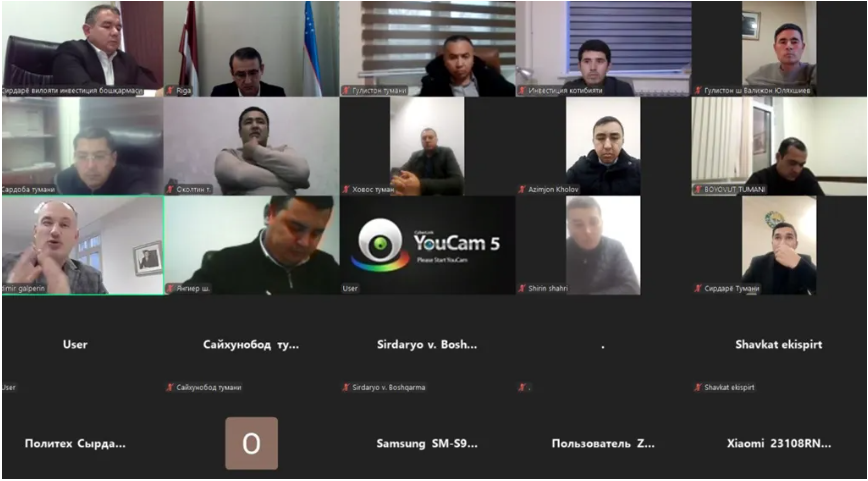
Торговый дом Узбекистана в Латвии провел онлайн-тренинг для хокимов и экспортеров Сырдарьинской области
📅 29.12.2024РИГА, 28 декабря. /ИА «Дунё»/. Глава Торгового дома Узбекистана в Риге и почетный консул нашей страны в Латвии Владимир Гальперин организовало в онлайн-формате «круглый стол» и семинар-тренинг на тему «Экспорт в Европу» для хокимов районов и экспортеров Сырдарьинской области, передаёт корреспондент ИА «Дунё».
В ходе мероприятия были подробно обсуждены нормативно-техническое регулирование и другие требования к экспорту узбекской продукции в страны Европы, поиску надежных партнеров, заключению контрактов, использованию возможностей торговых домов Узбекистана.
Кроме того, эксперт предоставил подробную информацию о требованиях и условиях, связанных с экспортом сельскохозяйственной продукции в Европу, стандартах упаковки пищевых продуктов, технологиях переработки и производства напитков. Участники были проинформированы о видах узбекской продукции, в которой заинтересованы латвийские, литовские и эстонские импортеры, а также о размерах этих рынков.
Мероприятие вызвало активный интерес участников к складам в Прибалтике и их аренде, а также таможенному оформлению и последующей доставке в другие страны Европы. На все вопросы были даны подробные ответы и достигнута договоренность между хокимиятами и Торговым домом Узбекистана о совместной работе по увеличению объемов экспорта из Сырдарьи на европейские рынки.
How is global climate change reshaping Uzbekistan’s riverside ecosystems?
📅 07.11.2026
Forest ecosystems that have developed over time line the major rivers of Central Asia. The peoples of the region call this distinctive natural heritage tugai. In Uzbekistan’s dry, hot climate, tugai provides a unique natural habitat that sustains a vital ecological balance. Tree roots stabilise riverbanks, trees and shrubs protect the soil, and their shade moderates the summer heat. Birds nest here, and many animals find food and shelter. Dozens of rare animal species, including the Bukhara deer, depend on these habitats. Desert poplars, willows, oleasters and tamarisk scrub maintain a distinctive natural balance between river and desert. In recent decades, however, climate change and extensive human activity have placed these riverside forests among the world’s most threatened ecosystems.
The value of tugai becomes more apparent as its extent shrinks. Historically, along some of Central Asia’s rivers, tugai forests extended two to three kilometres inland from the banks. Today, in many places, they survive only as narrow, disconnected green strips. Areas where trees, shrubs, reedbeds and wet meadows once joined together have broken into small, separate fragments. For every plant and animal, this means less living space, food and shelter.
Scientists at the Academy of Sciences of the Republic of Uzbekistan have completed a long-term programme of comprehensive research into tugai along the Amu Darya, Syr Darya and Zarafshan rivers and the shores of the Aydar–Arnasay lake system. Field observations were combined with analysis of historical records, satellite imagery and tree rings. The research revealed the richness of these riverside ecosystems, which support 632 plant species.
The research showed that the pressures threatening this diversity are closely interconnected. Warming is increasing evaporation, drought is depleting soil moisture, and earlier snowmelt and shrinking mountain glaciers are affecting the water feeding rivers. Where seasonal inundation becomes less frequent, natural regeneration of tugai becomes more difficult. Land conversion, excessive grazing and the regulation of river flows add to these pressures. Climate change compounds existing stresses and narrows the opportunities for recovery.
The life of a riverside tree often begins hundreds of kilometres away, high in the mountains. Snow accumulated during winter and glacier ice supply rivers with water in the warmer months. Warming is reducing winter snow accumulation and bringing earlier snowmelt, changing the distribution of water throughout the year. Shrinking glaciers weaken the supply of water in summer over the longer term. Faster melting may initially increase runoff, but this temporary rise does not mean that mountain ice reserves are recovering. As those reserves decline, the risk of water shortages during the hottest months grows.
Changes in the mountains thus reach tugai far downstream. When trees need more water, the supply from the river and soil falls short. The condition of tugai depends not only on the total volume flowing down the river each year, but also on whether that water reaches riverside habitats during the growing season.
Under natural conditions, the seasonal rise of a river sustains tugai. Water spreads across the low-lying land beside the river — its floodplain — moistening the soil, replenishing groundwater and creating wet sandy and silty surfaces where seeds can germinate. After the water recedes, moisture retained in the soil helps young plants grow. The next generation of tugai trees depends on this natural cycle.
When inundation becomes shorter, shifts in timing or no longer reaches particular sites, that connection is disrupted. Mature trees may still carry green canopies, but fewer young plants are available to replace them. A seedling whose roots have not yet reached deeper soil dies during its first dry, hot summer. Water flowing in the channel therefore does not mean that all neighbouring tugai receives enough moisture.
Rising temperatures intensify the problem. Long-term analysis for the Zarafshan valley shows warming and declining summer relative humidity. Rainfall in winter or spring does not always compensate for summer water shortages. In hot weather, soils dry faster and plants must replace lost moisture through their roots. When water is scarce, growth slows, trees weaken and surviving dry years becomes more difficult.
Sensitivity to climate was also evident along the Aydar–Arnasay shores. At the study sites, increases in spring rainfall relative to the previous year were associated with a tendency towards greener vegetation in summer; hotter summers showed the opposite relationship. The conclusion drawn from the research is that proximity to a large lake alone does not protect vegetation from heat and inadequate soil moisture.
Salinity compounds moisture shortages, placing tugai under even greater stress. Where water is not sufficiently renewed and salts are not flushed out, strong evaporation increases salt accumulation in the soil. Plants then find it harder to take up water even when some moisture remains. Trees experience water shortage and the effects of salinity at the same time.
Research in the lower Amu Darya and its delta revealed what this transformation looks like. In some areas, desert poplar stands are thinning and moisture-demanding plants are declining, while shrubs and herbs tolerant of drought and salinity are becoming more prominent. As woodland gives way to areas dominated by shrubs and salt-tolerant herbs, the shade, conditions for moisture retention and wildlife habitats also change. Unfortunately, the presence of vegetation where a forest once stood does not mean that the forest itself has survived.
This distinction also matters in Zarafshan tugai. Grasses and other herbs may spread, making a site look green even while its trees are weakened or dying. Greenness alone is therefore insufficient to assess the condition of tugai. The key criterion is whether healthy trees, natural regeneration and species characteristic of the habitat are being maintained.
The findings from three tugai stands along the Syr Darya in the Fergana Valley illustrate the scale of loss. Their combined area fell from approximately 754 hectares in 1975 to 377 hectares in 2025. Over half a century, these Syr Darya tugai stands lost almost half their area. Warming and drought are making the survival and recovery of the remaining fragments even more difficult.
In their research on tugai along the Amu Darya, Syr Darya and Zarafshan, Academy of Sciences scientists found that tree-ring width in the Amu Darya basin declined from 6.96 millimetres in 1949 to 2.46 millimetres in 2022. In the Syr Darya basin, it fell from 11.26 to 1.95 millimetres between 1965 and 2022. Radial growth declined by 65% relative to its historical maximum in the Amu Darya basin, by 83% in the Syr Darya basin, and by nearly 49% during the recent phase in the Zarafshan basin. The sharp decline in radial growth observed in tugai is not an ordinary climatic fluctuation, but a biological signal that ecosystem stability is being disrupted.
The research showed that fragmentation makes tugai increasingly vulnerable. Animals find it harder to move between isolated patches of woodland, while plants have fewer opportunities to spread. Nearby healthy tugai and seed sources are important when a damaged patch needs to recover after fire or prolonged drought. Where trees disappear and the soil becomes exposed, sunlight and wind have a greater effect, encouraging further moisture loss.
Accumulated dry grasses, reeds and branches also increase fire danger. Hot, dry weather creates favourable conditions for fires to start and spread, while dryness and heat can contribute to ignition. Recovery after a fire requires water too. Where moisture is scarce, damaged woodland takes longer to recover or is replaced by another type of vegetation. Warming, water shortage and fire danger are therefore becoming mutually reinforcing pressures.
Research by Academy of Sciences scientists helps identify where action is needed and which measures are appropriate for conserving tugai. Studying plant communities and tree condition, monitoring soil moisture and salinity, and mapping sites with high fire danger make it possible to identify the most vulnerable areas. This evidence is intended to match protection and restoration to the actual needs of each place.
The first priority is to protect the natural integrity of surviving tugai and prevent further loss through land conversion. Restoration should use native species suited to local soils and moisture conditions, while natural regeneration needs protection from excessive grazing. Where feasible, the floodplain’s connection with the river and scientifically informed seasonal wetting should be restored. Whether planted trees survive subsequent hot summers must be one of the main measures of success.
These tasks are inseparable from the responsible use of the region’s water resources. Water must be conserved, losses reduced and available supplies measured more accurately, with the needs of natural ecosystems considered in water allocation. Alongside water for households, agriculture and industry, provision must be made for the flows that sustain life in river floodplains. Planting trees alone cannot save a tugai deprived of water.
For the countries of Central Asia, conserving tugai is a shared responsibility. Mountain snow and ice reserves, rivers, valleys and their wildlife are interconnected. Stronger cooperation is therefore needed in sharing scientific data, monitoring water and ecosystems, protecting habitats of rare species and restoring tugai. Each country’s practical contribution helps sustain the region’s environment.
Global climate change also requires greater solidarity from the international community. Limiting warming, expanding the use of water-saving technologies and supporting research and ecological restoration are ways for countries worldwide to help protect these unique ecosystems. Joint action for biodiversity must produce tangible results: water reaching riverside habitats, young trees growing to maturity and wildlife retaining the places it needs to survive.
The future of tugai, now reduced in many places to narrow green strips, depends on how we treat water, land and nature. Protecting it requires us to put solutions informed by science into practice together. With that commitment, life along our rivers can continue for the generations to come.
- Sh. Khabibullaev
Head of Laboratory, Institute of Botany,
Academy of Sciences of the Republic of Uzbekistan, PhD, Senior Researcher.
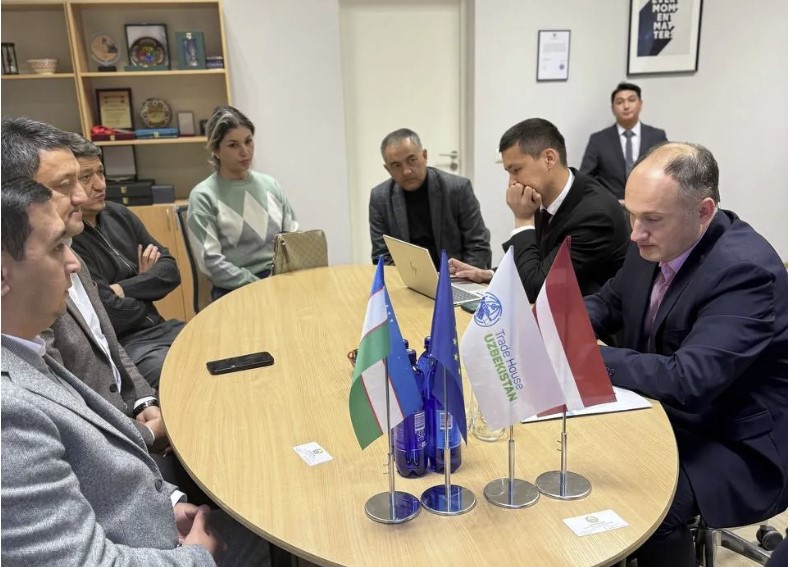
New contracts worth over $4 million signed as part of Uzbek exporters' business mission to Latvia
📅 26.11.2024The text of the article is in Uzbek!

Uzbekistan and Latvia ready for permanent dialogue in the field of labor migration
📅 31.01.2025The text of the article is in Uzbek!

The Ministry of Foreign Affairs of the Republic of Uzbekistan has launched the “Consular Services” mobile application
📅 09.06.2026The Ministry of Foreign Affairs of the Republic of Uzbekistan has launched the “Consular Services” mobile application.

-
 Ministry of Foreign Affairs of the Republic of Uzbekistan
-
 Diplomatic Service of the Ministry of Foreign Affairs
-
 State Committee for Tourism Development
-
Ministry of Investments and Foreign Trade of the Republic of Uzbekistan
-
 invest.gov.uz
-

-

-

-

-

-

-


of Uzbekistan in the Republic
of Latvia
When using the information, a link to www.uzembassy.lv
must be provided.
All rights reserved
Address
Address: Riga c., LV-1010. 11-11 Elizabetes Str., Latvia
Phone: 37167322424
Fax: 37167322306
Email: embassy@uzbekistan.lv
Useful links
HomeIssuance of biometric passport for departure abroad
Certificate to return to Uzbekistan
Withdrawal of citizenship
Loss of citizenship