Phone
Consular Issues
Phone
Embassy messages
We recommend
ЭЪЛОН!
📅 16.08.2024
Шуни маълум қиламизки, интернет тармоқларида жорий йилнинг 10 август куни Литва-Беларусь чегараси “Мядининкай” назорат пунктида Ўзбекистон Республикасида рўйхатдан ўтган юк машинаси контрабанда жиноятида гумонланиб Литванинг тегишли идоралари томонидан ушлангани хақида маълумот тарқалган.
Элчихона томонидан холат бўйича юқорида кўрсатилган назорат пункти ходимлари билан алоқалар ўрнатилган.
Бугунки кунда Божхона жиноий хизмати томонидан ушбу воқия юзасидан жиноят иши қўзғатилган ва Вильнюс туман прокуратураси томонидан тергов олиб борилмоқда.
Ушбу холат Элчихона томонидан назоратга олинган ва Литванинг тегишли идоралари билан доимий алоқа ўрнатилган.
Вазиятга тўлиқ ойдинлик киритилиши билан қўшимча хабар берилади.
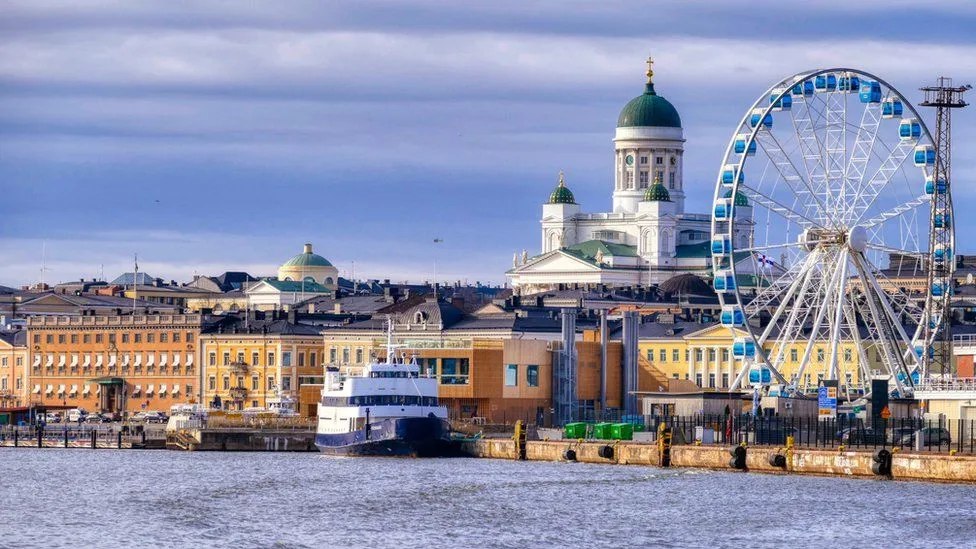
Uzbekistan and Finland are preparing for the next meeting of the intergovernmental commission and a business forum within its framework
📅 24.02.2025The text of the article is in Uzbek!
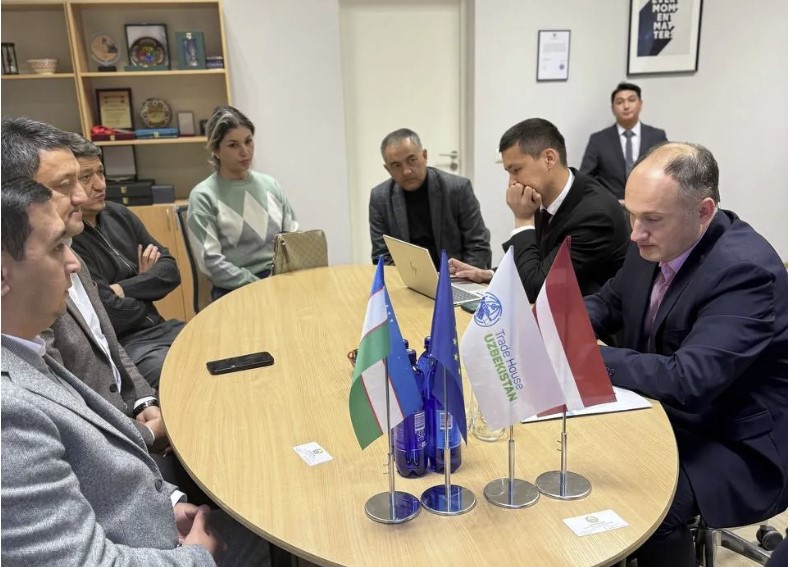
New contracts worth over $4 million signed as part of Uzbek exporters' business mission to Latvia
📅 26.11.2024The text of the article is in Uzbek!
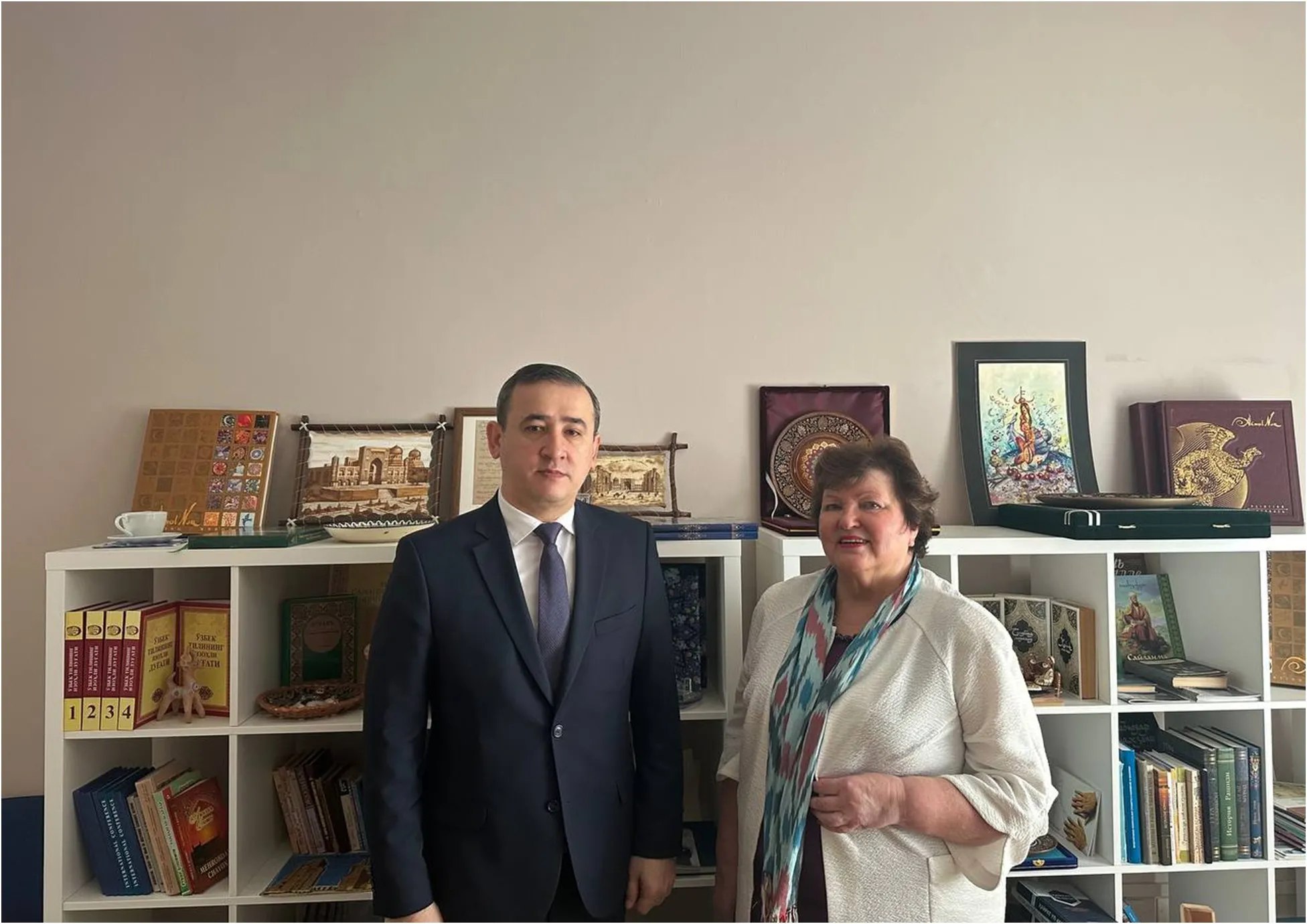
Latvian University Library is ready to establish experience exchange with libraries in Uzbekistan
📅 07.05.2024
RIGA, May 7. /IA "Dunyo"/. Ambassador Timur Rakhmanov met with the director of the academic library of the University of Latvia, Venta Koster, Dunyo news agency's correspondent reports.
During the meeting they discussed the development of cooperation between the libraries of the two countries, including the exchange of experience in this field, as well as the organization of exchanges between experts.
The director of the library of the Latvian university highly appreciated the reforms carried out in the field of science and culture in our country, and expressed interest in developing relations with the Alisher Navoi National Library, holding an exhibition dedicated to Uzbekistan on the basis of the library. It was emphasized that this exhibition will give an opportunity to Riga public and guests of the city to get acquainted with the reforms carried out in the sphere of culture, science and tourism in our country.
Following the talks, the sides agreed to sign a cooperation agreement between libraries of Uzbekistan and Latvia, develop a program of joint activities for 2024-2025, as well as organize an exhibition of famous Uzbek artist and craftsman Anorkul Boibekov in Riga in June.
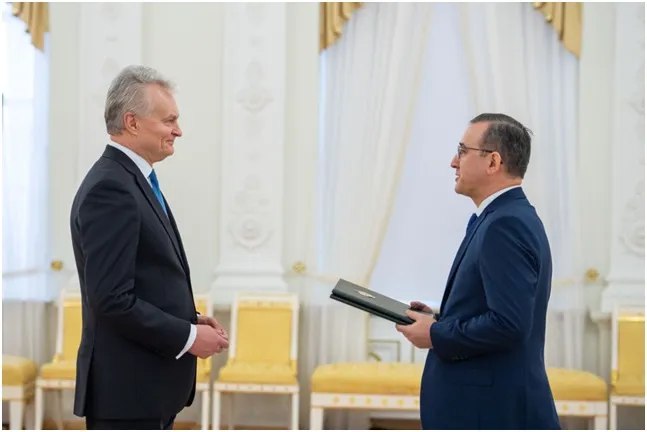
Ambassador of Uzbekistan presented his credentials to the President of Lithuania
📅 24.02.2025The text of the article is in Uzbek!

Досрочное голосование по выборам в Законодательную палату Олий Мажлиса Узбекистана проходит в Латвии
📅 21.10.2024
РИГА, 18 октября. /ИА "Дунё"/. Процесс досрочного голосования по выборам в Законодательную палату Олий Мажлиса Узбекистана продолжается в Латвии, сообщает корреспондент
В соответствии с законодательством, досрочное голосование началось 16 октября в латвийской столице Риге.
Пункты для голосования открыты в административном здании Латвийского государственного университета, Рижского университета транспорта, Рижской высшей школы управления и информатизации, в которых учатся узбекские студенты, а также крупнейшей в странах Балтии логистической компании «Kreiss», где осуществляют трудовую деятельность узбекистанцы.
Голосующие выражают удовлетворение и признательность за созданные для них возможности принять участие в выборах, имеющих важное значение для дальнейшего развития нашей страны.
Досрочное голосование также планируется провести в Литве и Финляндии.
How is global climate change reshaping Uzbekistan’s riverside ecosystems?
📅 07.11.2026
Forest ecosystems that have developed over time line the major rivers of Central Asia. The peoples of the region call this distinctive natural heritage tugai. In Uzbekistan’s dry, hot climate, tugai provides a unique natural habitat that sustains a vital ecological balance. Tree roots stabilise riverbanks, trees and shrubs protect the soil, and their shade moderates the summer heat. Birds nest here, and many animals find food and shelter. Dozens of rare animal species, including the Bukhara deer, depend on these habitats. Desert poplars, willows, oleasters and tamarisk scrub maintain a distinctive natural balance between river and desert. In recent decades, however, climate change and extensive human activity have placed these riverside forests among the world’s most threatened ecosystems.
The value of tugai becomes more apparent as its extent shrinks. Historically, along some of Central Asia’s rivers, tugai forests extended two to three kilometres inland from the banks. Today, in many places, they survive only as narrow, disconnected green strips. Areas where trees, shrubs, reedbeds and wet meadows once joined together have broken into small, separate fragments. For every plant and animal, this means less living space, food and shelter.
Scientists at the Academy of Sciences of the Republic of Uzbekistan have completed a long-term programme of comprehensive research into tugai along the Amu Darya, Syr Darya and Zarafshan rivers and the shores of the Aydar–Arnasay lake system. Field observations were combined with analysis of historical records, satellite imagery and tree rings. The research revealed the richness of these riverside ecosystems, which support 632 plant species.
The research showed that the pressures threatening this diversity are closely interconnected. Warming is increasing evaporation, drought is depleting soil moisture, and earlier snowmelt and shrinking mountain glaciers are affecting the water feeding rivers. Where seasonal inundation becomes less frequent, natural regeneration of tugai becomes more difficult. Land conversion, excessive grazing and the regulation of river flows add to these pressures. Climate change compounds existing stresses and narrows the opportunities for recovery.
The life of a riverside tree often begins hundreds of kilometres away, high in the mountains. Snow accumulated during winter and glacier ice supply rivers with water in the warmer months. Warming is reducing winter snow accumulation and bringing earlier snowmelt, changing the distribution of water throughout the year. Shrinking glaciers weaken the supply of water in summer over the longer term. Faster melting may initially increase runoff, but this temporary rise does not mean that mountain ice reserves are recovering. As those reserves decline, the risk of water shortages during the hottest months grows.
Changes in the mountains thus reach tugai far downstream. When trees need more water, the supply from the river and soil falls short. The condition of tugai depends not only on the total volume flowing down the river each year, but also on whether that water reaches riverside habitats during the growing season.
Under natural conditions, the seasonal rise of a river sustains tugai. Water spreads across the low-lying land beside the river — its floodplain — moistening the soil, replenishing groundwater and creating wet sandy and silty surfaces where seeds can germinate. After the water recedes, moisture retained in the soil helps young plants grow. The next generation of tugai trees depends on this natural cycle.
When inundation becomes shorter, shifts in timing or no longer reaches particular sites, that connection is disrupted. Mature trees may still carry green canopies, but fewer young plants are available to replace them. A seedling whose roots have not yet reached deeper soil dies during its first dry, hot summer. Water flowing in the channel therefore does not mean that all neighbouring tugai receives enough moisture.
Rising temperatures intensify the problem. Long-term analysis for the Zarafshan valley shows warming and declining summer relative humidity. Rainfall in winter or spring does not always compensate for summer water shortages. In hot weather, soils dry faster and plants must replace lost moisture through their roots. When water is scarce, growth slows, trees weaken and surviving dry years becomes more difficult.
Sensitivity to climate was also evident along the Aydar–Arnasay shores. At the study sites, increases in spring rainfall relative to the previous year were associated with a tendency towards greener vegetation in summer; hotter summers showed the opposite relationship. The conclusion drawn from the research is that proximity to a large lake alone does not protect vegetation from heat and inadequate soil moisture.
Salinity compounds moisture shortages, placing tugai under even greater stress. Where water is not sufficiently renewed and salts are not flushed out, strong evaporation increases salt accumulation in the soil. Plants then find it harder to take up water even when some moisture remains. Trees experience water shortage and the effects of salinity at the same time.
Research in the lower Amu Darya and its delta revealed what this transformation looks like. In some areas, desert poplar stands are thinning and moisture-demanding plants are declining, while shrubs and herbs tolerant of drought and salinity are becoming more prominent. As woodland gives way to areas dominated by shrubs and salt-tolerant herbs, the shade, conditions for moisture retention and wildlife habitats also change. Unfortunately, the presence of vegetation where a forest once stood does not mean that the forest itself has survived.
This distinction also matters in Zarafshan tugai. Grasses and other herbs may spread, making a site look green even while its trees are weakened or dying. Greenness alone is therefore insufficient to assess the condition of tugai. The key criterion is whether healthy trees, natural regeneration and species characteristic of the habitat are being maintained.
The findings from three tugai stands along the Syr Darya in the Fergana Valley illustrate the scale of loss. Their combined area fell from approximately 754 hectares in 1975 to 377 hectares in 2025. Over half a century, these Syr Darya tugai stands lost almost half their area. Warming and drought are making the survival and recovery of the remaining fragments even more difficult.
In their research on tugai along the Amu Darya, Syr Darya and Zarafshan, Academy of Sciences scientists found that tree-ring width in the Amu Darya basin declined from 6.96 millimetres in 1949 to 2.46 millimetres in 2022. In the Syr Darya basin, it fell from 11.26 to 1.95 millimetres between 1965 and 2022. Radial growth declined by 65% relative to its historical maximum in the Amu Darya basin, by 83% in the Syr Darya basin, and by nearly 49% during the recent phase in the Zarafshan basin. The sharp decline in radial growth observed in tugai is not an ordinary climatic fluctuation, but a biological signal that ecosystem stability is being disrupted.
The research showed that fragmentation makes tugai increasingly vulnerable. Animals find it harder to move between isolated patches of woodland, while plants have fewer opportunities to spread. Nearby healthy tugai and seed sources are important when a damaged patch needs to recover after fire or prolonged drought. Where trees disappear and the soil becomes exposed, sunlight and wind have a greater effect, encouraging further moisture loss.
Accumulated dry grasses, reeds and branches also increase fire danger. Hot, dry weather creates favourable conditions for fires to start and spread, while dryness and heat can contribute to ignition. Recovery after a fire requires water too. Where moisture is scarce, damaged woodland takes longer to recover or is replaced by another type of vegetation. Warming, water shortage and fire danger are therefore becoming mutually reinforcing pressures.
Research by Academy of Sciences scientists helps identify where action is needed and which measures are appropriate for conserving tugai. Studying plant communities and tree condition, monitoring soil moisture and salinity, and mapping sites with high fire danger make it possible to identify the most vulnerable areas. This evidence is intended to match protection and restoration to the actual needs of each place.
The first priority is to protect the natural integrity of surviving tugai and prevent further loss through land conversion. Restoration should use native species suited to local soils and moisture conditions, while natural regeneration needs protection from excessive grazing. Where feasible, the floodplain’s connection with the river and scientifically informed seasonal wetting should be restored. Whether planted trees survive subsequent hot summers must be one of the main measures of success.
These tasks are inseparable from the responsible use of the region’s water resources. Water must be conserved, losses reduced and available supplies measured more accurately, with the needs of natural ecosystems considered in water allocation. Alongside water for households, agriculture and industry, provision must be made for the flows that sustain life in river floodplains. Planting trees alone cannot save a tugai deprived of water.
For the countries of Central Asia, conserving tugai is a shared responsibility. Mountain snow and ice reserves, rivers, valleys and their wildlife are interconnected. Stronger cooperation is therefore needed in sharing scientific data, monitoring water and ecosystems, protecting habitats of rare species and restoring tugai. Each country’s practical contribution helps sustain the region’s environment.
Global climate change also requires greater solidarity from the international community. Limiting warming, expanding the use of water-saving technologies and supporting research and ecological restoration are ways for countries worldwide to help protect these unique ecosystems. Joint action for biodiversity must produce tangible results: water reaching riverside habitats, young trees growing to maturity and wildlife retaining the places it needs to survive.
The future of tugai, now reduced in many places to narrow green strips, depends on how we treat water, land and nature. Protecting it requires us to put solutions informed by science into practice together. With that commitment, life along our rivers can continue for the generations to come.
- Sh. Khabibullaev
Head of Laboratory, Institute of Botany,
Academy of Sciences of the Republic of Uzbekistan, PhD, Senior Researcher.
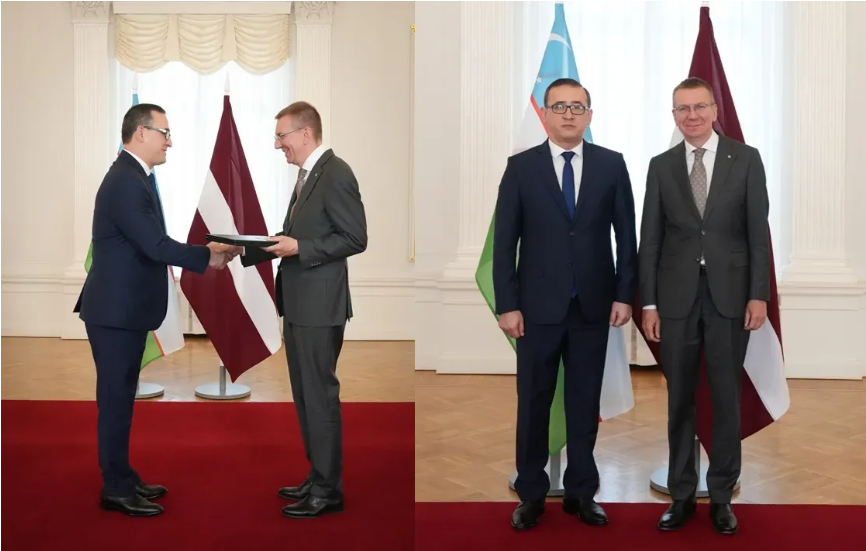
Ambassador of Uzbekistan presents credentials to President of Latvia
📅 18.06.2024
RIGA, June 18. /IA Dunyo/. Uzbekistan's Ambassador to Latvia Timur Rakhmanov yesterday presented his credentials to Latvian President Edgars Rinkevics, Dunyo news agency's correspondent reported.
The current state and prospects of development of cooperation between Uzbekistan and Latvia were discussed during the conversation held within the framework of the ceremony.
The Latvian president praised the state of political dialog and bilateral trade and economic cooperation between Riga and Tashkent. He emphasized that Uzbekistan has become one of Latvia's largest trade and economic partners by the end of 2023.
A high assessment was given to the large-scale reforms carried out in Uzbekistan, noting that their results are welcomed by all EU countries.
Timur Rakhmanov arrived in the Latvian capital on March 13 as Uzbekistan's new ambassador. He replaced Kadambai Sultanov, who served as Uzbekistan's ambassador to Latvia (2019-2024) and at the same time to Lithuania (2021-2024), Finland (2020-2024) and Estonia (2020-2024) with residence in Riga.
Uzbek specialists study Latvia’s best practices in veterinary and livestock sectors
📅 10.07.2025
RIGA, July 9. /Dunyo IA/. A training seminar was held in Latvia for specialists of the Committee for Veterinary Medicine and Livestock Development and Production Center for Breeding of Uzbekistan, reports Dunyo IA correspondent.
The seminar, organized by the Embassy of Uzbekistan in Riga in cooperation with the Latvian breeding center "Siguldas", aimed to expand opportunities for livestock breeding through artificial insemination under Uzbekistan’s climatic conditions, introduce modern technologies, and study international experience in this field.
During the seminar, participants received detailed information on Latvia’s best practices in veterinary and livestock management, technologies used in insemination processes, laboratory research, genetic quality assessment, and breeding selection methods.
Following the training, specialists from both countries agreed to further cooperation, joint research, and the organization of seminars on pressing topics.
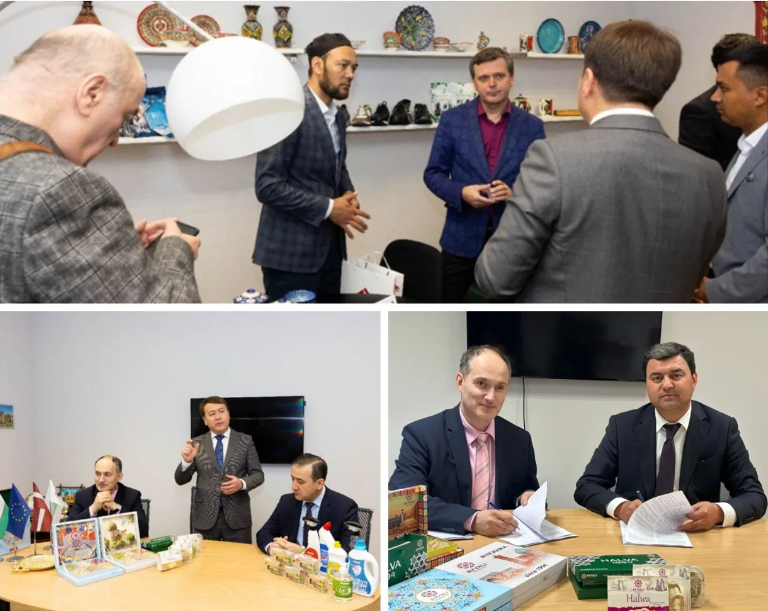
The visit of the Ferghana Oblast delegation to Latvia was fruitful
📅 29.04.2024
RIGA, April 29. /IA "Dunyo"/. A delegation of Uzbekistan headed by Deputy Khokim of Fergana region Nuriddin Mamajanov visited Latvia, Dunyo news agency's correspondent reported. Within the framework of the visit, the sides held talks on further development of trade and economic relations, increasing exports of national products and attracting direct investments in our country's economy.
In particular, during the meeting with Riga Deputy Mayor Linda Ozola the prospects of developing relations in trade-economic, investment, tourism, educational and cultural spheres were discussed, as well as an agreement was reached on participation of Fergana region representatives in cultural events to be held in Riga.
The delegation also held talks with Edgars Suna, Deputy Director of the Freeport of Riga (FPR). During the event, the sides discussed the issue of increasing exports of Uzbek products to Latvia and other EU countries, including active utilization of the port's terminal infrastructure. The issues of purchasing or renting warehouses in the territory of the REP by Uzbek entrepreneurs, granting them privileges and preferences were discussed. In turn, Edgars Suna said that the port management is ready to help in this matter. An agreement was reached to sign a memorandum on mutual cooperation between the parties in a short period of time.
Within the framework of the delegation's stay at the Uzbek Trade House in Riga, a B2B meeting between businessmen of the two countries was held. At this event, information about investment and export potential of Uzbekistan, including Fergana region, was presented. As a result of meetings and negotiations, agreements were reached on supplying agricultural products, household chemicals, confectionery and textile products to the Latvian market, and export contracts worth 25 million US dollars were signed.
At the same time, the opening ceremony of the exhibition hall of Fergana region in the Uzbek Trade House was held within the framework of the event.
Members of the delegation also held a meeting in Latvian company "KGS Group" and discussed the establishment of agro-logistic complex in Fergana region. The Latvian side expressed interest in the implementation of this project and readiness to invest 10 million dollars in it.
Translated with DeepL.com (free version)

Uzbekistan-Lithuania Business Cooperation Council to be established
📅 08.05.2024
VILNIUS, May 8. /IA "Dunyo"/. A delegation of the Uzbek Chamber of Commerce and Industry has organized a visit to Lithuania with the support of our country's embassy, Dunyo news agency's correspondent reports.
In the framework of the visit, an agreement on the establishment of the Business Cooperation Council "Uzbekistan-Lithuania" was signed in Vilnius, and the first meeting of the newly created platform was held.
President of the Confederation of Lithuanian Industrialists Vidmantas Janulyavicius noted that relations between the two countries in trade and economic, transportation and logistics, green energy, agriculture and other areas of mutual interest are consistently developing. He also expressed confidence that the Council to be established will serve as a good platform for the development of bilateral trade, economic and investment relations.
Lithuanian Deputy Minister of Transport and Communications Loreta Maskalioviene noted that Uzbekistan has become the country with the biggest economic potential in the Central Asian region. "Lithuanian businessmen show great interest in developing cooperative relations with Uzbek partners," she emphasized.
Within the framework of the visit, a business forum was held with the participation of representatives of business circles and heads of companies from Uzbekistan and Lithuania. Within the framework of the forum, B2B negotiations were organized between business representatives of the two countries, following which export contracts worth $30 million were signed to supply a wide range of products manufactured in Uzbekistan to Lithuania.
The parties agreed to establish Uzbek Trade House in Klaipeda jointly with the Chamber of Commerce and Industry of Uzbekistan and Lithuanian businessmen on the basis of equal participation. The trade house will serve to further expand opportunities for exporting products manufactured in Uzbekistan to Lithuania and European Union countries.
Uzbek businessmen familiarized themselves with the activities of major Lithuanian production enterprises and discussed issues of cooperation, mutual exchange of ideas and experience.

Latvia widely celebrated the anniversary of the adoption of the Basic Law of Uzbekistan
📅 07.12.2024
RIGA, December 6. /IA "Dunyo"/. A festive evening was held in Riga with the participation of our compatriots living and working in Latvia, reports a correspondent of the IA "Dunyo".
During the event, detailed information was presented on the content of the updated Constitution of Uzbekistan. It was emphasized that the Basic Law is a solid foundation for building a democratic state governed by the rule of law, a strong civil society, economy, as well as a peaceful and prosperous life for the people.
The concert program, which included national songs and dances performed by the Uzbek ensemble "Khalklar Dustligi", gave the participants of the event an elevated mood.

-
 Ministry of Foreign Affairs of the Republic of Uzbekistan
-
 Diplomatic Service of the Ministry of Foreign Affairs
-
 State Committee for Tourism Development
-
Ministry of Investments and Foreign Trade of the Republic of Uzbekistan
-
 invest.gov.uz
-

-

-

-

-

-

-


of Uzbekistan in the Republic
of Latvia
When using the information, a link to www.uzembassy.lv
must be provided.
All rights reserved
Address
Address: Riga c., LV-1010. 11-11 Elizabetes Str., Latvia
Phone: 37167322424
Fax: 37167322306
Email: embassy@uzbekistan.lv
Useful links
HomeIssuance of biometric passport for departure abroad
Certificate to return to Uzbekistan
Withdrawal of citizenship
Loss of citizenship